 English (Canada)
  English
  English (UK)
  English (Australia)
  العربية
  Deutsch
  Italiano
  Español de México
  Tiếng Việt
  ไทย
ไทย  Português do Brasil
  Français
  Български
  Čeština
  Dansk
Dansk  Ελληνικά
  Eesti
Eesti  Suomi
Suomi  Magyar
  Bahasa Indonesia
  Lietuvių kalba
  Latviešu valoda
  Norsk bokmål
  Nederlands (Formeel)
  Polski
  Română
  Русский
  Slovenčina
  Slovenščina
  Svenska
  Türkçe
  Українська
  简体中文
简体中文  日本語
日本語  한국어
한국어  繁體中文
繁體中文 
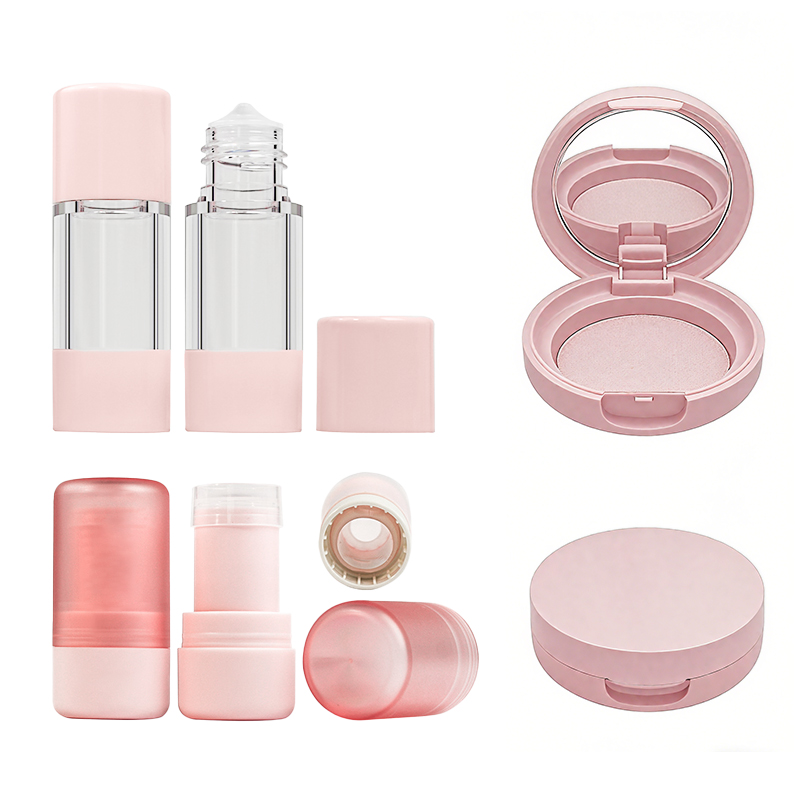
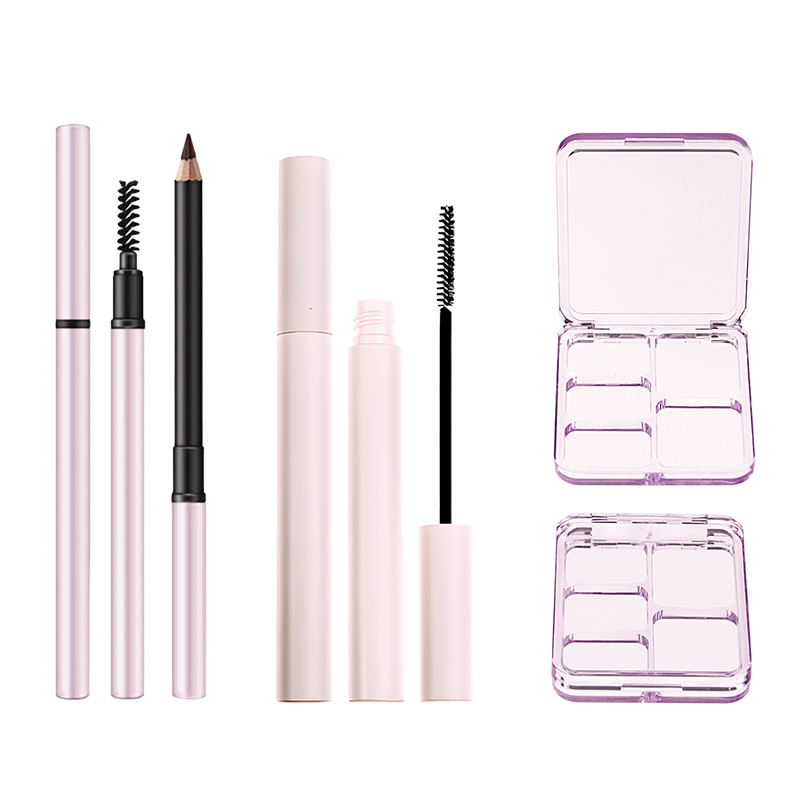
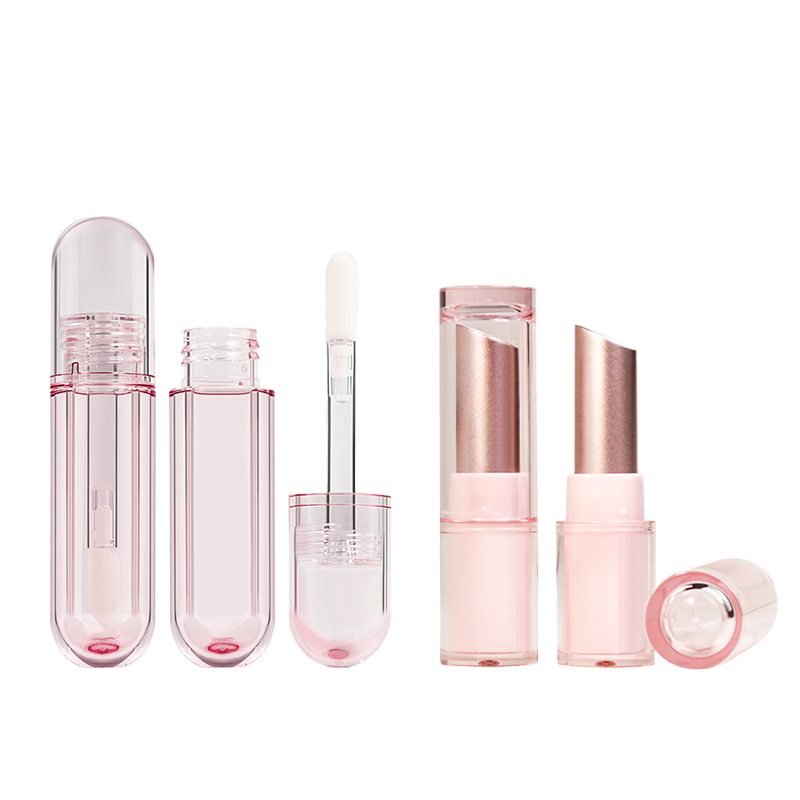

Easy Ways to Recycle Empty Beauty Containers in 2025
December 09,2025
Remember the graveyard of empty beauty containers under your sink? That chaotic drawer with half-dead lipsticks and mascara tubes that haven’t seen daylight since 2020? You’re not alone. With eco-conscious shoppers raising their brows higher than a cat-eye wing, tossing those pretty makeup packaging in the trash just won’t cut it anymore.
“The materials used in most cosmetic packaging weren’t designed with end-of-life in mind,” says Rachel Liu, Senior Sustainability Engineer at Topfeel (2024 Sustainability Report). “We’re now rethinking everything—from caps to colorants—to make recycling doable for real people.”
It’s not about guilt-tripping anyone into a zero-waste lifestyle. It’s about giving brands like yours simple ways to clean up their act without flipping their entire supply chain upside down.
From bamboo compacts that feel like art pieces to hot-stamped logos that don’t mess with recyclability—this is where smart design meets real-world waste solutions.
Key Points from the Lifespan of Empty Beauty Containers
➔ Sort by Material: Separate acrylic, glass, and plastic containers to ensure each material enters the correct recycling stream.
➔ Closure Type Considerations: Know your caps—screw tops are often recyclable, while pumps may need disassembly before disposal.
➔ Clean Before You Green: Rinse out all remaining product residue; dirty containers can contaminate an entire recycling batch.
➔ Drop-Off Destinations Matter: Return empties to beauty store take-back programs or specialized recycling points for proper handling.
➔ DIY Inspiration Stations: Turn old compacts into organizers, lipsticks into succulent planters, and droppers into crafty art tools instead of tossing them out.
➔ Materials Make a Difference: Plastic and aluminum have different environmental impacts—recycling helps reduce their footprint significantly.
➔ Bamboo’s Big Moment: Sustainable cosmetic packaging is trending—bamboo options are biodegradable and now beautifully customizable with eco-safe finishes like hot stamping.
Steps To Recycle Your Beauty Containers Responsibly
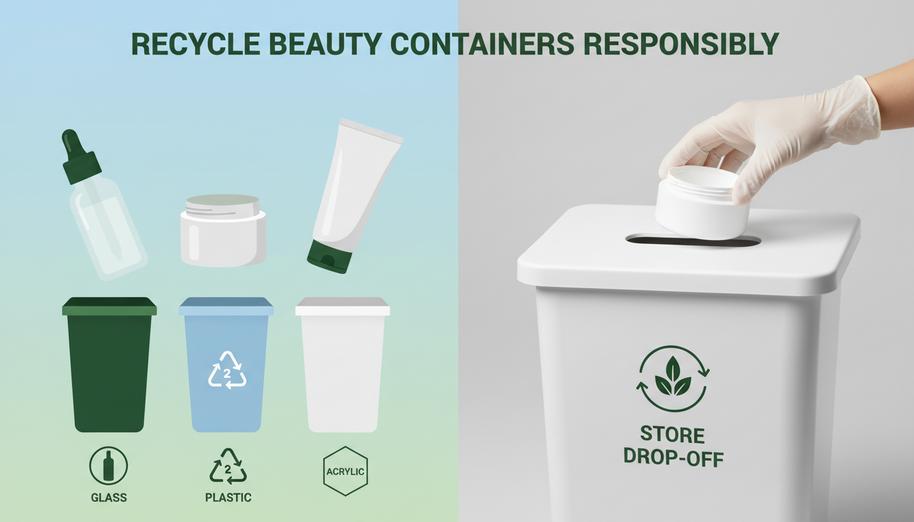
Recycling your empties isn’t hard—but doing it right makes all the difference.
Sort by Material: Acrylic, Glass, and Plastic
Before tossing anything into a bin, break down your empty beauty containers by what they’re made of:
- Acrylic containers: These are lightweight but not always recyclable curbside. Check with local facilities or specialty programs.
- Glass bottles/droppers: Fully recyclable if clean—just remove rubber bulbs or metal springs from droppers first.
- Plastic tubes and jars: Look for resin codes (#1 PET or #2 HDPE are safest bets). Soft plastics like squeeze tube lip gloss? Usually not accepted locally.
| Container Type | Common Examples | Recyclability | Special Handling Notes |
|---|---|---|---|
| Acrylic | Cream jars | Limited | Rarely accepted in curbside bins |
| Glass | Serum bottles | High | Remove non-glass parts |
| Plastic #1/#2 | Toner bottles, pumps | High | Rinse well; remove labels if asked |
| Soft Plastics | Lip gloss tubes | Low | Best sent to store take-back bins |
Sorting makes recycling smoother—and less ends up wasted.
Considerations for Closure Types: Screw Caps vs. Pump Dispensers
Not all closures are created equal when it comes to recycling your old skincare stash:
• Screw caps? Easy peasy—usually made of the same material as the bottle beneath them. Just rinse and toss them back on before recycling.
• Pumps and sprayers? These guys are trickier:
- Often contain mixed materials like metal springs inside plastic shells.
- Most municipal systems don’t separate those parts well.
- If you can take them apart without breaking a nail—do it. Otherwise? Trash ’em unless you’re using a specialty program.
Sometimes it’s better to go cap-only when shopping next time—you’ll thank yourself later when you’re sorting out those empties.
Cleaning and Preparing Your Containers for Recycling
You wouldn’t recycle a pizza box soaked in grease…same goes for sticky powder container or crusty mascara tubes:
- Rinse out all remaining product using warm water.
- Let air dry completely before tossing in the bin—wet items can contaminate paper recyclables nearby.
- Got stubborn residue? A drop of dish soap usually does the trick.
Empty beauty containers that still smell like foundation or shampoo might get rejected—even if they’re technically recyclable. Clean equals green here.
Proper Disposal: Where to Return Your Empty Containers
Tossing everything into your blue bin isn’t always enough—sometimes you’ve gotta go the extra mile:
• Many beauty stores now offer in-store drop-off programs:
-
Credo’s Pact Collective return boxes
• Local waste centers may accept certain types not handled curbside
• Some brands offer mail-in options—check their websites
If you’re unsure where your container belongs, apps like Earth911 can help pinpoint local options based on zip code.
The key is simple: don’t let laziness undo good intentions. With just a little effort, your old products can skip the landfill entirely—and maybe even come back as something new.
Four Creative Recycling Projects For Empty Beauty Containers
Breathe new life into your old makeup packaging with these fun, stylish, and surprisingly useful upcycling ideas.
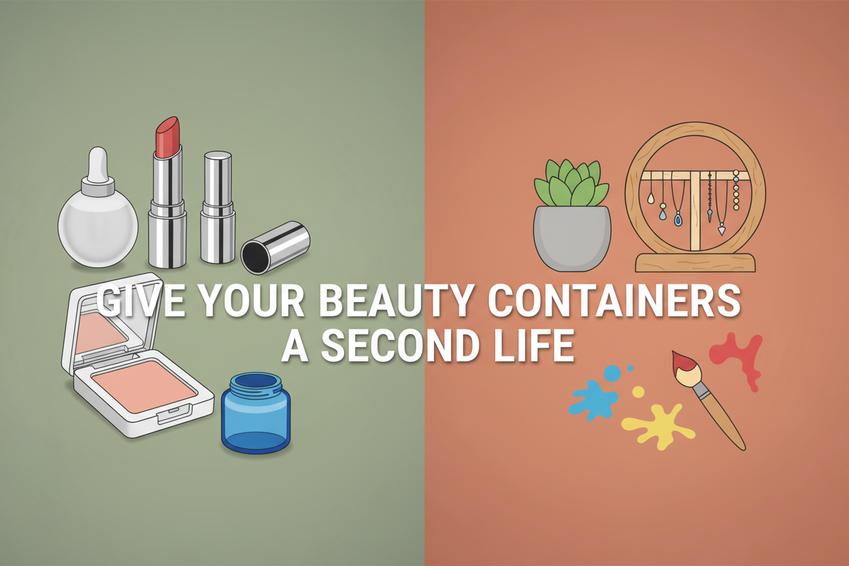
DIY Makeup Organizer from Compacted Powder Cases
Give those powder compact cases a second act as sleek little storage pods for your vanity or bag. Here’s how to make it happen:
• Pop out any remaining powder and clean the case thoroughly using micellar water or rubbing alcohol on a cotton pad.
• Use small adhesive magnets to stick several cleaned compacts together—great for stacking or wall-mounting.
• Line the inside with velvet scraps or felt to cushion jewelry or hairpins.
Want to go extra? Add labels using washi tape or paint pens so you always know what’s inside each one. These tiny cases are perfect for holding earrings, bobby pins, and even pills when traveling—proof that even broken-down beauty containers can shine again.
Upcycled Planters: Transforming Lipstick Tubes into Greenery
Tiny tubes, big impact! Here’s how you can turn those lipstick tubes into adorable mini planters:
🌿 Clean & Prep: Twist out any leftover lipstick stub and clean the interior with warm soapy water and a Q-tip. Let dry completely.
🌱 Add Drainage: Drop in a few grains of activated charcoal or crushed stones at the bottom to prevent root rot.
🪴 Soil & Planting: Fill with cactus soil mix and gently insert a small succulent clipping or air plant.
💡 Display Ideas: Group five to ten planters on a tray by color tone—or glue magnets on the back for fridge-mounted greenery!
These bite-sized gardens are not only cute but also help reduce waste from old cosmetic tubes. According to Euromonitor’s 2024 packaging trends report, “Micro-repurposing beauty waste is gaining traction among Gen Z consumers,” especially when it’s functional and aesthetic.
Creative Art Projects Using Glass Serum Droppers
Don’t toss those droppers—they’ve got serious artsy potential! Try these crafty ways to reuse them:
- Fill them with ink or watercolor for easy drip painting techniques—perfect for abstract canvases.
- Use them as mini bud vases; just trim flower stems short and pop them in.
- Create custom oil blends (e.g., lavender + sweet almond) and store them dropper-ready.
- Mix mica powder with resin directly in the bottle before dripping onto molds for jewelry making.
- Paint their exterior gold or black and string several together as part of an avant-garde mobile piece.
- Even kids can get involved—use food coloring in water-filled droppers for mess-free color mixing experiments!
With their precision tips and glass design, these little tools from your old skincare lineup can easily become part of your next masterpiece—or science fair project!
And if you’re looking to upgrade while recycling smartly, brands like Topfeel offer return programs that reward you for sending back used packaging—a win-win move toward sustainability without sacrificing style.
Let your once-forgotten empty beauty containers lead double lives full of charm, color, and creativity!
Why Is Recycling Beauty Containers Important For The Planet?
Recycling your empty beauty containers isn’t just about tidiness—it’s a real game-changer for the environment.
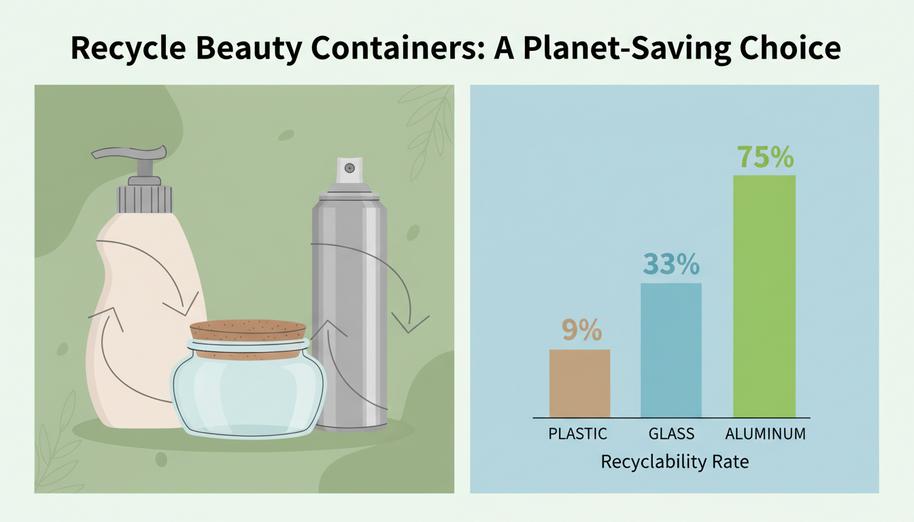
The Environmental Impact of Different Material Types
When you toss out empty beauty containers, what they’re made of matters more than you think. Let’s break it down:
- Plastic: Most common but least recycled. Single-use plastics from bottles and compacts often end up in landfills or oceans.
- Glass: Heavier to transport and energy-intensive to produce, but infinitely recyclable if sorted properly.
- Aluminum: Found in empty makeup palette and deodorant sticks—highly valuable due to its lightweight nature and recyclability.
- Paperboard: Used for outer packaging like mascara boxes—biodegradable but only if it’s not laminated with plastic layers.
Here’s how these materials stack up environmentally:
| Material | Recyclability Rate (%) | Carbon Footprint (kg CO₂/kg) | Common Use Cases |
|---|---|---|---|
| Plastic | 9 | 6 | Bottles, tubes |
| Glass | 33 | 1.2 | Jars, droppers |
| Aluminum | 75 | 10 | Palettes, sprays |
| Paperboard | 68 | 0.9 | Boxes, carton sleeves |
So next time you’re holding onto an old serum bottle or lipstick tube, remember—it’s not just trash; it could either pollute or be reborn.
Recycling Rates: What Happens to Your Containers?
Ever wonder where your tossed-out toner bottle ends up? Here’s the lowdown on what really happens to those discarded pieces of your skincare routine:
- Collection & Sorting
- Municipal recycling centers separate by material type—plastic caps go one way, glass jars another.
- Contamination Issues
- If leftover product remains inside an item (like dried foundation), it can ruin entire recycling batches.
- Processing
- Cleaned items are shredded, melted down, or crushed depending on material type before being reformed into raw resources.
- End Use
- Recycled aluminum might become bike parts; plastic could return as packaging—or sadly, get downgraded into lower-grade plastic goods.
Grouped by material:
- ♻️ Plastics: Often turned into park benches or insulation—not typically reused for new cosmetic containers due to safety standards.
- ♻️ Glass: Can be re-blown into bottles if uncontaminated—color sorting is crucial here.
- ♻️ Metals: Enjoy multiple lives; aluminum especially gets high marks for circular use in other industries.
The truth? Only a small fraction of your beauty empties ever see new life unless you prep them right—clean ’em out before tossing! That tiny step makes a huge difference when you’re trying to keep those empty beauty containers from clogging landfills forever.
The Rise Of Sustainable Packaging Trends In Beauty Industries
Sustainability isn’t just a buzzword anymore—it’s reshaping how beauty brands design, package, and deliver their products.
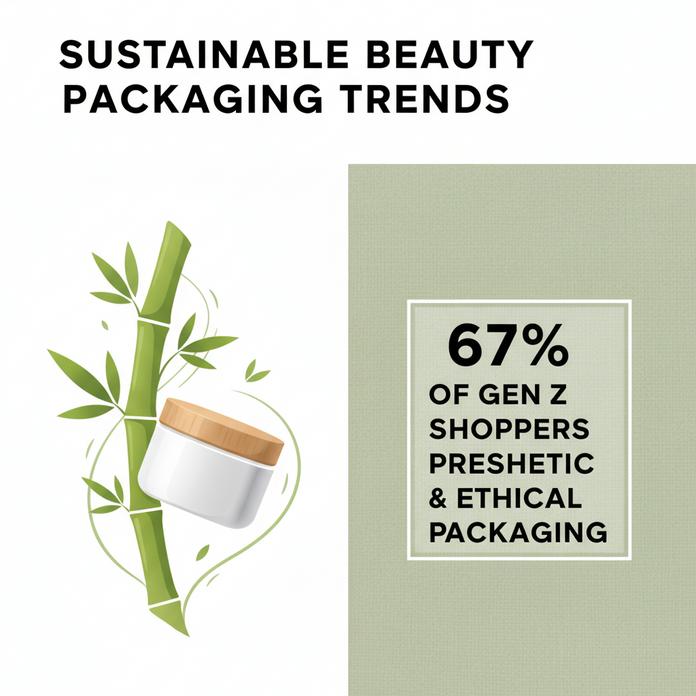
Innovative Materials: Bamboo Cosmetic Packaging on the Rise
- Bamboo isn’t just for pandas anymore—it’s become a go-to for eco-conscious brands.
- Why it’s hot:
- 🌱 Naturally biodegradable and renewable.
- 💪 Strong enough to replace plastic without sacrificing durability.
- 🎋 Grows fast with minimal water, making it a low-impact crop.
Beauty companies are swapping out plastic shells for sleek bamboo compacts and jars that scream clean beauty vibes. As more consumers demand sustainable choices, bamboo packaging is proving it’s not just trendy—it’s here to stay.
Custom Color Matching for Eco-Friendly Container Options
Color still sells—but now it also needs to be green. Brands are customizing shades on their eco-friendly containers to stand out while staying sustainable.
- Brands choose non-toxic dyes made from mineral or plant-based ingredients.
- Custom color palettes help maintain brand identity without compromising recyclability.
- Consumers associate certain hues—like earthy greens or soft neutrals—with eco values.
According to Mintel’s Q2 Sustainability Packaging Report 2024, over 67% of Gen Z shoppers said they’re more likely to purchase from brands offering both aesthetic and ethical packaging—proof that style and sustainability can definitely mix.
Hot Stamping Decoration: Enhancing Appeal with Sustainable Methods
♻️ Hot stamping has taken on a new role in the eco-packaging world:
• Uses heat instead of harsh chemicals
• Compatible with paperboard, bamboo, recycled plastics
• No inks involved = less environmental impact
It adds shine and luxury without the guilt trip—perfect for minimalist designs that still want some sparkle. This method lets brands elevate their look while keeping waste low and appeal high.
Refillable Solutions Changing the Game
Refillable formats are flipping the script on traditional packaging waste—and customers are loving it.
- Lipsticks with twist-out refill cores
- Compact powders where only pans get replaced
- Pump bottles designed for reuse multiple times
These options cut down on single-use waste while giving users long-term value—and many refill systems come housed in chic reusable shells made from glass or metal instead of disposable plastics like typical empty beauty containers.
Consumer Demand Driving Material Shifts
The pressure is real—from both people and policy changes:
• Governments pushing bans on single-use plastics
• Retailers demanding greener supply chains
• Social media fueling calls for transparency
As a result, companies are shifting toward materials like sugarcane bioplastics, post-consumer resin blends, and FSC-certified paperboard alternatives—all aiming to reduce reliance on petroleum-based components found in most traditional empty beauty containers.
Minimalist Design Meets Maximum Impact
Less really is more when it comes to sustainable design these days:
- Fewer components = easier recycling
- Uncoated finishes allow faster breakdown
- Clear messaging helps educate buyers about disposal options
Designers are ditching flashy multi-layered packs in favor of streamlined silhouettes that look modern but tread lightly on the planet—a win-win when you’re trying to build loyalty through authenticity rather than flashiness alone.
Upcycling Waste Into Chic Beauty Shells
One person’s trash is another brand’s treasure:
Grouped by source material:
Ocean Plastics: • Transformed into mascara tubes or pump bottles
• Reduces marine pollution
Agricultural Waste: • Wheat straw used as filler material
• Coffee husks molded into caps
Fabric Scraps: • Cotton fibers repurposed into pulpboard cartons
These upcycled innovations not only give discarded materials new life—they also give consumers stories worth sharing every time they pick up their favorite product housed inside one-of-a-kind packaging instead of generic empty beauty containers cluttering landfills.
References
FAQs
Each material tells a different story. Glass feels luxurious and is perfect for serums—it doesn’t react with ingredients and gives off that high-end glow. Acrylic jars, on the other hand, look sleek but are tougher than they seem—ideal for creams that need both style and strength. Plastic dominates lip gloss packaging because it’s light, easy to mold, and cheap to ship. Then there’s bamboo—earthy, biodegradable, and increasingly popular among brands trying to do right by the planet.
Absolutely! If you’re building a brand or refreshing your image:
- Hot stamping adds bold metallic accents.
- Silk screen printing makes logos pop without peeling over time.
- UV coating finish delivers shine while protecting labels from smudging.
- Custom color matching ensures every piece fits your palette perfectly.
Your container becomes more than just packaging—it becomes part of your identity.
Because one dirty mascara tube can ruin an entire bin of recyclables. That leftover foundation clinging inside pump bottles? It gums up machines at sorting facilities. Clean surfaces don’t just look better—they actually help recycling centers recover more usable material. A quick rinse could mean the difference between reuse or landfill.
Some retailers now partner with third-party programs that specialize in handling cosmetic waste—think mail-back boxes or bulk drop-off bins behind counters. These aren’t just token gestures; they’re real efforts toward reducing environmental impact at scale.
Yes—and some ideas are surprisingly charming:
- Lipstick tubes have been transformed into tiny planters for succulents during eco-campaigns.
- Compact cases become quirky pillboxes or travel mirrors when refurbished properly.These repurposed items often double as promotional tools while reinforcing sustainability goals in clever ways.
Not quite—and here’s where things get tricky. The plastic barrel might be recyclable if it’s clean enough, but metal tips and felt applicators usually aren’t accepted curbside due to mixed materials. Unless disassembled manually (which most people won’t do), these pens often end up tossed out entirely—a frustrating truth in the world of cosmetics recycling.

