 English (Canada)
  English
  English (UK)
  English (Australia)
  العربية
  Deutsch
  Italiano
  Español de México
  Tiếng Việt
  ไทย
ไทย  Português do Brasil
  Français
  Български
  Čeština
  Dansk
Dansk  Ελληνικά
  Eesti
Eesti  Suomi
Suomi  Magyar
  Bahasa Indonesia
  Lietuvių kalba
  Latviešu valoda
  Norsk bokmål
  Nederlands (Formeel)
  Polski
  Română
  Русский
  Slovenčina
  Slovenščina
  Svenska
  Türkçe
  Українська
  简体中文
简体中文  日本語
日本語  한국어
한국어  繁體中文
繁體中文 

Why Cardboard Makeup Packaging is the Ultimate Solution for Sustainable Beauty
February 18,2026
You ever open a lipstick box and think, “Wow… this thing could outlive me”? That sleek plastic casing might look like luxury, but it’s clogging up landfills faster than a beauty influencer drops #sponsored posts. Cardboard makeup packaging flips that script—lighter to ship, kinder to the planet, and still dressed to impress.
Big buyers are feeling the squeeze. Pressure from eco-conscious shoppers on one side and rising material costs on the other—it’s like trying to contour with a dull brush. Brands can’t afford wasteful packaging that eats margins and racks up carbon guilt.
According to TopfeelPack’s senior engineer Liu Wen (May 2024), “Brands switching to fiber-based cartons cut average emissions by 37% per unit.” That’s not just science—it’s survival in today’s climate-cautious market.
Why Choose Cardboard Makeup Packaging
Choosing cardboard makeup packaging isn’t just about aesthetics—it’s a smart move for brands aiming to blend sustainability, visibility, and speed in product development.
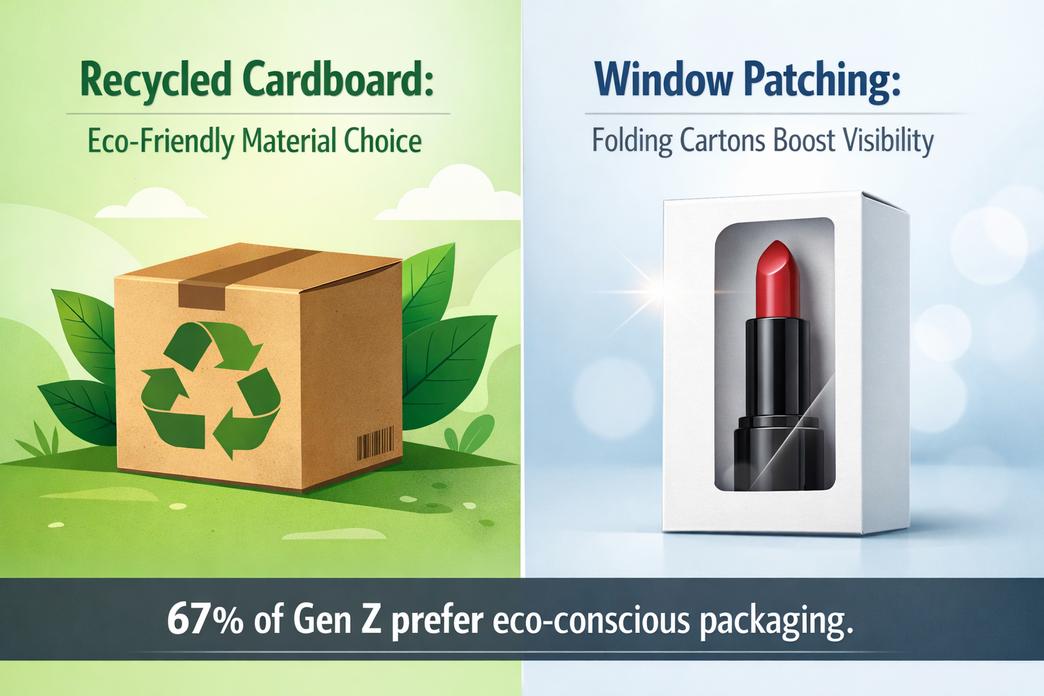
Recycled Cardboard: Eco-Friendly Material Choice
- Made from post-consumer waste, recycled cardboard helps cut down on landfill overflow.
- It’s both biodegradable and often compostable, reducing long-term environmental impact.
- Sourced through sustainable sourcing, this material supports responsible forestry practices.
“According to the 2024 Environmental Packaging Trends Report by McKinsey & Company, 67% of Gen Z consumers prefer beauty products with eco-conscious packaging materials like recycled cardboard.”
Short-run production with recycled board also means lower emissions during manufacturing. That’s a win for the planet and your brand story. Plus, it aligns perfectly with the values of today’s more eco-conscious shoppers who care about every layer of what they buy.
How Do Window Patching Folding Cartons Boost Visibility?
- A clear window enhances product display, letting customers peek inside without opening anything.
- This transparency builds trust—folks love seeing what they’re buying upfront.
- It also strengthens brand recognition by giving products a consistent visual signature.
• Smartly placed windows maintain carton strength while adding serious shelf appeal.
• The combo of structure and visibility ramps up consumer interaction and boosts perceived value.
Brands that use folding cartons with windows often see better engagement rates in retail environments thanks to improved visual appeal and stronger shelf presence.
Rapid Prototyping and Sampling for Lipstick Packaging
Step 1: Create a digital mock-up using CAD tools to visualize form and finish.
Step 2: Use quick-turn sampling services to produce physical test units for review.
Step 3: Gather feedback from internal teams or focus groups before going full-scale.
These steps speed up your time-to-market while allowing plenty of room for design tweaks or material changes mid-process. With lipstick tubes especially, where color accuracy matters, prototyping ensures your final look matches your brand vibe while keeping costs in check during early-stage development.
Rapid testing also encourages bold moves in design—thanks to faster cycles in product development, you can iterate on everything from embossing finishes to unique box folds without slowing down launch timelines.
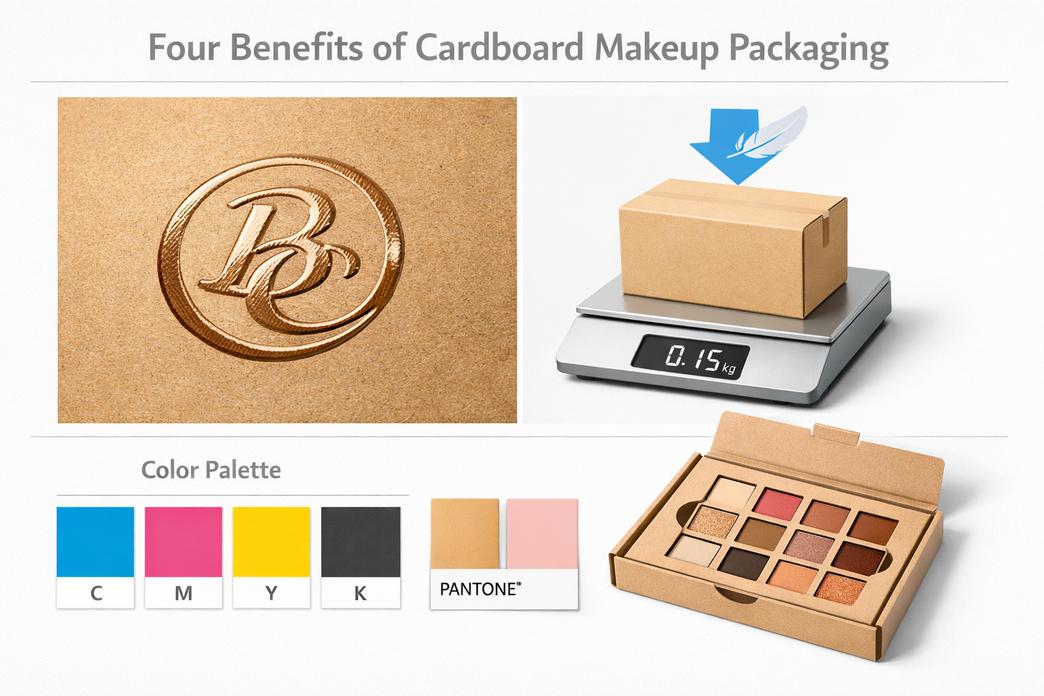
Four Benefits Of Cardboard Makeup Packaging
Cardboard makeup packaging isn’t just about looks—it’s a smart, eco-conscious move that adds serious value to your beauty brand.
Spot UV and Embossing: High-End Finishing on Kraft Paper
When it comes to making kraft paper packaging feel luxe, two techniques work hand in hand:
-
Spot UV coating
- Applied only to select areas like logos or borders
- Creates contrast between matte kraft texture and glossy shine
-
Embossing
- Raises the surface of design elements
- Adds tactile depth that feels premium in-hand
Now combine them:
-
Use spot UV on embossed logos for a 3D gloss effect.
- Example: A rose gold foil logo pops when raised and gloss-finished.
-
Layer both over natural brown kraft for a refined yet earthy vibe.
This combo lets you keep your cardboard makeup packaging biodegradable while still delivering upscale shelf appeal. It’s where sustainability meets sophistication—without plastic lamination.
Lightweight Folding Cartons Slash Your Shipping Expenses
Let’s break it down—lighter packaging saves more than just money:
• Less weight = lower shipping fees per unit, especially at scale
• Smaller volume = tighter palletization, which means fewer trips during distribution
• Reduced mass = lower CO₂ emissions across logistics
And here’s the kicker: these folding cartons don’t compromise on strength. Thanks to clever structural engineering, they’re rigid enough for glass jars or palettes but light enough to ship cheap.
So yeah, switching to lightweight folding cartons in your makeup box designs doesn’t just cut costs—it actually boosts your green credentials too.
Accurate Branding with CMYK and Pantone Printing Techniques
Color consistency matters big time when you’re selling beauty products across multiple SKUs. Here’s how smart printing keeps your brand tight:
A. CMYK Process Printing
- Best for photo-realistic imagery or gradients
- Great flexibility for short runs or digital presses
B. Pantone Matching System
- Guarantees exact color matches every single time
- Ideal for logo colors or signature product lines
Now pair them:
-
Use CMYK for background art and Pantone for brand marks.
- This ensures vibrancy without sacrificing identity.
-
Print across multiple substrates—from matte-coated board to textured kraft—and still stay consistent.
With this combo, even if you switch between different types of cardboard cosmetic boxes, everything looks uniform on shelf. That kind of polish builds trust fast among picky shoppers.
Perfectly Fitted Eyeshadow Palette Inserts via Die-Cut Designs
Ever opened an eyeshadow palette where everything rattled around? Yeah—not cute. That’s why custom die-cut inserts are game-changers:
I. Base Material Selection:
A. Choose thick corrugated board if pans are heavy.

B. Go with thinner chipboard if space-saving is key.
II. Die-Cut Design Process:
A. Measure pan dimensions down to millimeters.

B. Create snug cutouts using CAD software templates.
III. Production & Assembly:
A. Precision laser cutting ensures clean edges.

B. Inserts are glued or slotted into outer cartons securely.
The result? Zero wiggle room during transit + smooth unboxing vibes every time someone opens your palette.
Best part? These inserts are fully recyclable—so you’re not adding waste just to hold things in place inside your eco-friendly makeup packaging.
And let’s be real, nothing says “premium” like a product that stays exactly where it should inside its box—even after bouncing around in someone’s tote bag all day long.
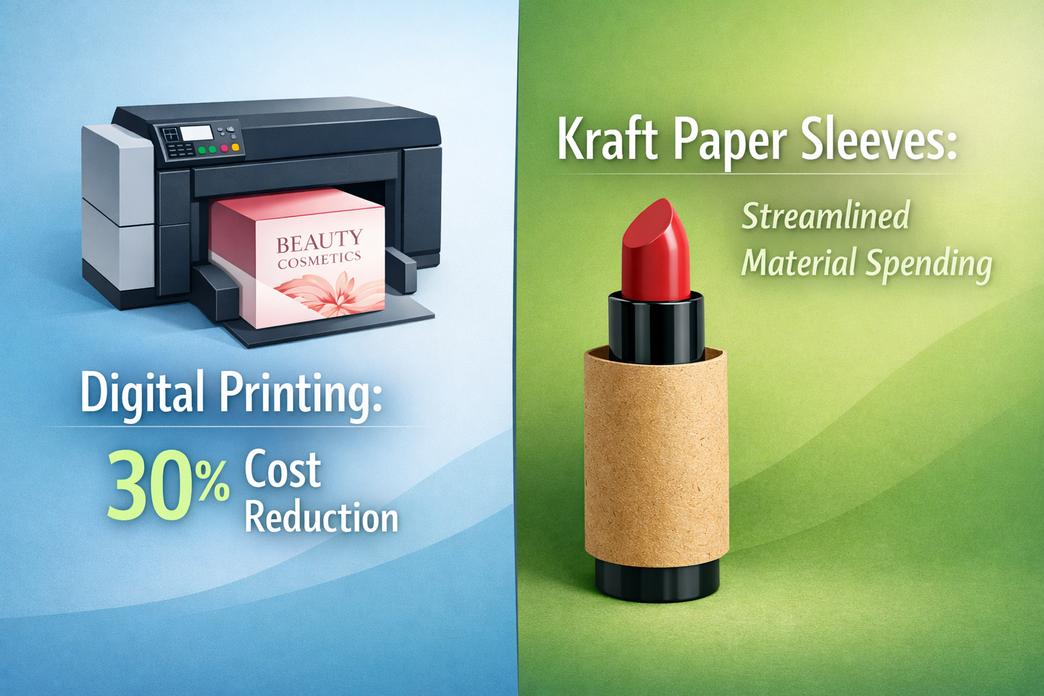
Is Cardboard Makeup Packaging Cost-Effective?
Eco-friendly doesn’t have to mean expensive. Let’s break down how smart packaging choices can actually save you money.
How Digital Printing Cuts Packaging Costs by 30%
-
Digital printing skips the whole plate-making hassle, which means:
- No upfront tooling costs.
- Quicker design changes without penalties.
- Lower minimums for trial runs.
- With digital printing, you only print what you need—no more waste from overproduction.
- Customization is super flexible, so brands can test seasonal looks or influencer collabs with minimal risk.
- Plus, turnaround times are faster, keeping your supply chain snappy.
→ It’s not just about cost-cutting—it’s about smarter production that fits modern branding needs. And yes, it can trim your packaging costs by up to 30%, especially when you’re working with small-batch cardboard makeup packaging runs.
Can Kraft Paper Sleeves Streamline Your Material Spending?
- Less bulk = less expense: Using kraft paper sleeves instead of full boxes reduces material use and shipping weight.
- They’re recyclable and biodegradable—ticks all the green boxes.
- Easy to print on directly using low-cost inks and digital printing methods.
Multiple short segments:
- Ideal for minimalist branding.
- Keeps product visibility high while cutting excess material.
- Works great for lipsticks, mascaras, or compacts in slim forms.
And here’s the kicker—when paired with smart die-cutting techniques, these sleeves keep your brand looking premium without bloating your budget on packaging materials.
High MOQ Issues: Sampling and Prototyping Lower Financial Risk
Let’s be real—jumping into high MOQs (Minimum Order Quantities) is risky if you’re still testing designs or new product lines.
Step-by-step approach:
- Start with sampling via short-run digital printing—this lets you validate packaging design without locking into huge inventory.
- Use prototyping tools to check fit, finish, and durability before committing bulk dollars.
- After testing success? Scale up confidently knowing your design works both functionally and visually.
This kind of strategy is gold for indie beauty startups using custom cardboard makeup packaging, where every dollar counts early on. Topfeelpack makes this process smoother by offering low-volume runs that don’t wreck your wallet or timeline.
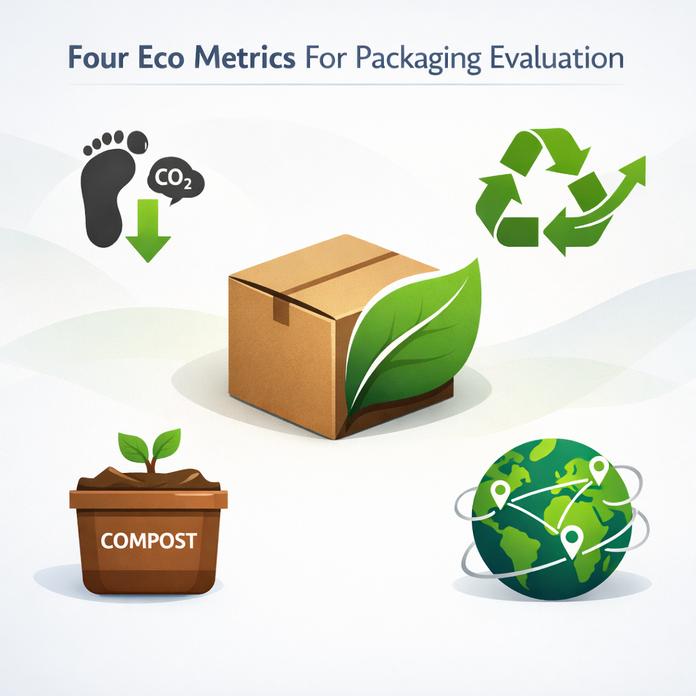
Four Eco Metrics For Packaging Evaluation
A quick dive into the four key eco factors that make or break sustainable packaging—especially for brands using cardboard makeup packaging.
Carbon Footprint Analysis of Cardboard Packaging
- Life cycle assessment shows that cardboard, especially when sourced from FSC-certified forests, emits 60% less greenhouse gases than single-use plastics.
- The manufacturing process of unbleached kraft board uses less water and energy.
- Transportation impact is reduced due to its lighter weight compared to glass or rigid plastic.
🌱 Unlike synthetic containers, cardboard absorbs some CO₂ during tree growth—a small but meaningful form of carbon sequestration. That’s a win for both your brand and the planet.
Recyclability Rates for Paperboard and Kraft Paper
- Coated paperboard with plastic film? Tricky to recycle.
- Plain kraft paper? Over 85% fiber recovery in most urban systems.
- Local collection systems vary—some accept waxed liners, others don’t.
📊 Here’s a quick look at recyclability by material type:
| Material Type | Recyclability Rate | Common Issues | Processing Method |
|---|---|---|---|
| Uncoated Kraft Paper | 90% | Low contamination | Standard pulping |
| Coated Paperboard | 60% | Film contamination | Specialized separation |
| Laminated Board | 30% | Mixed materials | Manual sorting |
| Waxed Cardboard | 50% | Water resistance | High-temp pulping |
If you’re using cardboard makeup packaging, stick with plain finishes—it boosts reuse and keeps things moving through the recycling stream.
Compostability Standards and Biodegradability Tests
✔️ To pass EN 13432 or ASTM D6400, materials must:
• Disintegrate within 12 weeks
• Show zero harmful residue (ecotoxicity)
• Fully biodegrade under controlled conditions
Uncoated kraft is golden here. It breaks down fast thanks to active microbial activity, leaving no trace behind—just good compost. Avoid laminated layers; they block oxygen flow and reduce overall biodegradation rates.
Supply Chain Emissions: Lead Time and Logistics Impact
When it comes to lowering emissions in your supply chain, timing is everything. Brands like Topfeelpack have trimmed lead times by sourcing regionally—cutting down on long-haul freight and warehouse overstocking. Here’s how it plays out:
- Shorter delivery loops = lower freight emissions
- Regional hubs = smarter inventory management
- Optimized routes = fewer trucks on the road
All this adds up to leaner logistics and greener results for your next batch of custom-designed cardboard makeup packaging.
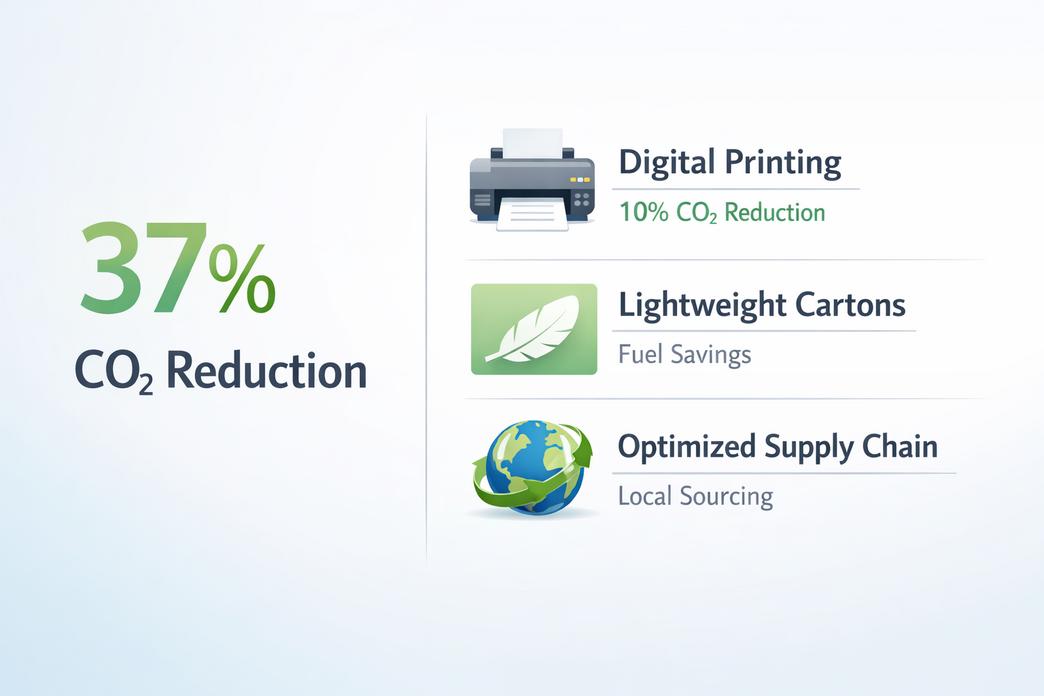
Thirty-Seven Percent Reduction In CO₂ Using Cardboard Makeup Packaging
Small changes in packaging can lead to massive environmental wins. Here’s how cardboard makeup packaging is slashing emissions across the board.
Digital Printing Cuts 10% of Packaging CO₂ Emissions
- Digital printing skips the traditional plate-making process, which means less energy use.
- Lower setup time equals fewer wasted materials and shorter production runs.
- With no need for large inventories, brands can print on demand, reducing overproduction.
- Switch to digital printing = instant drop in carbon output.
- No plates = no chemicals or water waste.
- Smaller batches = smarter inventory and less landfill waste.
- Less energy, less waste—that’s the beauty of going digital.
The way this tech trims down emissions is pretty slick. By cutting out unnecessary steps, it reduces both the power needed and the materials wasted. And when you’re dealing with millions of units in beauty packaging, that 10% drop isn’t just a number—it’s a game-changer for sustainability.
According to Smithers Pira’s 2024 Global Print Sustainability Report: “Digital print’s low-carbon workflow is now a key driver for eco-conscious brands aiming for net-zero targets.”
Topfeelpack taps into this by offering customizable runs using digital printing, helping brands lower their carbon footprint without sacrificing design flexibility.
Lightweight Folding Cartons Account for Major CO₂ Savings
• Slimmer builds mean fewer raw materials—less pulp, less processing.
• Lighter weight cuts down on fuel burn during shipping.
• Smart packaging design leads to compact shipping formats.
These cartons aren’t just lighter—they’re smarter too. Every gram shaved off reduces manufacturing strain and freight emissions. Plus, using sustainable materials helps close the loop on recyclability.
Shorter production cycles and leaner logistics? That’s where these folding cartons shine brightest. They punch way above their weight when it comes to long-term savings—both ecological and financial—for makeup brands using lightweight packaging solutions like Topfeelpack’s custom builds.
Optimized Supply Chain: Local Sourcing Cuts Transportation Emissions
- Identify regional mills producing high-quality paperboard
- Partner with local converters skilled in eco-printing
- Map optimized delivery routes to reduce fuel use
A well-oiled supply chain doesn’t just save time—it saves carbon too. By sourcing close to home, companies shrink their transportation-related carbon emissions dramatically.
- Local sourcing means fewer cross-border hauls
- Shorter routes equal lower fuel needs
- Faster turnaround times support agile inventory planning
The secret sauce here? Proximity plus precision equals performance—with a lighter footprint every step of the way. Brands embracing this model are seeing real gains not just in efficiency but also in brand perception as they commit visibly to greener practices through smarter logistics choices around their cardboard makeup packaging strategy.
FAQs about Cardboard Makeup Packaging
Why is recycled cardboard the most trusted foundation for eco-focused beauty brands?
Cardboard with post-consumer recycled content stands as both durable and biodegradable—keeping tone with clean-beauty ethics.
- Saves trees, energy, and water in production.
- Light structure reduces shipping weight across supply chain management.
- Each lipstick or skincare box carries a quiet badge of sustainability that customers instantly read through touch.
How do premium finishes turn kraft paper boxes into luxurious makeup stages?
Kraft paper gains charm through finishes that keep recyclability intact:
- Matte lamination softens texture for calming elegance on eyeshadow palette packaging.
- Spot UV over embossed logos highlights brand confidence under boutique lighting.
- Foil stamping whispers sophistication without breaking its compostable soul—biodegradable yet glamorous at once!
What role does digital printing play in shaping recognizable cardboard cartons?
Short description + bullet sequence rhythm: Digital printing thrives where color fidelity meets low waste output—ideal for mascara sleeves or compact trays needing fast turnaround times.
- Enables vivid CMYK and Pantone colors across folding carton designs; no plate setup required.
- Minimizes material scrap compared to offset printing.
Quick sampling aligns tones effortlessly before bulk release, keeping every shade story consistent from prototype to store display packaging.
How do die-cut inserts protect delicate cosmetics during transit while staying stylish?
A brief branch-line flow: Precision die-cut inserts cradle each product like a jeweler’s hand would gemstones, preventing rattle through long-distance logistics routes.
♥ Designed for custom dimensions of foundation bottles or pans inside rigid boxes; the snug embrace limits movement and breakage rates below 1%.
End result—a consumer opens a flawless item delivered safely within sustainable materials grace.This union of care and conscience defines modern cardboard makeup packaging protection artistry!

