 English
  English (UK)
  English (Australia)
  English (Canada)
  العربية
  Deutsch
  Italiano
  Español de México
  Tiếng Việt
  ไทย
ไทย  Português do Brasil
  Français
  Български
  Čeština
  Dansk
Dansk  Ελληνικά
  Eesti
Eesti  Suomi
Suomi  Magyar
  Bahasa Indonesia
  Lietuvių kalba
  Latviešu valoda
  Norsk bokmål
  Nederlands (Formeel)
  Polski
  Română
  Русский
  Slovenčina
  Slovenščina
  Svenska
  Türkçe
  Українська
  简体中文
简体中文  日本語
日本語  한국어
한국어  繁體中文
繁體中文 

What is a Cream Tube?
February 16,2026
Cream tube packaging—slick, squeezable, and wildly underrated. It’s the quiet MVP of bathroom counters and handbags everywhere. While jars are a two-hand operation and pumps can be temperamental divas, cream tubes just get the job done. One squeeze, no mess. That’s efficiency with flair.
Now imagine you’re launching a skincare line or restocking 500K units for an SPF relaunch—are you really gonna pick a package that leaks under pressure? Consumers want clean application; manufacturers want easy filling lines; brands want shelf appeal without burning through budgets. The humble cream tube ticks all those boxes without breaking a sweat.
According to Euromonitor’s 2023 Beauty Packaging Report, over 62% of skincare buyers prefer flexible tubes for daily-use creams due to portability and hygienic design—proof that functionality still wins in a world obsessed with aesthetics.
Cream Tube Quick Answers
➔ Hygienic Application: Squeeze and airless designs ensure precise, mess-free dispensing.
➔ Material Matters: Choose plastic, PCR plastic, aluminum, laminated or co-extruded tubes based on barrier protection and sustainability goals.
➔ Capacity Range: From 5 ml sampling sizes to 100 ml retail formats, with 15–50 ml travel-friendly options.
➔ Branding & Finishes: Elevate shelf appeal with silk-screen printing, hot stamping, digital printing and premium matte, soft-touch or frosted effects.
➔ Closure Options: Secure product delivery with flip-top caps, screw caps, pump dispensers or applicator tips.
➔ Sustainability Focus: Incorporate PCR content, lightweight co-extruded structures and eco-conscious printing to minimize environmental impact.
What Is a Cream Tube? Key Features Explained
Understanding what makes a cream tube effective is key to choosing the right skincare packaging. Here’s what defines its structure, size, and usability.
A squeeze tube solution designed for facial cream, sunscreen, and hand lotion
- Squeeze tubes are all about ease. You just press gently and out comes your product—no mess, no waste.
- They’re perfect for facial cream, sunscreen, or hand lotion, keeping things clean and travel-friendly.
- This kind of packaging solution is super popular in personal care because it’s light, flexible, and hygienic.
You’ll often see these tubes on beauty shelves because they strike the right balance between function and feel. The soft plastic body allows controlled dispensing while keeping air out—so your formula stays fresh longer.
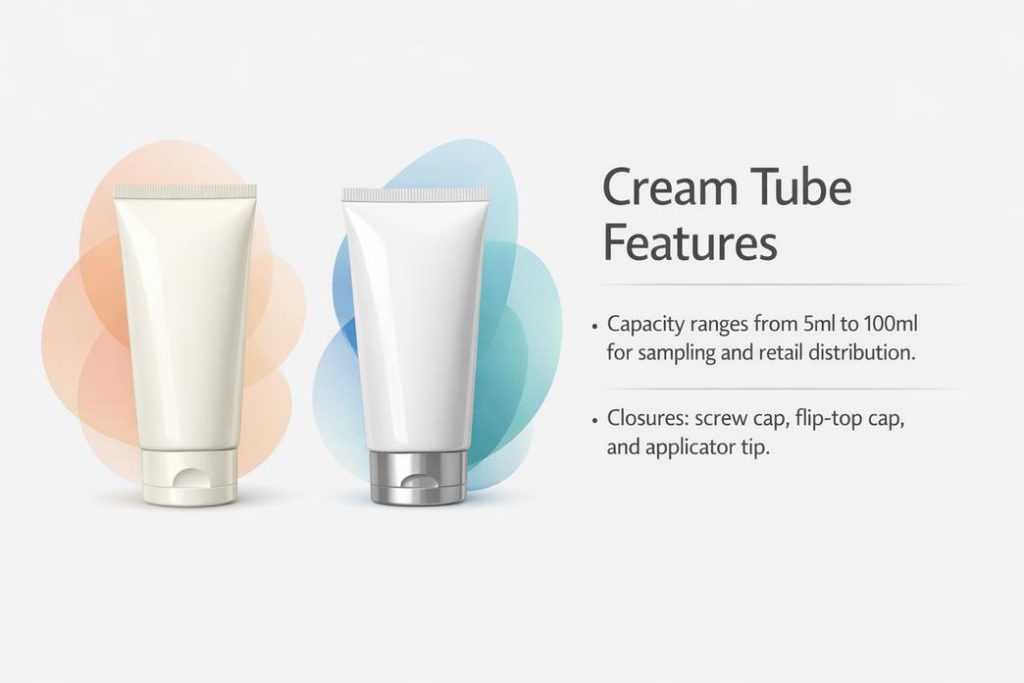
Capacity ranges from 5ml to 100ml for sampling and retail distribution
- 5ml–15ml: Ideal for free samples or trial packs.
- 20ml–50ml: Common for travel-size items or mid-range skincare products.
- 60ml–100ml: Perfect for full-size retail sales on store shelves.
Whether you’re handing out testers at an event or stocking up store displays, this volume range covers it all. The variety in capacity meets both marketing needs like sampling and long-term use in retail distribution.
Closures and dispensing formats: screw cap, flip-top cap, and applicator tip
• Flip-top caps are quick to open with one hand—great when you’re rushing out the door.
• Screw caps give a tight seal that’s ideal for tossing into bags without leaks.
• Applicator tips offer targeted delivery without using fingers—less mess, more precision.
Each of these closures brings something different to the table depending on how you want users to experience your product. From classic screw cap reliability to sleek modern applicator tip styles, there’s flexibility built into every choice of tube closures.
According to Mintel’s Global Packaging Trends Report 2024: “Consumers increasingly prioritize packaging functionality that aligns with their on-the-go lifestyle—easy-to-use caps and precise dispensers top their wish list.”
Topfeelpack has been leading innovations in custom cosmetic tubes by offering tailored designs across all these features—from size options to advanced dispensing formats—making them a go-to name in premium skincare packaging solutions.
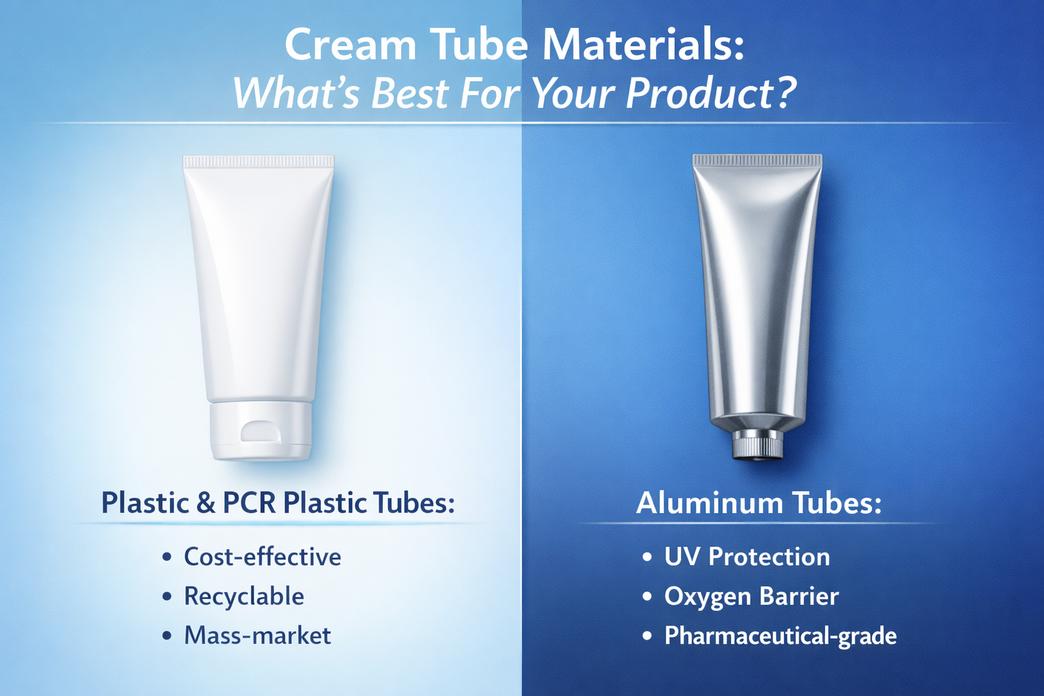
Cream Tube Materials: What’s Best For Your Product?
When picking the right cream tube packaging, it’s not just about looks—it’s about how well it protects your formula and supports your brand goals.
Plastic and PCR plastic tubes for mass-market cosmetic lines
To keep things affordable yet eco-conscious, plastic tubes—especially those made from PCR plastic—are a go-to for big beauty brands. Here’s how they stack up:
A. Cost-efficiency & Scalability
- Low production cost per unit
- High-speed filling compatibility
- Lightweight shipping benefits
B. Sustainability Points
- Use of recyclable materials like HDPE/LDPE
- PCR content reduces virgin plastic use
- Easier to source in bulk sustainably
C. Ideal Use Cases
- Mass-market cosmetic lines, such as body lotions or hand creams
- Non-reactive skincare formulations
- Brands targeting eco-savvy consumers at scale
This combo of price, performance, and planet-friendliness makes them a staple in high-volume personal care products.
Aluminum tubes for light-sensitive eye cream and pharmaceutical-grade formulas
Aluminum isn’t just shiny—it’s smart packaging when you need serious protection.
• It blocks UV rays completely—perfect for light-sensitive ingredients in eye cream
• The metal creates an oxygen barrier that keeps air out even after opening
• It’s commonly used in pharmaceutical-grade formulas, where preserving potency is non-negotiable
• Bonus: aluminum is endlessly recyclable, giving it green points too
So if your product is delicate or potent, this material keeps its integrity locked tight.
Laminated and co-extruded structures for enhanced barrier protection
For brands needing more than basic defense against the elements, these advanced tube types step up:
A. Laminated Tubes
- Combine multiple layers like EVOH + PE + foil
- Offer strong resistance to gas exchange
- Great when dealing with active ingredients or oils prone to oxidation
B. Co-extruded Tubes
- Built by layering polymers during extrusion—not glued later like laminated ones
- Provide consistent wall thickness with better sealing performance
Both options extend shelf life while keeping the product texture stable—even under varying temps or humidity levels.
Perfect picks when you’re working with volatile actives or long shelf-life expectations.
Matching material choice with formulation stability and application type
Not all contents behave the same inside a tube—and neither should your packaging choices.
Step A: Evaluate Formulation Traits
• Is it water-based or oil-heavy?
• Does it oxidize easily?
• Any pH sensitivity?
Step B: Match With Application Needs
→ Sunscreens need UV-stable materials like laminated or aluminum tubes
→ Body butters benefit from flexible squeeze-friendly plastics
Step C: Consider Consumer Experience
– Flip-top caps vs screw-on lids?
– One-handed use vs precise dosing?
Choosing wisely here means fewer complaints down the road—and better product performance straight outta the tube.
Whether you’re launching a luxe serum or budget-friendly moisturizer, aligning form with function is key to winning fans fast.
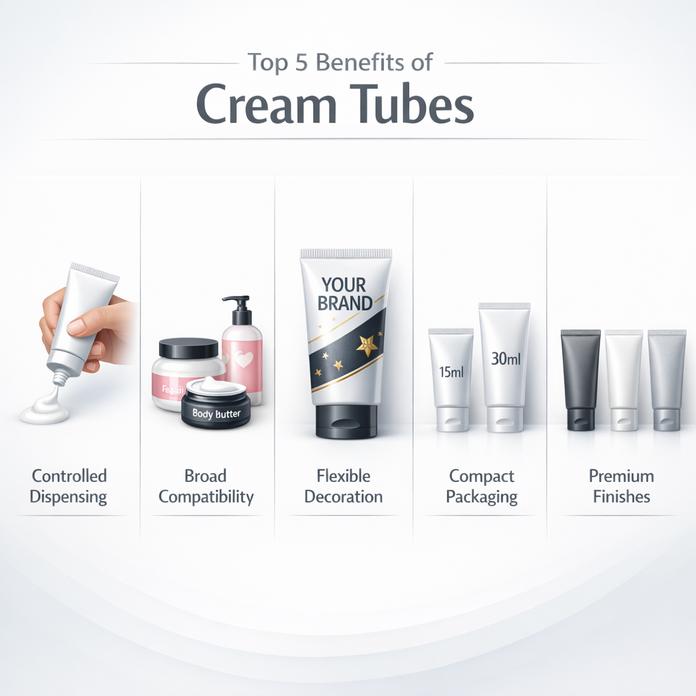
Top 5 Benefits Of Using a Cream Tube For Products
Cream tubes aren’t just about looks—they’re smart, clean, and super practical. Here’s why they’ve become the go-to for skincare packaging.
Controlled dispensing with squeeze tube and airless tube designs
- Squeeze tube formats let users control how much product they get—no more messy overpours.
- Airless tube designs prevent air from getting in, keeping formulas fresher for longer.
- The result? Less waste, better hygiene, and a smoother daily routine.
You’ll notice that these tube designs are especially handy when applying products like eye cream or spot treatments that need precise application. That’s where the magic of controlled dispensing really shines—no guesswork, no mess.
Broad compatibility with facial cream, body butter, and hand lotion
- Works perfectly with lightweight moisturizers like facial cream
- Holds up against thick textures such as rich body butter
- Keeps things tidy for everyday essentials like soothing hand lotion
It doesn’t matter if your formula is runny or dense—a well-made cream container handles it all. This kind of broad compatibility helps brands streamline their packaging choices without compromising on performance.
Flexible decoration options including silk screen printing and hot stamping
• Want your brand to pop? Go bold with metallic accents using hot stamping
• Prefer something sleek? Use multi-color layers through silk screen printing
• Customization like this boosts recognition at first glance
These advanced print methods offer endless ways to elevate your product’s vibe. From edgy minimalism to loud luxury looks, creative packaging isn’t limited anymore thanks to these flexible techniques in branding and customization.
Compact packaging formats from 15ml to 50ml for travel and retail
Short trips or shelf displays—these sizes nail both:
– 15ml: pocket-sized for quick touch-ups
– 30ml: ideal for trial kits or curated gift sets
– 50ml: generous enough for daily use but still carry-on approved
This range of compact choices makes life easier. Whether you’re packing light or building a retail lineup, these formats bring serious flexibility in terms of portability and display-ready design.
Premium surface finishes such as matte, soft touch, and frosted effects
A great finish can make someone stop mid-scroll:
• A smooth-as-silk feel from a velvety soft touch coating
• A cool-to-the-eye look from icy-clear frosted effects
• That modern edge only a muted matte finish delivers
Each texture adds something special—not just visually but emotionally too. It’s the subtle difference between “just another lotion” and “this one feels expensive.” These details enhance both tactile experience and visual appeal on any shelf.
And yep—you guessed it—the humble yet mighty cream tube makes all this possible.
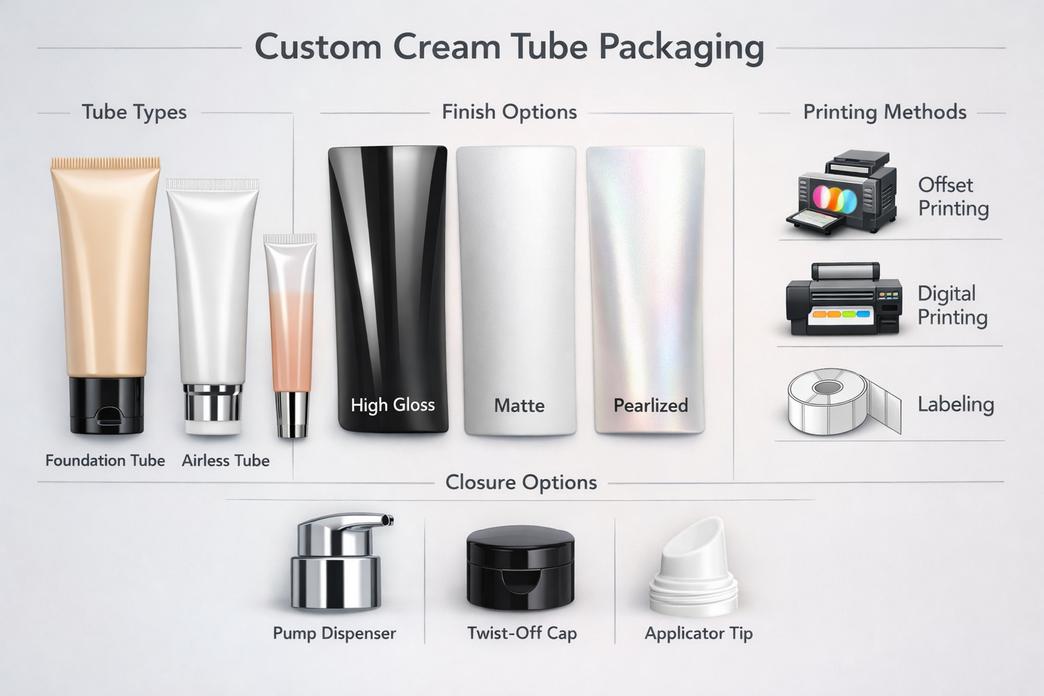
How To Design Your Own Custom Cream Tube Packaging
Nailing your Cream Tube packaging isn’t just about looks—it’s about feel, function, and standing out on shelves.
Selecting tube type: lip gloss tube, foundation tube, or airless tube
- Not all formulas play nice with every tube type.
- Thicker creams? Go for a sturdy foundation tube.
- Lightweight serums? An airless tube keeps them fresh longer.
- Lip products need flexibility—hello, soft squeeze lip gloss tubes.
- Foundations demand stability—rigid walls prevent product breakdown.
- Serums and actives love airless tech—it stops oxidation in its tracks.
☑ Match the formula’s viscosity to the right container type for best results.
Choosing wisely means fewer leaks and better shelf life—your customers will thank you later.
Choosing surface finishes from glossy to pearlized aesthetics
Start with the vibe you want your brand to give off:
• A bold shine? Go with a high-gloss surface finish.
• Want elegance? A muted matte says premium without trying too hard.
• Something ethereal? Pearlized coatings shimmer subtly in light.
Break it down further:
- Glossy = energetic & modern
- Matte = chic & understated
- Pearlized = dreamy & luxe
- Soft touch = velvety feel consumers can’t resist
The finish isn’t just about looks—it’s part of how people remember your product when they hold it.
Printing methods that enhance branding: offset printing, digital printing, labeling
Your branding deserves more than basic ink jobs:
- Use offset printing for sharp colors and detailed graphics on large orders.
- Opt for fast-turnaround with digital printing, perfect for small batches or seasonal promos.
- Stickers and shrink sleeves? That’s where custom labeling shines—great for limited runs or textured tubes.
According to Mintel’s 2024 Global Packaging Trends report: “Packaging is now storytelling real estate.”
Combine this with hot stamping or silk screen accents to really make that logo pop off the shelf.
Closure customization with pump dispenser, twist-off cap, or applicator tip
Let’s talk user experience—because nobody likes messy creams:
Step 1: Choose functionality over flash.
• Thick creams benefit from a precise pump dispenser
• Everyday lotions do well with a classic flip-top or twist-off cap
• Spot treatments shine using a fine-pointed applicator tip
Step 2: Test closure compatibility with your cream’s texture.
Step 3: Align design aesthetics across all components so nothing feels mismatched.
Topfeelpack gets this balance right—they know how to pair closures that not only work flawlessly but feel good in hand too.
Every little detail—from dispensing ease to tactile feedback—adds up to an unforgettable user moment around your custom cream packaging solution.
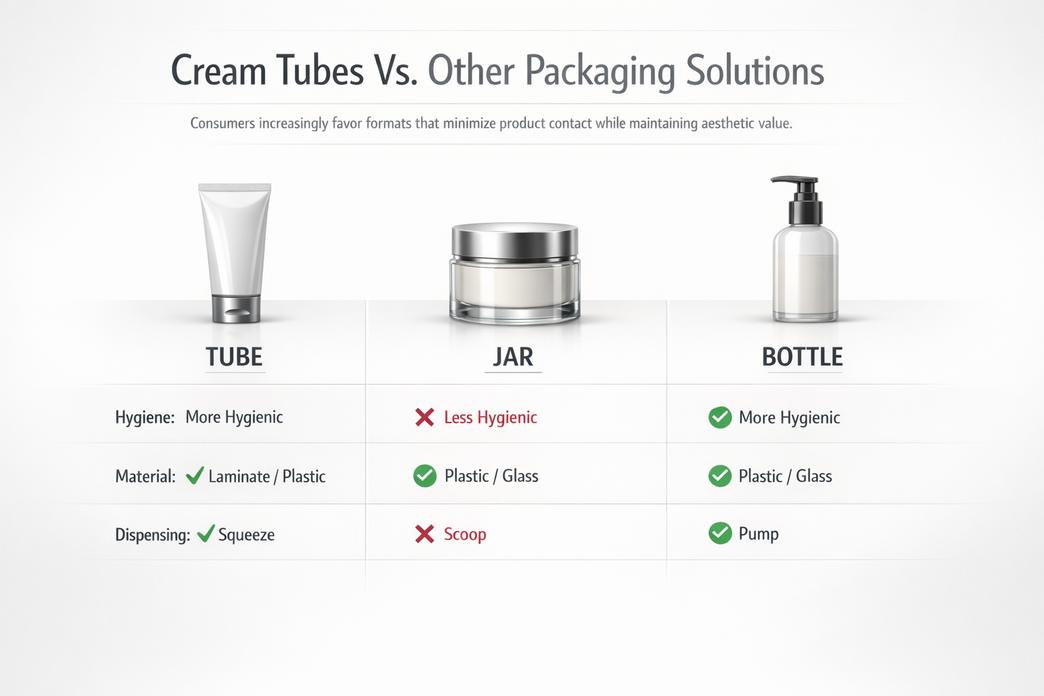
Cream Tubes Vs. Other Packaging Solutions
A quick look at how different packaging types stack up when it comes to creams and lotions—some win on hygiene, others on ease.
Cream tubes
Cream tube packaging isn’t just about portability—it’s a whole system built for efficiency and cleanliness. Here’s how it breaks down:
1. Material composition
- Most tubes are made with layers of laminate material, combining aluminum and plastic for top-tier barrier properties.
- Others use pure plastic resin, which is lighter but slightly less protective against air and light.
2. Dispensing control
- The built-in squeeze dispenser gives users better control over the amount used.
- An optional applicator tip adds precision, especially for spot treatments or eye creams.
3. Hygiene & safety
- Sealed ends ensure strong seal integrity, reducing contamination risk.
- No double-dipping like jars—just squeeze and go.
This combo makes the cream tube ideal for travel kits, gym bags, or skincare routines that demand minimal fuss. Topfeelpack’s custom options even let brands tweak every detail—from shape to print—to match their vibe without compromising function.
Jars
Jars have been around forever in skincare—but they’re not perfect. Here’s where they shine, and where they fall short:
- ✔️ Wide openings make scooping thick balms easy—especially with a spatula.
- ❌ But repeated use often means fingers inside the jar, raising hygiene concerns.
- ✔️ Aesthetic appeal is high; many luxury brands love using heavy glass material or stylishly tinted plastics.
- ❌ Even with a tight-fitting screw cap, exposure to air is constant once opened.
Most jars are made from either sturdy plastic material or premium-looking glass, often with a layered design like a double wall, adding insulation and shelf appeal. Still, unless you’re using a spatula every time—or cleaning your hands obsessively—they’re not the cleanest option out there.
According to Mintel’s Beauty Packaging Trends report from early 2024: “Consumers increasingly favor formats that minimize product contact while maintaining aesthetic value.”
That explains why some brands now include mini spoons or offer refillable inserts inside these otherwise classic containers.
Bottles
When it comes to runnier formulas or serums, bottles are usually the go-to—but do they work as well for creams?
A. Bottle types by dispensing mechanism
- 🧴 The basic bottle has a simple opening through its small, controlled narrow neck
- 💧 Some use a drop-by-drop method via a built-in dropper insert
- 🚿 Others come fitted with either a sleek pump (pump dispenser) or mist-style spray (spray applicator) depending on viscosity
B. Material choices & functionality
-
Lightweight options:
- Made from recyclable PET or HDPE—durable forms of high-grade plastic material
- Easy to mold into ergonomic shapes
-
Premium variants:
- Use frosted or tinted glass (glass material) for perceived value
- Often paired with elegant metallic caps under varied closure options
While bottles excel at protecting contents and offering mess-free application, they’re less compact than cream tubes—and don’t always allow precise portioning unless paired with pumps.
For daily-use face creams? Maybe not ideal. But for liquid moisturizers? They nail it every time thanks to smart designs focused on clean dispensing and airtight storage—keeping your formula fresh without taking up too much room on the shelf.
Topfeelpack continues pushing innovation across all three formats but remains especially known for its advanced cream tube systems that balance tech-driven materials with user-friendly design choices.
Exploring Eco-Friendly Cream Tube Options
Earth-friendly packaging doesn’t have to be boring. Let’s break down how Cream Tube designs can be smarter, lighter, and greener.
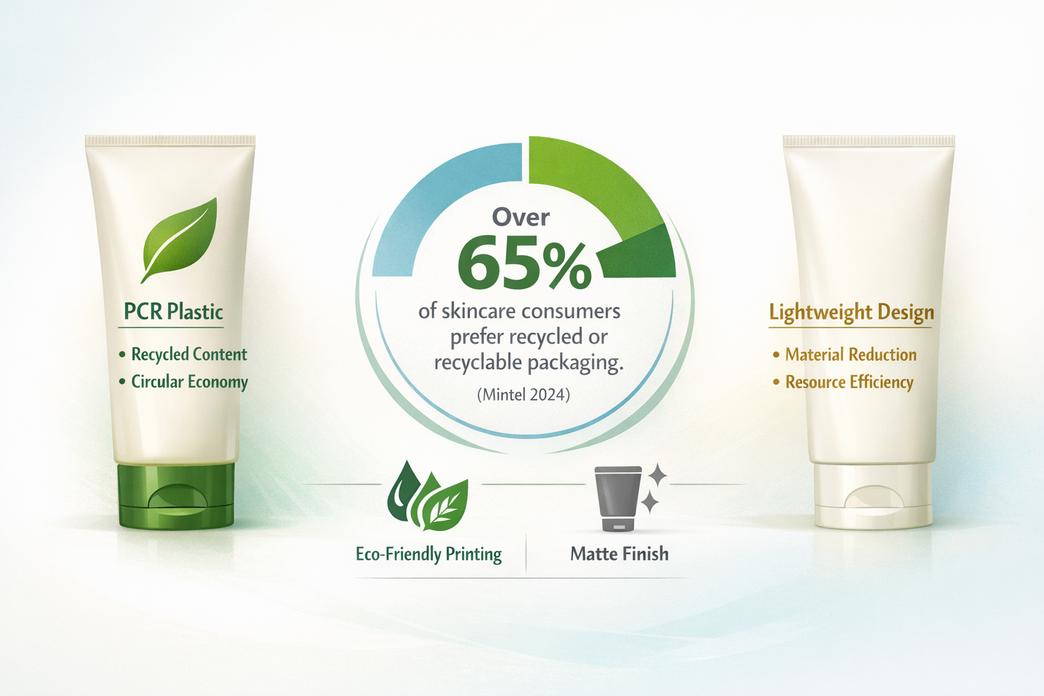
PCR plastic tubes for sustainable cosmetic packaging programs
Using PCR plastic in Cream Tube production isn’t just a trend—it’s a necessity in today’s eco-conscious world. Here’s how it all stacks up:
A. What makes PCR plastic work?
- It contains high recycled content, reducing the need for virgin materials.
- Sourced from post-consumer resin, it’s part of the circular economy loop.
B. Why brands are switching:
- Reduces total environmental impact, cutting emissions tied to extraction and refinement.
- Supports goals for sustainable packaging, especially in the beauty sector.
According to Mintel’s Global Packaging Trends 2024, “Over 65% of skincare consumers now prefer products packaged with recycled or recyclable materials.”
C. Cosmetic packaging gets a green glow-up:
- Using PCR doesn’t compromise aesthetics or durability—modern tech keeps it sleek and strong.
From lip balms to body creams, every type of segmented cream tube benefits from this shift.
Material reduction through co-extruded lightweight tube structures
Making cream tubes lighter without making them flimsy? Here’s how that happens step-by-step:
- Engineers design multi-layered tube structures using advanced co-extrusion techniques.
- Each layer is optimized for specific functions—barrier protection, flexibility, or printability.
- The result is significant material reduction, slashing unnecessary bulk.
- This boosts overall resource efficiency, helping manufacturers cut down on waste.
- Lighter tubes mean lower shipping costs and reduced carbon footprints—win-win!
Even heavy-duty skincare formulas can thrive in these new-gen lightweight packages without sacrificing protection.
Eco-conscious printing and surface finish considerations
There’s more than one way to keep your cream tube green—and good-looking too:
• Brands now use eco-conscious printing methods like water-based or soy-based inks that reduce harmful emissions during production.
• Low-VOC coatings help meet stricter air quality standards while improving recyclability.
• Matte finishes made from biodegradable polymers enhance both feel and sustainability credentials.
Short-run digital printing also allows personalization without excess waste—a major plus for indie cosmetics brands using custom-sized cream tubes.
And when paired with certified materials meeting global environmental standards, even your product label tells a greener story.
So yes—your next favorite moisturizer might come in a smarter, lighter, cleaner package than ever before!
FAQs about Cream Tube
1. What makes a Cream Tube appealing for skincare brands?
A cream tube feels simple but carries quiet precision — hygienic, easy to squeeze, and kind to skin formulas.
- Forms include squeeze tubes or airless tubes, both allowing one-hand dispensing.
- Ideal sizes range from 5ml travel minis to 100ml retail packs, fitting everything from facial cream to hand lotion.
- Prevents contamination that often occurs in open jars, preserving texture and active ingredients longer.
2. Which tube materials best balance cost and protection?
Material choice defines how safely each formula breathes inside its shell:
| Material | Main Traits | Common Use |
|---|---|---|
| Plastic / PCR plastic | Light, affordable; PCR reduces virgin resin use | General creams & lotions |
| Aluminum | Shields light-sensitive blends like eye cream | Premium skincare lines |
| Laminated / Co-extruded | Strong oxygen barrier with reduced weight | Sunscreen & body butter |
Each composition tells a story of endurance mixed with eco-awareness.
3. How do closures change daily user experience?
Every closure turns the small act of applying cream into rhythm: twist, press, release—done cleanly each time.
- Flip-top cap: Quick access for routines on the go.
- Screw cap: Solid seal for thicker hand lotion or body butter.
- Pump dispenser or applicator tip: Targeted dosing for foundation tubes or lip gloss applications.
That little “click” at close signals freshness guarded tight until tomorrow.
4. Why are surface finishes so tied to brand emotion?
Texture carries memory just as much as scent—how it looks under bathroom light matters:
- A soft shimmer through a pearlized finish, calm confidence in a silky touch matte layer; glossy styles call attention brighter than morning sun.*
Blending tone and texture allows even small 15ml eye creams to feel luxurious without words spoken aloud.
5. What decoration methods bring designs alive across thousands of units?
In production halls where color repeats endlessly:
1️⃣ Offset printing: For precise hues spanning wide batches of sunscreen tubes.
2️⃣ Silk screen printing: Offers tactile raised ink details people can trace by finger tip.
3️⃣ ★ Hot stamping adds metallic allure atop frosted columns; labeling aids fast variant swaps; subtle digital printing personalizes special editions.*
Such techniques make every container — big or small — tell the brand’s heartbeat long before opening the lid.
References
[Euromonitor 2023 Beauty Packaging Report – euromonitor.com]
[Mintel Global Packaging Trends Report 2024 – mintel.com]
[The Association of Plastic Recyclers: Recycled Content – plasticsrecycling.org]
[Sustainable Packaging Coalition: PCR Resources – sustainablepackaging.org]

