 English
  English (UK)
  English (Australia)
  English (Canada)
  العربية
  Deutsch
  Italiano
  Español de México
  Tiếng Việt
  ไทย
ไทย  Português do Brasil
  Français
  Български
  Čeština
  Dansk
Dansk  Ελληνικά
  Eesti
Eesti  Suomi
Suomi  Magyar
  Bahasa Indonesia
  Lietuvių kalba
  Latviešu valoda
  Norsk bokmål
  Nederlands (Formeel)
  Polski
  Română
  Русский
  Slovenčina
  Slovenščina
  Svenska
  Türkçe
  Українська
  简体中文
简体中文  日本語
日本語  한국어
한국어  繁體中文
繁體中文 

How to Choose the Private Label Eyeshadow Palette Packaging for Your Brand
February 12,2026
Hot take: Private label eyeshadow palette packaging can make or break your brand faster than a TikTok trend fizzles out.
It’s not just about slapping your logo on a cardboard box and calling it glam. Nope—one wrong material choice, and boom! You’ve got cracked pans, warped lids, or worse…a batch of palettes that smell like the inside of a tire shop. “We once saw a client lose an entire shipment because their magnets weren’t calibrated for high-humidity shipping,” says Eva Duan, Senior QC Engineer at Topfeelpack (2024). Ouch.
So if you’re planning to scale up and want packaging that actually survives transit, screams luxury (without screaming at Mother Earth), and fits your aesthetic down to the last emboss—stick around. This guide’s going to walk you through what works, what warps…and how to avoid looking like an amateur in front of your supplier.
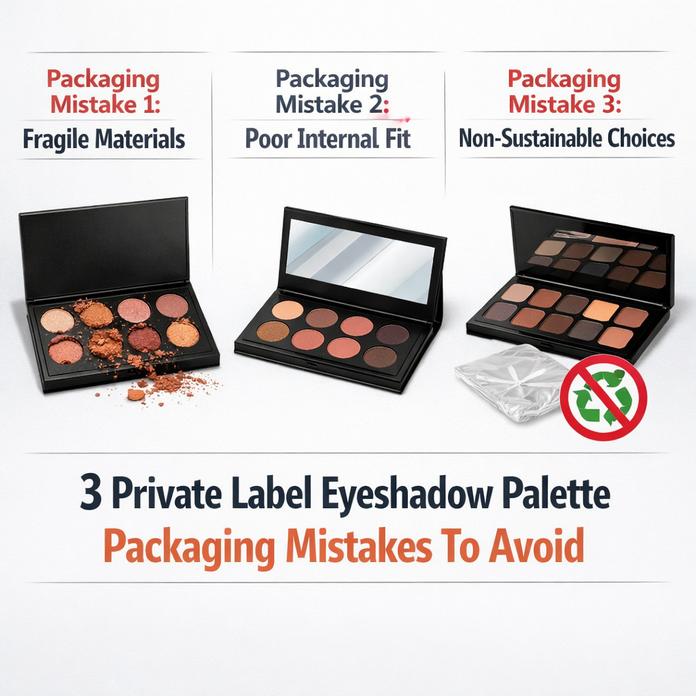
3 Private Label Eyeshadow Palette Packaging Mistakes To Avoid
Even the prettiest palette can flop if your packaging choices miss the mark. Let’s break down three common mistakes that can quietly wreck your product’s success.
Choosing plastic or acrylic that fails quality control and cracks in transit
- Weak packaging materials like low-grade acrylic often can’t handle shipping stress.
- Flimsy builds lead to cracked palettes, especially during long-haul transport.
- Poor material strength directly affects customer trust in your brand.
- Cracks and warping? That’s usually from cheap injection molding or poor QC.
- If it doesn’t pass drop tests, it won’t survive a warehouse shelf.
- Customers don’t care how cute it looks if it arrives broken.
✱ Always test for real-world wear before mass production.
When you’re building a solid reputation with your private label eyeshadow palette packaging, durability isn’t optional—it’s expected. Brands like Topfeelpack help avoid these pitfalls by offering tested, high-quality materials built for both style and toughness.
Overlooking mirror, insert, or divider fit during prototyping and assembly
- Misaligned mirrors ruin the vibe—and function.
- Loose inserts rattle around and damage pans.
- Dividers that don’t sit flush? Total deal-breaker.
→ A snug interior layout keeps everything in place without sacrificing ease of use.
Poor internal fit isn’t just annoying—it screams amateur hour to buyers browsing shelves full of polished competitors. Every element inside your palette should feel intentional, not slapped together last minute.
According to Mintel’s 2024 Beauty Packaging Insight Report, “Consumers now associate thoughtful interior design with higher product value—even more than exterior visuals.”
That’s why smart brands prioritize testing every insert during prototyping—not just the outer shell—so their private label eyeshadow palette packaging delivers on both form and function.
Ignoring recyclable or FSC certified paperboard options your buyers expect
• Eco-conscious shoppers are watching what you use—closely.
• Skipping sustainable choices can alienate key demographics fast.
• Using non-certified board might save pennies but cost you loyalty later.
Recyclable or FSC-certified materials aren’t just trendy—they’re becoming baseline expectations for beauty brands trying to stand out on shelves while staying planet-friendly. These choices boost your brand’s values and amplify its credibility with younger buyers who care deeply about sustainability in their makeup purchases.
Your private label eyeshadow palette packaging needs to reflect not only aesthetic appeal but also environmental responsibility—because today’s customers are looking beyond the surface before they click “buy.”
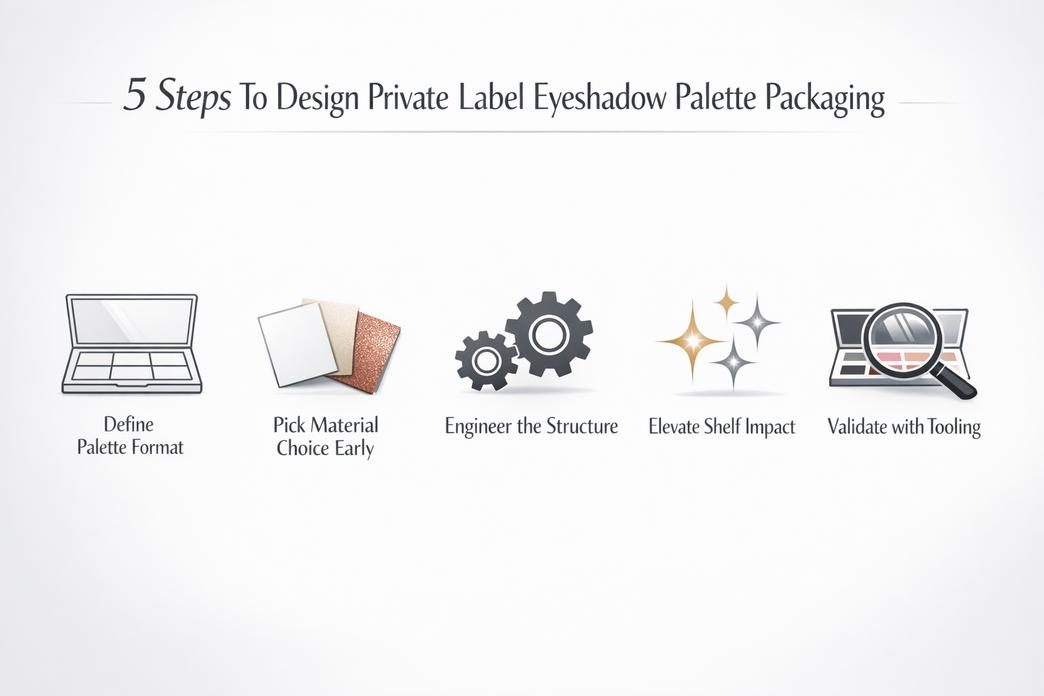
5 Steps To Design Private Label Eyeshadow Palette Packaging
Quick heads-up: if you’re building out your own private label eyeshadow palette packaging, these five moves will help you do it right—from layout to shelf-ready shine.
Define palette format: custom size, pan layout, and applicator slot needs
You’ve gotta start with the bones. The number of pans? Their shape? Mirror or no mirror? That stuff shapes everything.
- Decide on your pan count, like 6, 9, or a bold 18.
- Map out the layout—grid, row-based, or asymmetrical.
- Include an applicator slot if your audience expects on-the-go use.
This early planning keeps your packaging functional and avoids awkward designs later.
Pick material choice early—paperboard, metal, bamboo, or PCR plastic
Materials matter more than most think. They tell a story before anyone opens the lid.
- Want eco-friendly vibes? Go for bamboo or PCR plastic.
- Need luxury feels? Try brushed metal or rigid box-style paperboard.
- Match materials to your brand’s aesthetic and price point for consistency.
| Material Type | Look & Feel | Eco Rating | Cost Range ($) |
|---|---|---|---|
| Paperboard | Matte/Smooth | ★★★★☆ | Low |
| Bamboo | Natural/Warm | ★★★★★ | Medium |
| Metal | Sleek/Glossy | ★★☆☆☆ | High |
| PCR Plastic | Modern/Clean | ★★★★☆ | Medium |
Choosing early saves time during prototyping and helps define your brand identity right from the jump.
Engineer the structure with die cutting, hinge, magnet closure, and tray design
Now it’s time to make sure that thing opens smoothly—and doesn’t break after two uses.
• Add a magnetic flap for secure closing without fuss
• Use precise die cutting for neat pan slots that don’t jiggle
• Choose between plastic trays or molded paper inserts depending on weight
Structure blends form with function—no one wants shadow dust all over their makeup bag.
Elevate shelf impact using hot stamping, embossing, and UV coating finishes
Make it pop under store lights. This is where looks really do matter in the world of cosmetics.
Short hits that work:
- Glossy black + gold foil = drama
- Soft-touch matte + embossed logo = premium
- Holographic UV coat = Gen Z magnet
These finishes boost perceived value without changing product quality—a smart move when margins are tight in private label cosmetics packaging.
Validate with tooling, printing tests, and final quality control before scaling
Before going big-time with production, test everything. Like seriously—everything.
Step 1: Run sample tooling to check mold accuracy
Step 2: Print color proofs to confirm artwork alignment
Step 3: Conduct drop tests and stress checks for durability
Step 4: Final QC sign-off ensures every unit meets spec
Grouped testing avoids disaster later down the road when thousands of units are already made. A solid QC process is what separates amateur brands from serious players in the private label game.
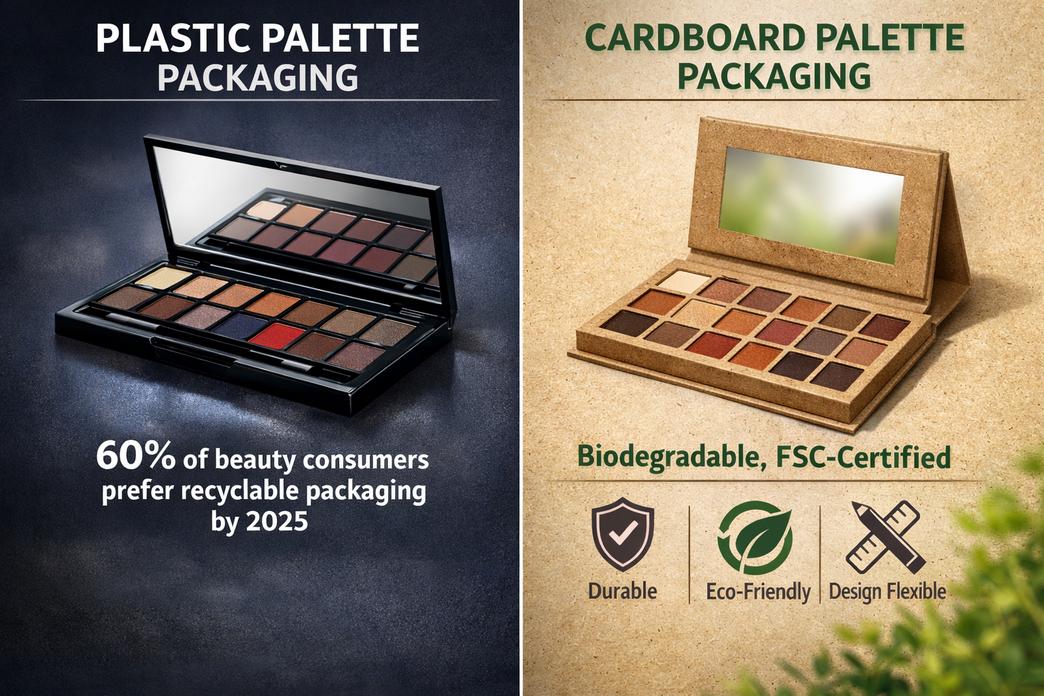
Plastic Vs. Cardboard Palette Packaging
A quick breakdown of how plastic and cardboard packaging stack up for your private label eyeshadow palette packaging.
Plastic palette case
Plastic cases are all about durability, and they’re tough to beat when it comes to water resistance and holding up against scratches.
- They offer serious design flexibility, perfect for brands wanting custom molds or sleek finishes.
- Lighter than you’d think, the weight can be optimized without sacrificing strength.
- Depending on the material options, some plastics can be made with PCR, boosting their eco score.
But here’s the thing: unless you’re using post-consumer recycled materials, plastic can feel out of sync with green-conscious buyers.
“By 2025, over 60% of beauty consumers will prefer products in recyclable or sustainable packaging,” according to Mintel’s Global Beauty Packaging Report 2024.
If your brand leans into luxe vibes and long-lasting appeal, plastic might still be your go-to—especially when you want that mirror snap-shut effect done right.
Cardboard paperboard palette container
Cardboard’s got that earthy charm—it screams eco-friendly without trying too hard. It’s also super light, which helps cut down on shipping emissions and costs.
• The high level of printability means you can go wild with colors, foils, or textures.
• Thanks to its natural biodegradability, it aligns well with clean beauty values.
• With solid enough construction, it still offers decent structural integrity for most palettes.
Want a magnetic closure? No problem—just layer it in smartly during production. Paperboard doesn’t mean basic anymore; it just means smart and stylish packaging that matches your vibe.
PCR plastic vs recycled content paperboard kit
Let’s break this one down by comparing core benefits based on what matters most in today’s market:
A) Circular Benefits
- PCR plastic supports a closed-loop system: reusing old plastics = less landfill.
- Recycled paperboard leans into biodegradation instead of reuse—but both reduce virgin material consumption.
B) Eco Credentials
- PCR plastics often qualify under sustainability certifications.
- Paperboards win points with FSC-certified sourcing and compostable end-of-life options.
C) Brand Match
- If your target audience prioritizes sleekness + longevity → go PCR plastic.
- If they value low-waste + ethical sourcing → go recycled board.
- If you’re torn? Hybrid kits exist—plastic pans inside cardboard shells for a balanced solution.
Ultimately, the choice boils down to how you balance aesthetics with environmental impact while staying true to your product’s vibe and what your customers care about most in their beauty buys—whether it’s visual flair or that guilt-free unboxing moment tied to sustainable choices in their favorite 9 pan eyeshadow palette designs.
FAQs about Private Label Eyeshadow Palette Packaging
What materials give palettes both beauty and resilience?
A bold palette feels sturdy in the hand yet looks graceful under a spotlight. Cardboard and paperboard create printable elegance, while metal cases guard against dents. Bamboo whispers eco-charm, PCR plastic offers recycled strength, acrylic shows the product through crystal clarity, and glass adds weighty sophistication.
Why is prototyping a make-or-break step before mass production?
Prototyping is like the dress rehearsal—checking mirror alignment so reflections aren’t skewed; hinge movement so lids don’t stick; magnet closures clicking into place without force; divider spacing keeping each pan safe. One trial secures thousands of future kits or containers from costly flaws.
How can finishing processes turn packaging into art?
Hot stamping breathes metallic light over logos; embossing lets fingertips trace raised identities; matte lamination softens glare for an intimate feel, while gloss UV coating adds high-gloss drama that shrugs off scuffs during shipping trays across continents. Silk screen printing blends intense color with texture finishes for unforgettable shelf presence.
Can cardboard or paperboard satisfy luxury branding needs?
Yes—quality cardstock becomes couture when dressed in foil edges or debossed emblems, layered with inserts holding delicate pans and applicator slots hidden beneath hinged windows. FSC certified boards speak directly to eco-conscious buyers without losing sophistication’s sparkle.
Which sustainability touches matter most at contract stage?
Ask your supplier about recycled content percentages in paperboard cases, biodegradable bamboo compacts for refillable systems, compostable tray inserts, or PCR plastic hinges tested via injection molding durability trials—all shaping a container’s environmental story alongside its beauty narrative.
Does magnet closure design influence customer satisfaction long-term?
Absolutely—a well-set magnet within custom shape lids guards powder integrity during jostled delivery runs while keeping daily use effortless compared to stiff snaps or misaligned hinges… every secure click deepens trust between user and brand.
References
- FSC Certification – Forest Stewardship Council [https://us.fsc.org/en-us/certification]
- Recycled Plastic Content – Association of Plastic Recyclers [https://plasticsrecycling.org]

