 English
  English (UK)
  English (Australia)
  English (Canada)
  العربية
  Deutsch
  Italiano
  Español de México
  Tiếng Việt
  ไทย
ไทย  Português do Brasil
  Français
  Български
  Čeština
  Dansk
Dansk  Ελληνικά
  Eesti
Eesti  Suomi
Suomi  Magyar
  Bahasa Indonesia
  Lietuvių kalba
  Latviešu valoda
  Norsk bokmål
  Nederlands (Formeel)
  Polski
  Română
  Русский
  Slovenčina
  Slovenščina
  Svenska
  Türkçe
  Українська
  简体中文
简体中文  日本語
日本語  한국어
한국어  繁體中文
繁體中文 
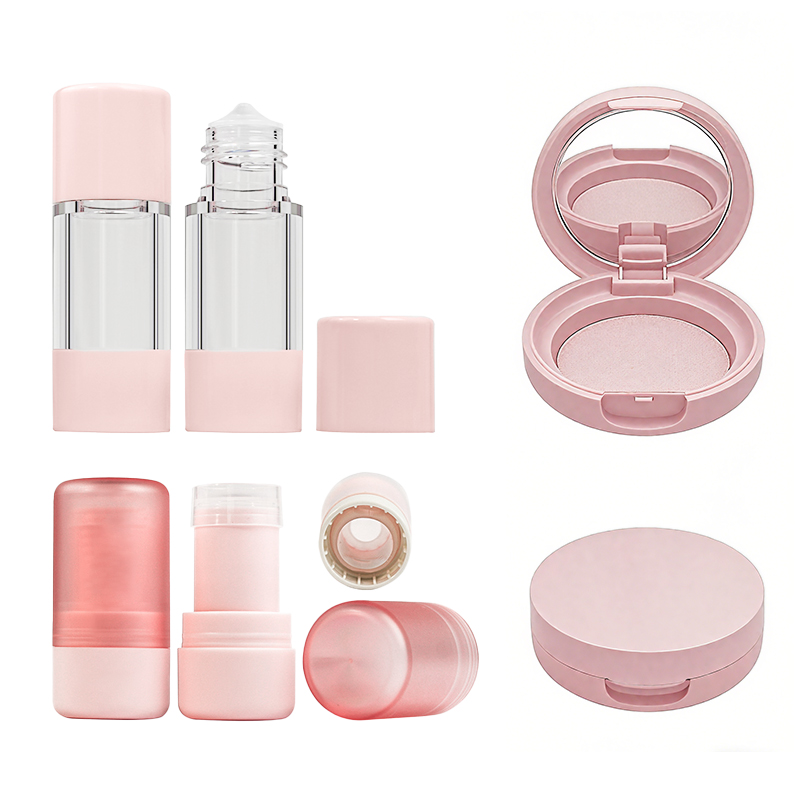
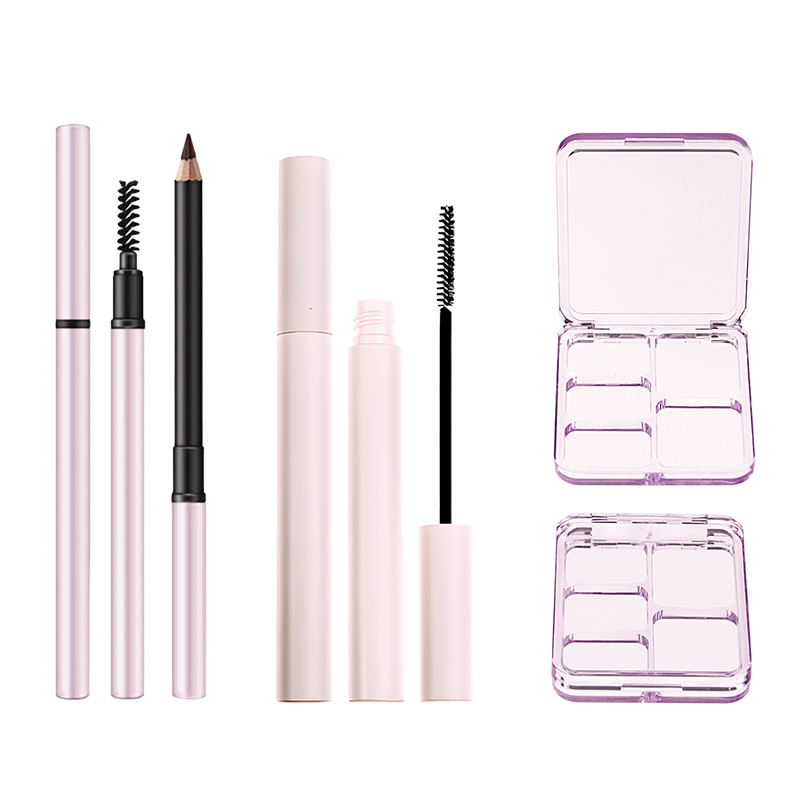
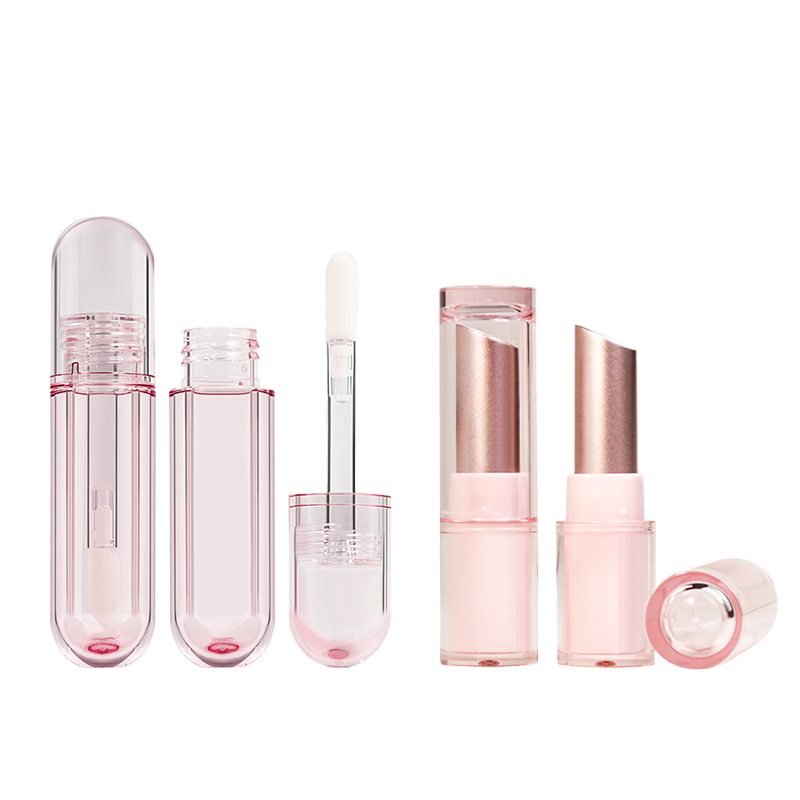

Why PFAS-free materials are mandatory for lip products in 2026
January 13,2026
What are PFAS-free packaging materials? In a nutshell: the future of lipstick tubes that won’t bite back. These days, nobody wants “forever chemicals” hitching a ride in their beauty bags—not consumers, not regulators, and definitely not retailers tiptoeing through compliance minefields. The clock’s ticking: by 2026, if your lip products aren’t squeaky clean (and wrapped in PFAS-free goodness), you’re out faster than last season’s contour kits.
PFAS used to be the industry’s best-kept secret—waterproof this, smudge-proof that—but now they’re public enemy number one. Why? Because these suckers don’t break down in nature or bodies. And when something sticks around longer than grandma’s Tupperware collection… we’ve got a problem.
Topfeelpack product manager Lisa Chen puts it bluntly: “Brands that wait until 2026 will be scrambling for compliant suppliers while others are already miles ahead.” So yeah—it’s go-time.
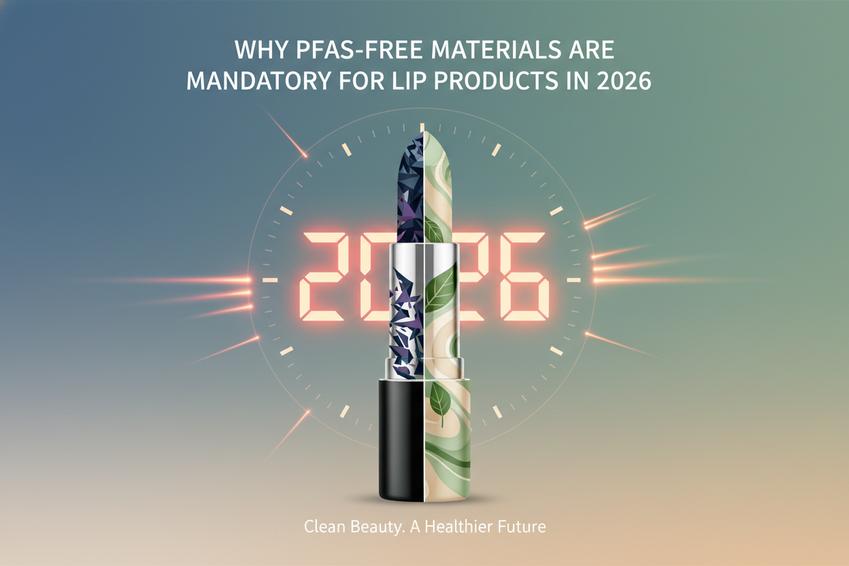
Quick Insights: What are PFAS-free Packaging Materials?
➔ Definition: PFAS-free packaging materials are eco-friendly alternatives that do not contain harmful “forever chemicals,” designed to enhance product safety and sustainability.
➔ Health Risks: Prolonged exposure to PFAS can elevate health concerns, making it vital for beauty brands to seek safer packaging options.
➔ Regulatory Push: With regulatory deadlines looming (e.g., 2026 compliance), brands must act now to avoid scrambling for PFAS-free suppliers.
➔ Sustainable Options: Molded pulp, biodegradable plantable paper, and seaweed-based films are promising alternatives that foster a greener cosmetic industry.
➔ Consumer Trust: Brands offering PFAS-free products enhance their credibility and attract eco-conscious consumers, boosting business success.
Understanding PFAS: The Problem in Cosmetic Ingredients
PFAS sneak into beauty routines more than you think—especially through lipsticks and packaging. Here’s what you should know.
What Are PFAS and Why Are They Used?
- PFAS are synthetic, carbon-fluorine bonded chemicals.
- They’re used to repel oil, water, grease, and dirt.
- Their resistance properties make them ideal for long-wear makeup formulas.
Long-lasting foundation? Smudge-proof lipstick? That’s usually chemical exposure talking. These substances aren’t just inside the product—they’re often baked into the packaging too.
Some common uses: • In mascara tubes to resist smudging • In lipstick tubes to prevent melting or warping • In foundation compacts to boost shelf life
So while they help performance, they also raise red flags around toxicity, consumer safety, and environmental impact.
The Impact of PFAS on Cosmetic Safety
PFAS don’t just sit pretty—they migrate:
🧴 From packaging into the product itself 💋 From your lip products into your body over time
And because lip products are often ingested in small amounts daily, this chronic exposure adds up fast.
Risks tied to prolonged contact include:
- Hormonal disruption
- Immune system suppression
- Potential links to certain cancers
While there’s no immediate burn or rash, it’s the silent accumulation that has experts worried about long-term health risks from these persistent chemicals.
Common PFAS-Laden Ingredients in Lip Products
| Ingredient Name | Function in Product | Where It’s Found | Associated Risk Level |
|---|---|---|---|
| PTFE | Smooth texture enhancer | Long-wear lipsticks | High |
| Perfluoroalkyl ethyls | Oil resistance | Waterproof foundations | Moderate |
| Fluoropolymer coatings | Packaging durability | Lipstick tube interiors | High |
| PFOA-related compounds | Shine & spreadability | Glossy lip finishes | Severe |
These ingredients don’t always show up clearly on labels—sometimes they’re hidden under terms like “film former” or “slip agent.” Knowing what you’re applying is half the battle when trying to avoid chemical exposure through everyday cosmetics.
Regulatory Scrutiny: Are Companies Aware?
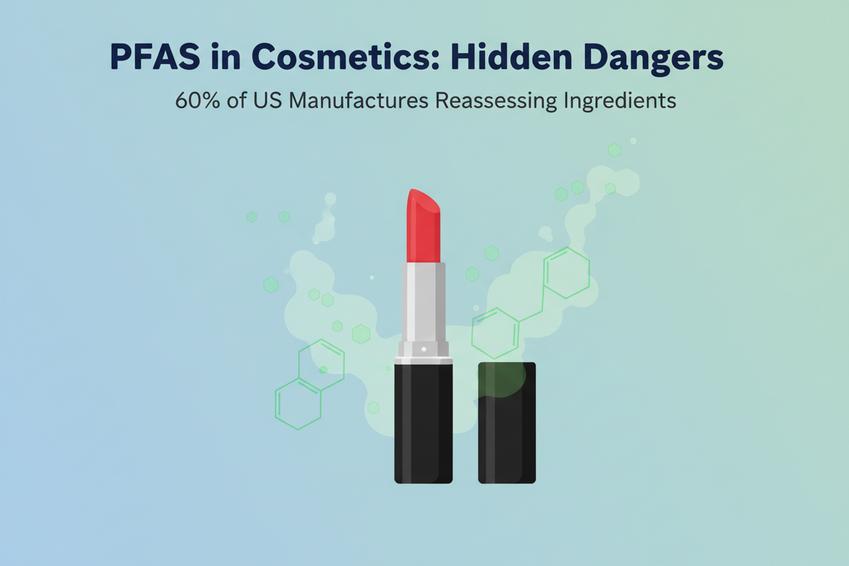
“By mid-2024, over 60% of U.S.-based cosmetic manufacturers had begun reassessing their ingredient sourcing due to rising pressure from FDA and European REACH compliance audits.” — Global Cosmetics Compliance Review 2024
Brands are waking up—but slowly. While some have pledged to remove PFAS, many still grapple with murky supply chains where ingredient traceability is weak.
There’s growing global tension between innovation and regulation: • U.S.: FDA focuses on food-contact migration risks that overlap with cosmetic packaging standards. • EU: REACH lists over 10K substances requiring disclosure—including many fluorinated polymers found in cosmetics.
Still, transparency gaps remain. Most companies can’t yet guarantee their products meet a full definition of “what are PFAS-free packaging materials,” especially across suppliers using layered manufacturing processes.
In short? There’s movement—but not enough momentum yet for full-scale reform across the beauty industry’s use of potentially toxic materials like PFAS.
The Health Risks of PFAS in Lip Products
PFAS might be invisible, but their impact on your favorite cosmetics could be more personal than you think.
Long-term Effects of PFAS Exposure on Health
- Bioaccumulation is no joke—these chemicals don’t just vanish after use. They stick around in your body for years.
- Hormonal chaos? Yep, PFAS are linked to endocrine disruption, messing with estrogen and thyroid function.
- The immune system takes a hit too—some studies show reduced vaccine effectiveness tied to long-term chemical exposure.
🧪 A recent EPA study (2024) found that individuals with high PFAS levels had:
| Effect Type | Frequency (%) | Age Group Most Affected | Duration Observed |
|---|---|---|---|
| Hormone Disruption | 48% | Adults 25–45 | Over 5 years |
| Immune Suppression | 36% | Children under 12 | Over 3 years |
| Liver Enzyme Elevation | 29% | All age groups | Immediate onset |
That’s not fear-mongering—it’s cold data. If you’re swiping on lip products daily, it’s worth thinking twice about what’s inside.
Vulnerable Populations: Who Needs to Be Concerned?
- Pregnant folks—your baby doesn’t get to opt out of PFAS exposure.
- Kids—tiny bodies mean higher concentration per dose.
- Beauty junkies—daily users rack up more exposure from cosmetics, especially those applied near the mouth or eyes.
💄 People using blushes stored in plastic containers or mascaras with flexible applicators may unknowingly increase their exposure due to packaging materials containing fluorinated compounds.
✨ Quick hits:
- Frequent lipstick users ingest small amounts every day.
- Mascara wand coatings may leach trace toxicity components into the eye area.
- Compact powders often come housed in shiny plastic cases treated with water-resistant coatings containing PFAS derivatives.
If you’re part of these groups, switching to PFAS-free packaging materials isn’t just trendy—it’s smart self-care.
Scientific Research Linking PFAS to Health Issues
📌 Let’s break it down by health category:
🔹 Cancer Risk Studies from NIEHS (2024) show elevated rates of kidney and testicular cancers among individuals exposed to high levels of PFAS over decades.
🔹 Metabolic Disorders Linked directly to increased cholesterol and insulin resistance—a metabolic double whammy that can lead to Type 2 diabetes.
🔹 Reproductive Harm “Even low-dose exposures during pregnancy can cause developmental delays,” notes a recent report by EWG (2024).
🧴 These findings have pushed regulatory bodies across Europe and parts of Asia to restrict or ban certain fluorinated ingredients in both product formulas and packaging—including some forms used in lip products, mascara tubes, and powder compact solutions.
So yeah, if you’re still wondering “what are PFAS-free packaging materials,” now’s the time to find out—and make the swap before your health pays the price.
Regulations and Standards: The Mandatory Shift by 2026
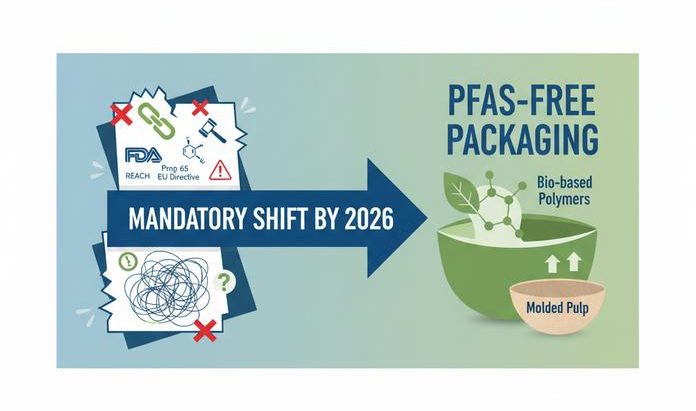
The push for safer, greener packaging is more than a trend—it’s a legal reality barreling toward 2026. Here’s what brands need to stay ahead.
Overview of FDA Food Contact Compliance
- Lipsticks and glosses count as “indirect food contact” items.
- The FDA requires materials not migrate harmful substances under expected use.
- Brands must ensure all colorants, coatings, and adhesives meet GRAS or approved additive status.
You can’t just slap on any coating or pigment anymore—not unless you want regulatory heat. For those working with compliance teams, understanding how food-grade materials intersect with cosmetic packaging is crucial when switching to PFAS-free options.
Understanding REACH Substance Restrictions
- REACH bans the use of certain high-concern chemicals like long-chain PFAS.
- Brands must prove chemical traceability back through the supply chain.
- Safer alternatives such as bio-based polymers are now favored under updated EU rules.
REACH doesn’t mess around with half-measures—it’s about full transparency and accountability across sourcing, formulation, and production lines. If you’re asking “what are PFAS-free packaging materials,” you better be ready to show your homework.
California Proposition 65: What You Need to Know
• Requires labeling if products expose users to chemicals known to cause cancer or reproductive harm—including many PFAS types • Forces companies selling in California to rethink their ink bases, glue systems, and barrier layers • Encourages switchovers to cellulose-based wraps or compostable fiberboard inserts
California Proposition 65 is not waiting around for federal cues—it’s already enforcing stricter mandates that hit lip product makers square in the face if they don’t watch their material choices.
EU Packaging Directive Conformity for Lip Products
This one’s heavy on eco-design principles:
– All lipstick tubes must be recyclable or reusable by design; no more mixed-material nightmares. – Eyeshadow palette trays? Must ditch toxic additives and opt for minimal-impact plastics like mono-material PP or PETG. – Labels and inks? Biodegradable if possible—or at least free from restricted substances under Article 11 of the directive.
If you’re wondering what are PFAS-free packaging materials that pass muster here—think molded pulp trays, sugarcane bagasse shells, or starch-based polymer blends that tick both safety and recyclability boxes under this evolving regulatory framework.
Each regulation brings its own flavor of pressure—but together they form an unavoidable wave of policy changes pushing every brand toward cleaner packaging by 2026.
Alternatives to PFAS: Safe Materials for Lip Products
Curious about ditching the forever chemicals? These eco-forward packaging swaps are changing the game in sustainable cosmetic packaging.
Molded Pulp Packaging vs. Traditional Plastics
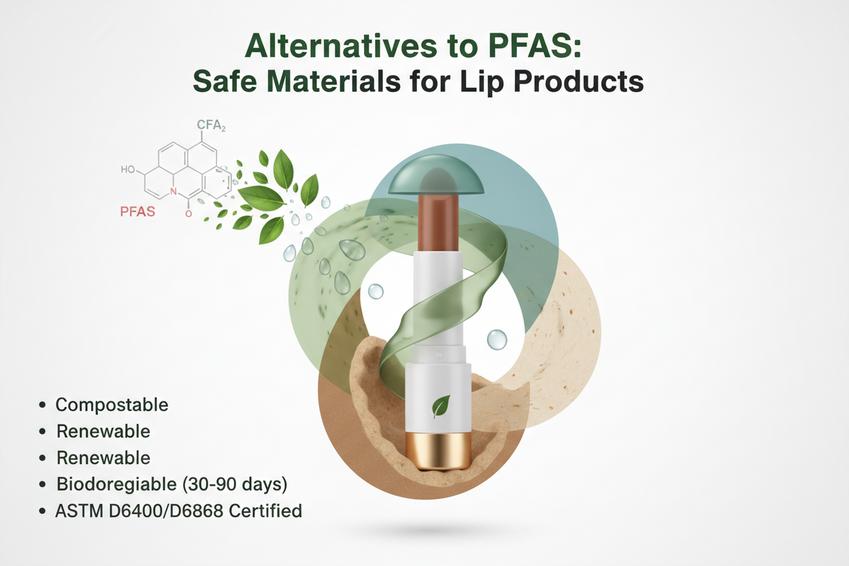
Molded pulp packaging is a low-key hero for anyone trying to go green with their lip product containers. It’s made from recycled paper or sugarcane waste, and it breaks down way faster than plastic—no landfill guilt here.
- ✅ Compostable in home and industrial settings
- 🌍 Made from renewable raw materials like bamboo or bagasse
- 🔥 Heat-resistant and strong enough for shipping
Compared to traditional plastics, molded pulp skips all the fluorine-free materials drama while still protecting your goods. Plus, most versions meet strict compostability standards like ASTM D6400.
Biodegradable Plantable Paper: A Sustainable Choice
Biodegradable plantable paper does double duty—it wraps your lipstick box and grows wildflowers when tossed in soil. That’s not just cute; it’s clever.
- Embeds native seeds directly into packaging fibers
- Fully breaks down within 30–90 days depending on climate conditions
- Uses soy-based inks, avoiding synthetic dyes and PFAS alternatives
Perfect for brands looking to connect with eco-conscious buyers who care about cosmetic safety just as much as they do about aesthetics.
Seaweed-Based Packaging Films for Eco-Friendly Products
💧 Seaweed films are naturally water-repellent, making them ideal liners inside lipstick tubes or compact boxes.
• Derived from red algae species like Kappaphycus alvarezii • Certified biodegradable under ASTM D6868 standards • Offers oxygen barrier properties without synthetic polymers
These films give you that sleek finish without any of the shady chemicals found in conventional coatings. A total win if you’re chasing that clean beauty vibe using green chemistry principles.
Algae-Based Protective Layers: An Innovative Option
Algae-based layers are turning heads in the cosmetic world thanks to their water-dispersible barrier properties. They’re applied like a varnish but dry into a breathable coating that keeps moisture out—without locking toxins in.
You’ll find these coatings used on inner box linings or even directly over printed labels where they act as a natural shield against humidity and oil transfer. As part of the new wave of fluorine-free materials, they’re helping redefine what clean packaging really means.
Wax Emulsion Coatings As a Natural Alternative
Grouped by Source Type:
🍃 Plant-Based Waxes:
- Carnauba wax gives high-gloss protection
- Candelilla wax adds flexibility
🐝 Bee-Derived:
- Beeswax offers excellent moisture resistance
- Blends well with emulsifiers for smooth application
🌾 Synthetic-Free Binders:
- Water-based emulsions avoid petrochemicals
- Fully compatible with cardboard substrates
Wax emulsions coat your lipstick cartons without needing any sketchy additives—just good old-fashioned nature doing its thing. Perfect if you’re after PFAS alternatives that actually work under real-world conditions while keeping things pretty on the outside and safe on the inside.
Top 5 Benefits of PFAS-Free Lip Products
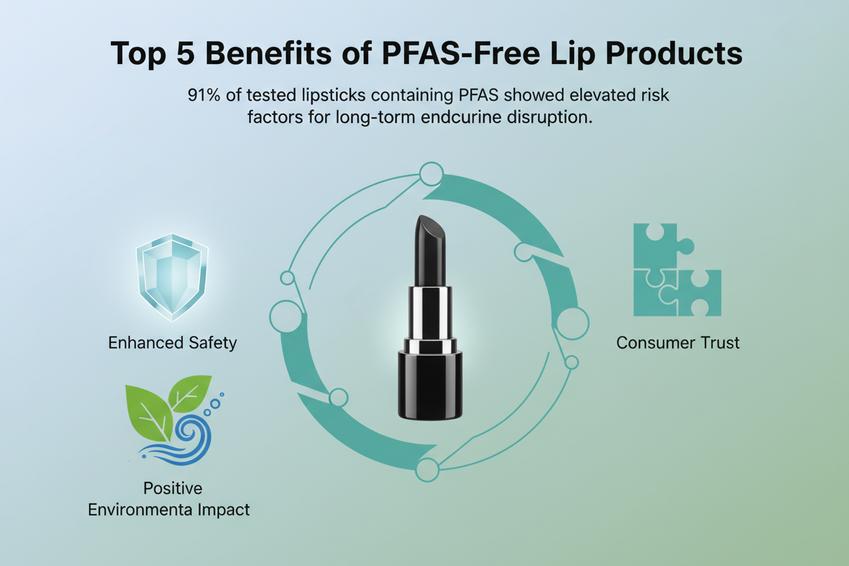
PFAS-free lip care is more than a trend—it’s a shift toward safer, smarter beauty choices with real perks for people and the planet.
Enhanced Safety: Reducing Health Risks
• Swapping out PFAS means cutting direct exposure to long-chain fluorinated compounds that build up in the body over time. That’s huge for anyone who wears lip products daily. • Formulas made with non-toxic ingredients reduce allergic reactions and skin irritation—especially around the sensitive mouth area. • Even packaging gets safer when you nix PFAS—think blush container solutions that don’t leach chemicals into your purse or makeup bag.
According to a 2024 report by Environmental Working Group, “91% of tested lipsticks containing PFAS showed elevated risk factors for long-term endocrine disruption.” That’s not worth the shimmer.
Environmental Impact: Promoting Sustainable Practices
- Compostable tubes and caps reduce landfill waste significantly—especially when paired with biodegradable fillers inside.
- Brands using soy-based printing ink options cut down on petroleum-derived pollutants during production.
- Compostable adhesive labels? They’re small, but they matter—they break down cleanly without leaving microplastics behind.
When you eliminate PFAS from both product and packaging, you’re helping detox ecosystems as much as your own routine.
Consumer Trust: Attracting Eco-Conscious Buyers
• Transparency sells—especially when it comes to sourcing raw materials or disclosing full ingredient lists online. • Ditching synthetic dyes for mineral-free pigment alternatives builds credibility with clean beauty fans who read every label twice. • Real-time supply chain transparency reporting? It turns casual buyers into loyal repeat customers who advocate for your brand.
People want brands that walk the talk—and ditching PFAS is a bold move that speaks volumes about values.
What Are PFAS-Free Packaging Materials?
PFAS-free packaging materials are exactly what they sound like—no perfluoroalkyl substances hiding anywhere near your lips or eco-friendly tubes.
Short-tail variations like “PFAS-free,” “packaging materials,” and “PFAS alternatives” pop up across discussions on sustainable cosmetics because they matter now more than ever.
These alternatives include:
- Molded pulp containers made from recycled fibers
- Plant-based bioplastics derived from corn starch
- Water-resistant barriers using natural waxes instead of fluoropolymers
Choosing these options not only supports clean beauty standards, it actively reduces chemical load on both consumers and the environment.
Why It Matters Now More Than Ever
Clean beauty isn’t just hype—it’s becoming policy across global markets faster than expected:
● The EU has already proposed restrictions on over 10,000 types of PFAS by late 2025; U.S. states like California aren’t far behind. ● Consumers are savvier now—they research ingredients before buying, especially when it comes to lip care they ingest daily. ● Major retailers are phasing out products that don’t meet new sustainability benchmarks—including those with hidden fluorinated coatings.
As demand grows for sustainable cosmetics, ditching toxic compounds isn’t optional—it’s survival strategy wrapped in lipstick form.
One brand leading this charge? Topfeelpack—with their early adoption of compostable adhesives and soy ink across their product lines, they’ve earned serious street cred among green-conscious buyers without shouting about it too loud.
FAQs about PFAS-Free Packaging Materials
What are PFAS-free packaging materials and why do they matter for lip products?
- Made without harmful fluorinated chemicals, ensuring purity in cosmetics.
- Often crafted using molded pulp packaging, biodegradable plantable paper, or seaweed-based films to avoid toxin migration into lip gloss tube components.
- Designed to meet FDA food contact compliance and REACH substance restrictions adherence while feeling safe to hold and beautiful on display.
Why should makeup brands consider molded pulp or mushroom packaging solutions over plastics?
These options bring a tactile warmth absent in cold synthetic shells:
- Fully compostable with no fluorinated coatings.
- Resilient through transit stress for blush container solutions and mascara applicator packaging alike.
- EU packaging directive conformity makes global trade smoother without hidden chemical risks.
How can wax emulsion coatings replace traditional fluoropolymer layers effectively? ✦
Soft yet protective: wax emulsions blend renewable sourcing with moisture resistance for foundation compact containers; paired with water-based varnish alternatives or clay-based coating options, they enhance finishing without losing eco-conscious charm.
How does supply chain transparency help buyers feel secure when shifting to PFAS-free materials? — branch line style
It offers more than compliance reports; it’s a narrative of trust where every step—material origin traceability data, environmental impact assessments—assures that from eyeshadow palette cases to compostable cardboard boxes, the journey stays authentically clean.
Which biodegradable printing inks fit sustainable beauty branding best?
| Ink Type | Key Benefit | Ideal Use Case |
|---|---|---|
| Soy-based printing ink options | Strong pigment clarity | Compostable adhesive labels |
| Algae pigment printing solutions | Natural tone variety | Lightweight blush container designs |
| Vegetable oil based inks | Smooth coverage | Foundation compact outer wraps |
| Mineral-free pigment alternatives | No heavy metal traces | Mascara applicator sleeve graphics |
Short description: Choosing these mineral-safe inks ensures vibrant palettes endure without staining the planet—and keeps product presentation true to its ethical promise.
References
- Per- and Polyfluoroalkyl Substances (PFAS) – NIEHS
- EPA’s PFAS Strategic Roadmap 2024 – EPA
- Cosmetics Laws & Regulations – FDA
- Perfluoroalkyl chemicals (PFAS) – ECHA
- Proposition 65 – OEHHA
- Standard Specification for Labeling of Plastics Designed to be Aerobically Composted – ASTM
- EWG Statement on Banned Toxic Chemicals – EWG

