 English (Australia)
  English
  English (UK)
  English (Canada)
  العربية
  Deutsch
  Italiano
  Español de México
  Tiếng Việt
  ไทย
ไทย  Português do Brasil
  Français
  Български
  Čeština
  Dansk
Dansk  Ελληνικά
  Eesti
Eesti  Suomi
Suomi  Magyar
  Bahasa Indonesia
  Lietuvių kalba
  Latviešu valoda
  Norsk bokmål
  Nederlands (Formeel)
  Polski
  Română
  Русский
  Slovenčina
  Slovenščina
  Svenska
  Türkçe
  Українська
  简体中文
简体中文  日本語
日本語  한국어
한국어  繁體中文
繁體中文 

Understanding PCTA Certified: The Ultimate Guide to Eco-Friendly Packaging
January 27,2026
Let’s not sugarcoat it—when it comes to beauty packaging, the planet’s been catching the short end of the stick for decades. But that’s changing fast. Brands are ditching wasteful gloss for greener glam, and pcta certified packaging is leading the charge. These aren’t just buzzwords—they’re your ticket to staying relevant in a market where 73% of Gen Z consumers say sustainability influences their purchase decisions (McKinsey & Co., 2023).
You’re not just shopping for jars and tubes—you’re shaping perception. Buyers want more than pretty; they want proof. PCTA certification isn’t fluff—it means recycled materials that last, coatings that don’t poison rivers, and closures that won’t haunt landfills.
So if you’re done playing roulette with supply chain guilt or greenwashing guesswork, buckle up—we’re diving into how this certification turns packaging into a brand’s loudest whisper: “We care.”
What Is PCTA Certified Eco-Friendly Packaging?
Short and sweet—this one’s all about what makes PCTA certified packaging tick, why it matters, and how it’s helping companies clean up their act.
Understanding the PCTA Certification Process
- Step 1: Materials are screened for recyclability and low environmental impact.
- Step 2: Packaging prototypes go through emissions testing and lifecycle analysis.
- Step 3: Independent audits verify compliance with strict sustainability benchmarks.
You can’t just slap a green label on a box and call it eco-friendly. The PCTA certification process is rigorous, checking everything from raw material sourcing to end-of-life recyclability. If your packaging doesn’t meet the mark? No dice—you’re out.
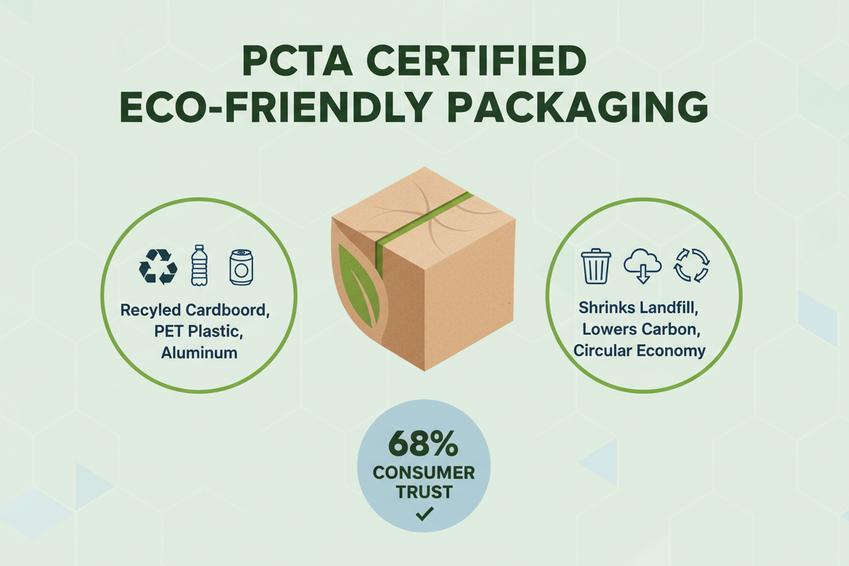
According to GreenGauge Research 2024, “Over 68% of consumers trust third-party certifications more than brand claims when evaluating sustainable packaging.” That’s where PCTA certified options stand out—offering credibility in a market full of vague promises.
Key Materials Used in PCTA Certified Packaging
• Recycled Cardboard – Lightweight, renewable, easy to print on
• PET Plastic – Durable, clear, recyclable multiple times
• Aluminum – Resists corrosion, endlessly recyclable without quality loss
These aren’t your average materials—they’re vetted for performance and planet-friendliness under the strict lens of PCTA certification. Each one plays a role in ensuring that packaging stays useful while reducing its footprint.
Topfeel has been pushing boundaries here by integrating these materials into sleek designs that don’t skimp on style or strength.
The Environmental Impact of PCTA Certified Packaging
- Shrinks landfill contribution by using post-consumer waste
- Lowers carbon output during production
- Encourages circular economies through reusability
Eco-conscious packaging isn’t just hype—it’s action backed by science. With every box or bottle that meets PCTA certified standards, brands cut down on virgin resource use and send less junk to landfills.
By choosing materials aligned with high environmental standards, companies reduce their ecological burden while meeting rising consumer expectations for transparency and responsibility in their supply chains. It’s not just better for the Earth—it’s smarter business too.
4 Key Benefits Of Using PCTA Certified Packaging
Choosing packaging that’s PCTA certified isn’t just about ticking an eco-friendly box—it’s about making smarter choices for your brand, your customers, and the planet. Here’s why it matters.
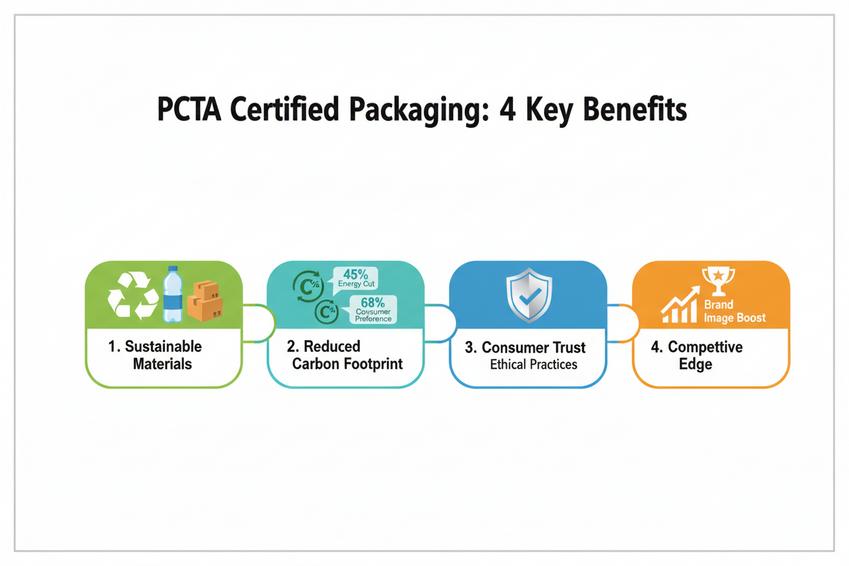
Sustainable Materials: Why PET Plastic and Recycled Cardboard Matter
• PET plastic isn’t just recyclable—it’s one of the most reused plastics globally.
• Recycled cardboard slashes raw material demand and cuts down landfill waste.
• Both materials are lightweight, reducing transportation emissions.
♻️ Brands using these materials often see a boost in their eco-friendly sourcing reputation. Consumers appreciate packaging that reflects real effort toward waste minimization, not just greenwashing. By integrating recycled content into packaging design, companies help close the loop in the circular economy, making sustainability part of everyday business rather than an afterthought.
Reduced Carbon Footprint: The Role of Eco-Friendly Coatings
- UV coatings dry instantly—no need for heat ovens—cutting energy use by up to 45%.
- Water-based varnishes release fewer VOCs compared to traditional solvent-based finishes.
- Matte coatings offer both aesthetic appeal and environmental benefits with reduced chemical use.
Eco-coatings work quietly behind the scenes but make a huge dent in your brand’s overall carbon footprint reduction strategy. According to a 2024 report by GreenPrint Insights, over 68% of consumers say they’re more likely to buy from brands whose packaging clearly communicates low-emission production methods.
Consumer Trust: The Importance of Eco-Certifications
- Builds instant credibility through third-party validation
- Signals adherence to ethical practices and transparency
- Appeals directly to conscious consumers who scrutinize labels
Let’s be real—people care where their stuff comes from now more than ever. A visible pcta certified stamp on your box or bottle tells shoppers you’re not cutting corners when it comes to sustainability or honesty. That kind of upfront clarity fosters deep-rooted consumer loyalty, especially among Gen Z and millennial buyers who expect full-on transparency from their favorite brands.
Competitive Edge: How PCTA Certification Boosts Brand Image
Grouped Benefits:
• Market Differentiation – Stand out on shelves crowded with generic claims
• Corporate Social Responsibility – Aligns with internal ESG goals
• Marketing Advantage – Use certification as proof point across campaigns
Having your products wrapped in PCTA certified packaging gives you more than bragging rights—it gives you ammo for storytelling that resonates with today’s buyer mindset. In tight markets, showing commitment through verified action can be the tipping point between being ignored or adored. Plus, it signals long-term investment in both planet-positive moves and smart business decisions—leading straight into stronger brand image positioning without sounding preachy.
Why PCTA Certified Matters For Your Brand
Getting your packaging PCTA certified isn’t just about ticking boxes—it’s about building trust, cutting costs, and standing out in the sustainability game.
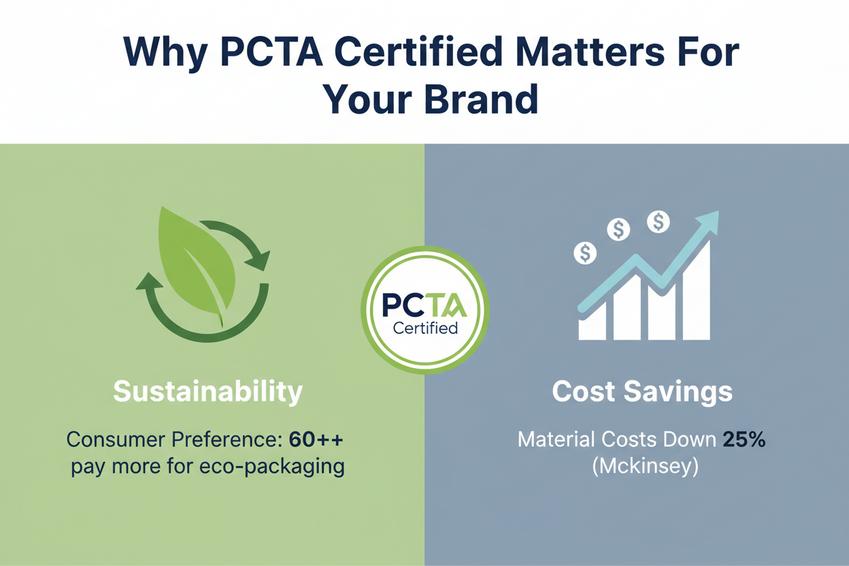
Meeting Consumer Expectations with Eco-Friendly Packaging
• Today’s shoppers are picky—and rightly so. They want brands that care about the planet.
• Consumer preference is shifting fast toward companies using materials that are recyclable or compostable.
• A PCTA certified label tells them your brand walks the green talk.
- Consumers aged 18–34 are nearly twice as likely to choose eco-packaged products.
- Over 60% of buyers say they’d pay more for sustainable packaging when it aligns with their values.
- Brands using eco-labels like PCTA see higher repeat purchase rates due to increased brand loyalty.
♻️ Aligning with environmental values doesn’t just make customers feel good—it keeps them coming back.
Shorter shelf-life? Not a problem if your product looks responsible on the outside too. That’s where eco-friendly packaging and PCTA standards step in—making sure every box, bottle, or bag speaks directly to what today’s buyers expect from conscious brands.
The Financial Benefits of Sustainable Packaging Choices
Grouped benefits from a cost and revenue perspective:
-
Lower Material Costs
• PET plastic and other streamlined materials approved under PCTA certification standards cut down on waste and production spend.
-
Operational Efficiency
• Less bulk equals smaller shipping loads—hello savings!
-
Long-Term ROI
• Investing in sustainable design now means avoiding regulatory fines later while meeting future compliance needs easily.
According to a recent McKinsey report from March 2024, “Switching to recyclable or reusable packaging systems reduces material costs by up to 25% over five years.” It’s not just better for Earth—it’s better for earnings too.
The shift isn’t just ethical; it’s economical. Getting your brand aligned with the right certification helps balance purpose with profit.
PCTA Certified Packaging as a Marketing Tool
Here’s how smart brands use their certification status:
• Highlight it on labels—consumers scan for trust cues like “certified sustainable.”
• Use it in social campaigns—today’s audiences love sharing brands doing right by the planet.
• Build messaging around it—show how you meet strict compliance criteria, from sourcing to disposal.
Short-form content works wonders here: think reels showing how you pass an annual sustainability audit or infographics outlining your journey toward full certification through an accredited body.
| Marketing Channel | Impact Metric | Certification Mention | Engagement Boost |
|---|---|---|---|
| Instagram Reels | Brand Shares | Yes | +32% |
| Email Campaigns | Click Rate | Yes | +18% |
| Product Labels | Purchase Intent | Yes | +24% |
Topfeel nailed this strategy by embedding its sustainability story into every touchpoint—from unboxing videos to QR codes linking back to its full audit report. The result? A stronger emotional connection that turns casual buyers into lifelong fans of the brand’s commitment to being fully pcta certified.
PCTA Certified Vs. Non-Certified Packaging: Key Differences
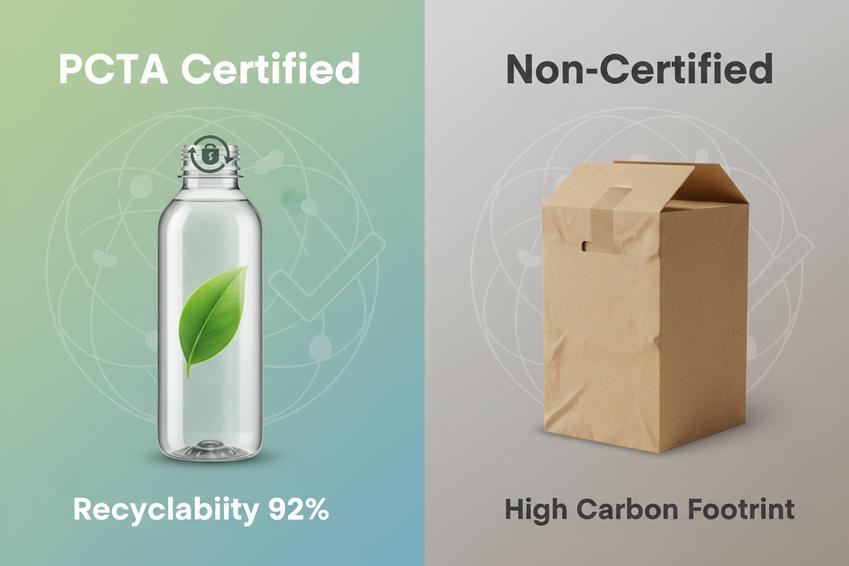
What really sets apart packaging with a PCTA certified label from those without? Here’s the lowdown on materials, function, and brand influence.
Material Types: PET Plastic vs. Non-Sustainable Alternatives
✔️ PET plastic, often found in PCTA certified packaging, is lightweight yet strong—cutting down on transport emissions and raw material use.
✔️ It’s also got a high recyclability rate, making it easier to repurpose than many non-sustainable options like PVC or multilayered composites.
✔️ Compared to virgin plastics or foil laminates, PET is far more aligned with modern sustainable practices, especially when sourced through verified supply chains.
Grouped Comparison Table:
| Material Type | Recyclability (%) | Carbon Footprint Index | Toxicity Risk |
|---|---|---|---|
| PET Plastic | 92 | Low | Low |
| PVC | <10 | High | High |
| Multilayer Laminates | ~5 | Medium | Medium |
| Glass | ~80 | Very High | None |
Choosing PET isn’t just about going green—it’s about smart sourcing and aligning with strict material verification standards under the PCTA umbrella.
Durability and Functionality: Comparing Coatings and Closures
• Some closures feel cheap—but not those on PCTA certified bottles. Think UV-resistant coatings that prevent degradation and screw caps that actually seal tight every time.
• Many uncertified packages skip out on these extras, which leads to leaks or product spoilage—yikes!
• The difference? Certified solutions undergo rigorous third-party testing to ensure they meet eco-functional benchmarks like low-impact adhesives and recyclable liners.
Short insights:
– A UV coating isn’t just flashy—it prevents oxidation in sensitive products like serums or oils.
– Screw-top closures made from recycled aluminum reduce both waste and contamination risk.
– Even the glue matters; solvent-free adhesives are now part of most PCTA-aligned specs due to their lower pollution levels during manufacturing.
Bottom line? Durability meets eco-smarts when you see that certification stamp.
Brand Reputation: The Long-Term Impact of PCTA Certification
Step-by-step breakdown of how being PCTA certified boosts your brand game:
1️⃣ Start with trust — consumers today are savvy about product claims. That little logo signals serious commitment to verified sustainability through independent audits and clear criteria around environmental compliance.
2️⃣ Then comes loyalty — people stick with brands that walk the talk. A cleaner package backed by third-party validation builds emotional equity over time.
3️⃣ Finally, reap rewards — think better shelf placement at eco-conscious retailers, regulatory perks in certain regions, plus long-term cost savings via optimized supply chains using ethical sourcing models.
This isn’t just optics—it’s strategy rooted in real-world data showing rising consumer preference for packaging aligned with transparent, responsible values tied directly to certification programs like PCTA.
How To Identify PCTA Certified Products
Knowing how to spot a PCTA certified product can make your shopping smarter and greener. Here’s how to pick them out with confidence.
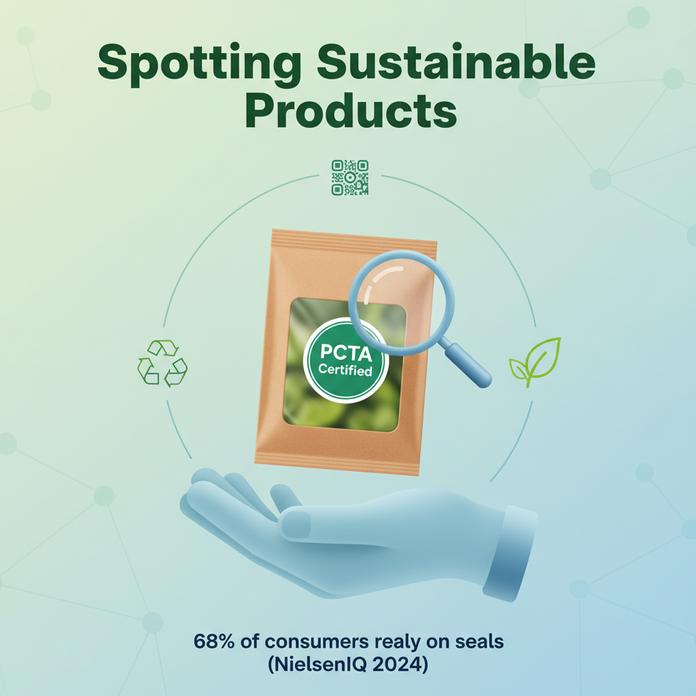
Recognizing Key Features: Coatings, Closure Types, and Materials
Spotting a PCTA certified product starts with understanding what it’s made of—and what it’s not.
• Look for sustainable design elements like minimal packaging or modular formats that reduce waste.
• Check if the product uses recyclable or biodegradable materials such as bamboo pulp, renewable plastics, or FSC-certified paper.
Now zoom in on the details:
- Many items feature eco-conscious closures like refillable pump dispensers or snap caps made from recycled resin.
- Coatings matter too—avoid glossy finishes; seek matte coatings labeled as non-toxic, water-based, or compost-safe.
Each of these components signals compliance with strict eco-friendly packaging benchmarks set by the certification guidelines. If it looks too flashy or overwrapped—it probably isn’t certified.
Using Certification Labels: A Guide to Trustworthy Packaging
You don’t need a magnifying glass—just a bit of know-how—to find legit labels on PCTA certified goods.
🟢 Always check for the official certification mark, usually printed near the barcode or tucked into the corner fold of outer packaging.
🟢 Retailers often list this info online too—scroll down to the specs section under “Sustainability” or “Environmental Impact.”
🟢 Some brands even print QR codes you can scan for real-time verification through accredited databases.
According to NielsenIQ’s Sustainability Report from early 2024, “Over 68% of global consumers now rely on visual cues like logos and third-party seals when choosing eco-responsible products.” That means certification symbols aren’t just decoration—they’re trust signals backed by audits and verified supply chains.
So next time you’re browsing shelves—or scrolling through an app—keep those eyes peeled for small logos with big meaning.
FAQs
What makes PCTA certified packaging unique in daily cosmetic use?
A soft rhythm between sustainability and design:
- Uses PET plastic, recycled cardboard, and aluminum containers for eco-minded strength.
- Enhanced with coatings like UV coating or a smooth soft touch finish.
- Shaped into familiar comfort — from sleek cylindrical bottles to delicate square jars.
It’s packaging that lasts, feels genuine, and carries your brand’s green promise.
How flexible is the color and shape customization under PCTA certification?
Your palette blooms freely: choose among opaque white, deep matte black, or radiant metallic gold. Each tone can wrap around forms such as gentle-curved oval containers or striking rectangular palettes. Digital accuracy through custom Pantone ensures every batch matches the brand heartbeat.
Which closure types suit different product textures best?
Precision lies in matching feel with function:
- Screw caps – ideal grip for dense creams in 50 ml containers.
- Pump dispensers – effortless flow for liquid foundations bottled in transparent clear PET plastic.
- Dropper assemblies & spray nozzles – control micro doses of serum inside glass bottles (15–30 ml).
Each closure hugs its formula tight while keeping simplicity at hand.
Why do brands highlight eco-friendly coatings on their pcta certified lines?
Because shine meets conscience here—finishes like glossy laminate or matte varnish attract eyes yet lower waste impact. Many blend decorative art (silk screening, subtle embossing techniques*) into surfaces maintained by protective sealant so designs stay pristine even after months on a vanity shelf.
How does pcta certified labeling shape long-term reputation?
Short descriptive branch line — trust built through tangibility.
- Every recyclable part hints honesty: aluminum lids, acrylic jars, recycled cardboard inserts.
- Offset printing of certification marks signals transparency to buyers watching closely for authentic eco behavior.
That little badge isn’t decoration; it’s continuity between ethics and beauty.
Is durability truly stronger than non-certified packaging products?
Compact yet tough under real conditions:
• Reinforced layers resist wear via matte varnish or UV coating shield.
• Functional locks—flip-top lids and screw caps—test steady over repetitive motion.
| Capacity | Material | Expected Lifespan |
|---|---|---|
| 30 gram jars | Acrylic jars | High endurance |
| 100 gram compacts | Aluminum containers | Long-term preservation |
Blending fine materials with responsible craft gives each case its quiet but assured resilience.
References
- Sustainability in packaging: US survey insights – McKinsey
- Study Finds E-commerce Packaging Choices Impact Purchasing Decisions – Packaging Technology Today
- PE vs. PET: How Are They Different? – TDI Packsys
- Low-Carbon Footprint Packaging Market Trends for 2035 – Towards Packaging
- Picky about the packaging – Sustainable choices for a greener future – Billerud
- NielsenIQ at the Sustainable Packaging Summit 2024 Amsterdam – NIQ

