 English
  English (UK)
  English (Australia)
  English (Canada)
  العربية
  Deutsch
  Italiano
  Español de México
  Tiếng Việt
  ไทย
ไทย  Português do Brasil
  Français
  Български
  Čeština
  Dansk
Dansk  Ελληνικά
  Eesti
Eesti  Suomi
Suomi  Magyar
  Bahasa Indonesia
  Lietuvių kalba
  Latviešu valoda
  Norsk bokmål
  Nederlands (Formeel)
  Polski
  Română
  Русский
  Slovenčina
  Slovenščina
  Svenska
  Türkçe
  Українська
  简体中文
简体中文  日本語
日本語  한국어
한국어  繁體中文
繁體中文 

The 2026 Guide to Flawless Cosmetic Labeling Compliance
January 16,2026
Ever picked up a sleek new serum or lipstick and squinted at the label, wondering if “clean” really means clean—or just clever marketing? With cosmetic labeling rules tightening faster than a jar lid with lotion on your hands, brands that don’t get their act together might find themselves benched by regulators. The FDA isn’t playing around anymore: ingredients must be transparent, claims must be legit, and packaging for cosmetics better walk the talk.
“By 2026, 78% of global beauty consumers will prioritize regulatory compliance and sustainability when choosing products,” reports Mintel’s Global Beauty Report. Translation: if your packaging can’t prove it’s safe, sustainable, and certified—it won’t sell.
So yeah… packaging is no longer just about looking pretty on a shelf. It’s about trust. And in this guide? We’re breaking down how to stay ahead without getting buried under red tape or glittery distractions.
Understanding Cosmetic Labeling Regulations for 2026
Getting your packaging right isn’t just about looks—it’s about legal survival. Here’s what you need to know before your next product hits the shelf.
Key Regulatory Entities Impacting Cosmetic Labeling
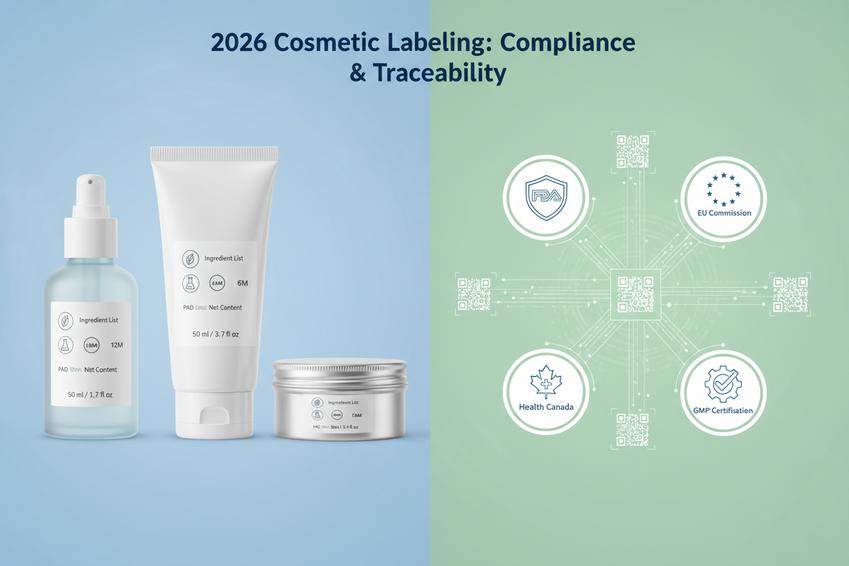
• The FDA mandates ingredient transparency and safety data for all cosmetic products sold in the U.S. market, specifically under the Modernization of Cosmetics Regulation Act of 2022 (MoCRA). • The EU Commission enforces Regulation EC No.1223/2009, requiring a Product Information File and labeling in local languages. • In Canada, Health Canada oversees cosmetics under the Food and Drugs Act, focusing on claims accuracy and allergen declarations.
“Global regulators are tightening oversight as consumer safety concerns grow,” according to Mintel’s Global Beauty Trends Report, Q4 2024.
Also worth noting: the PCPC helps brands interpret guidelines, while ISO standards like ISO/TR 24475 support harmonization across borders.
The Role of Responsible Packaging Types in Compliance
Different packaging types require different labeling strategies—but here’s where most folks trip up:
- Primary Packaging: Think jars, bottles, or tubes—these must display core info like net weight and usage instructions.
- Secondary Packaging: Boxes or sleeves often carry extended information such as full ingredient lists or branding details.
- Sustainable cosmetic packaging materials like bamboo or compostables need special ink types that won’t compromise recyclability.
- Labels on containers made with recycled plastics often fade faster; compliance means using UV-resistant ink.
- Glass bottles might seem elegant but require adhesive labels that withstand temperature shifts during shipping.
If you’re not matching label durability with container material, you’re flirting with non-compliance.
Common Labeling Requirements for Different Material Types
Grouped by material type, here’s what labeling needs look like:
Plastic Containers:
- Must show an accurate Ingredient List
- Need a clear expiration date or a visible Period After Opening (PAO) icon
- Require durable printing techniques due to flexible surfaces
Glass Bottles:
- Often need tamper-evident seals
- Should include embossed batch numbers for traceability
- Must display storage warnings if contents are light-sensitive (Warnings & Precautions)
Metal Tins:
- Require rust-proof coating under labels
- Typically include heat-resistant label adhesives
- Must list both metric and imperial units for volume (Net Content)
Each material calls for its own toolkit of label adhesives, print methods, and regulatory symbols—mess one up and you’re back at square one.
Certifications to Watch: Ensuring Compliance in 2026
Short bursts of info you’ll want on your radar:
• A valid GMP Certification will be non-negotiable come mid–2026; audits will intensify across EU zones. • Products claiming ethical sourcing? You’ll need proof via a recognized standard like the COSMOS Standard, especially if exporting globally. • Don’t forget market-specific credentials—like halal certification for Southeast Asia or the Middle East. • Want vegan status? Ensure third-party verification of every raw material used (Vegan Certification)—even colorants! • For cruelty-free claims: only certifications from groups like Leaping Bunny will hold water legally (Cruelty-Free Certification). • ISO standards such as ISO 22716 are becoming baseline expectations—not value-adds anymore.
By early next year, expect digital traceability tools tied directly into these certifications—QR codes aren’t just trendy; they’re becoming mandatory identifiers on cosmetic labeling worldwide.
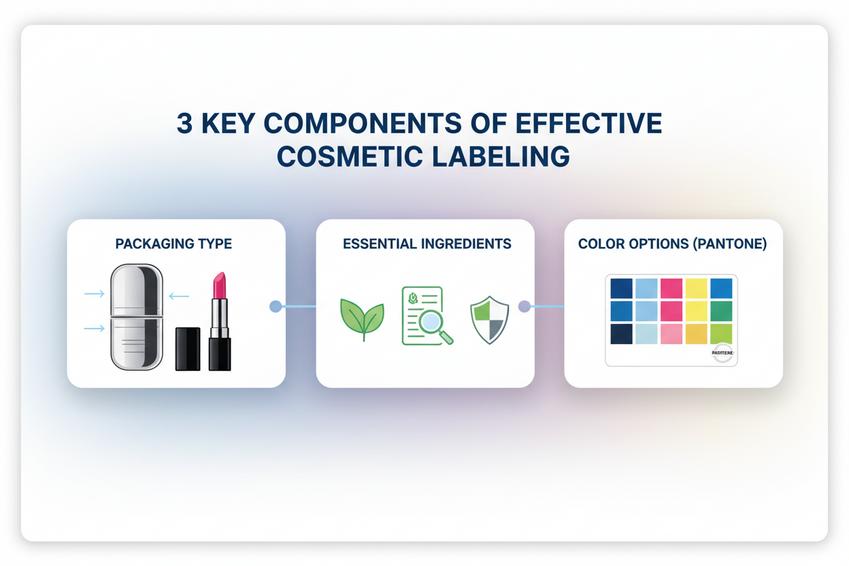
3 Key Components of Effective Cosmetic Labeling
Nailing down the right details on your pretty makeup packaging? These three essentials make or break how consumers see your product.
Packaging Type: Compact Cases vs. Lipstick Tubes
Different shapes, different rules. When it comes to compact cases and lipstick tubes, labeling isn’t one-size-fits-all—it’s more like “fit what space allows.”
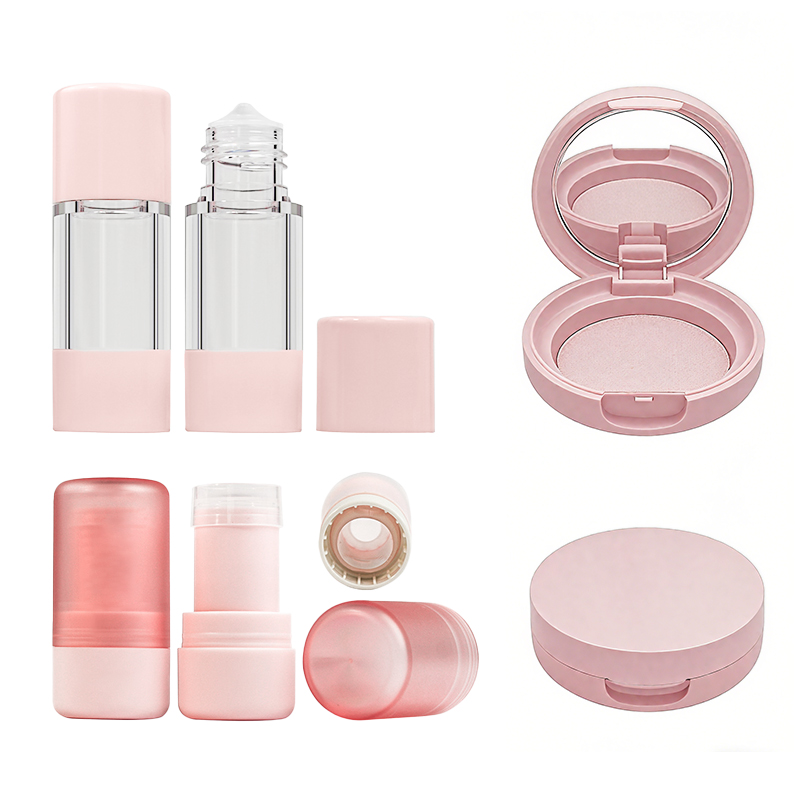
- Powder compact cases offer a broader labeling area, making them ideal for listing full ingredient claims, brand logos, and even QR codes.
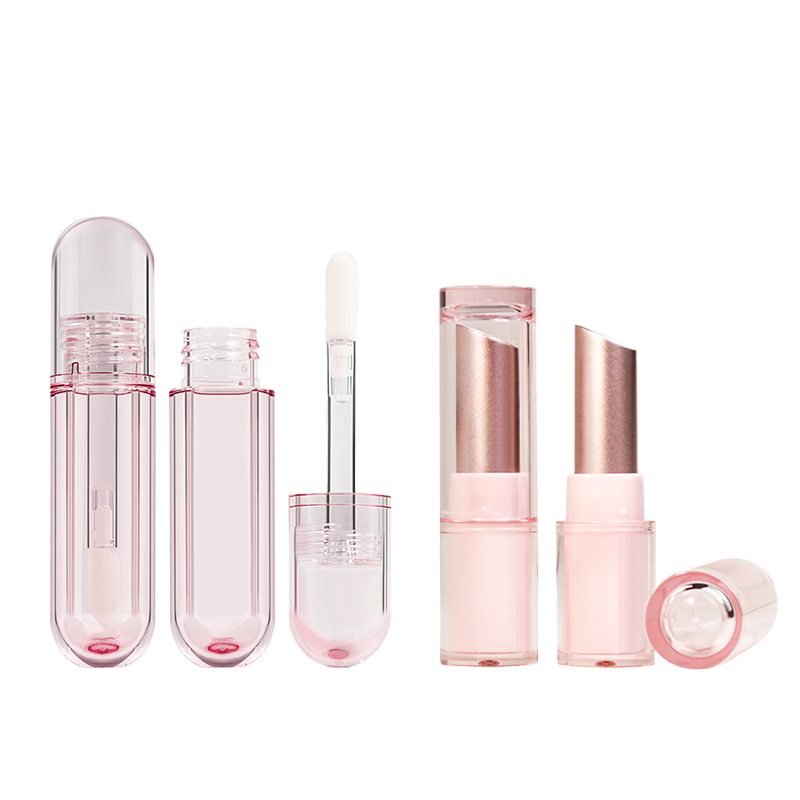
- On the flip side, slim lip stick tube designs require clever execution—think peel-back labels or shrink sleeves—to meet regulatory needs without crowding the space.
- Material-wise, the compatibility between inks and plastics matters. Some packaging materials don’t play nice with certain adhesives or finishes.
You also have to factor in both primary packaging (what holds the product) and secondary packaging (like boxes). Each layer has its own compliance needs depending on where you sell.
Essential Ingredients and Their Labeling Standards
Labeling ingredients isn’t just about transparency—it’s about trust, safety, and legal survival. Here’s how it breaks down:
| Ingredient Type | Label Requirement | Common Format Used | Regulatory Concern |
|---|---|---|---|
| INCI names | Mandatory | Latin/Scientific Naming | Global consistency |
| Allergens | Must be listed separately | Bolded or highlighted | Consumer health alerts |
| Preservatives | Required if present | Listed by function/name | Shelf life & safety |
| Fragrance disclosure | Often required | “Fragrance” or specific | Potential irritants noted |
Don’t forget active compounds too—if you’re touting benefits like “hydration” or “anti-aging,” those must be backed by actual listed ingredients, not marketing fluff.
Color Options: How Pantone Matching Makes a Difference
Color is more than pretty—it’s powerfully persuasive in cosmetic branding. That’s where the Pantone system steps in.
• Brands use it to ensure exact shade matching across batches—no surprises when your blush compact doesn’t match its box. • It keeps your visual identity tight across all channels—from digital ads to shelf display. • Consistency also boosts consumer trust; nothing feels off-brand faster than mismatched pinks.
From print finish to ink absorption on different surfaces, every material affects how that color shows up. Using Pantone ensures that no matter what you print on—plastic lids, foil wraps, glossy cartons—the result pops with reliable vibrance and crispness thanks to high-end print quality, strong color accuracy, and killer shelf appeal built around solid visual storytelling.
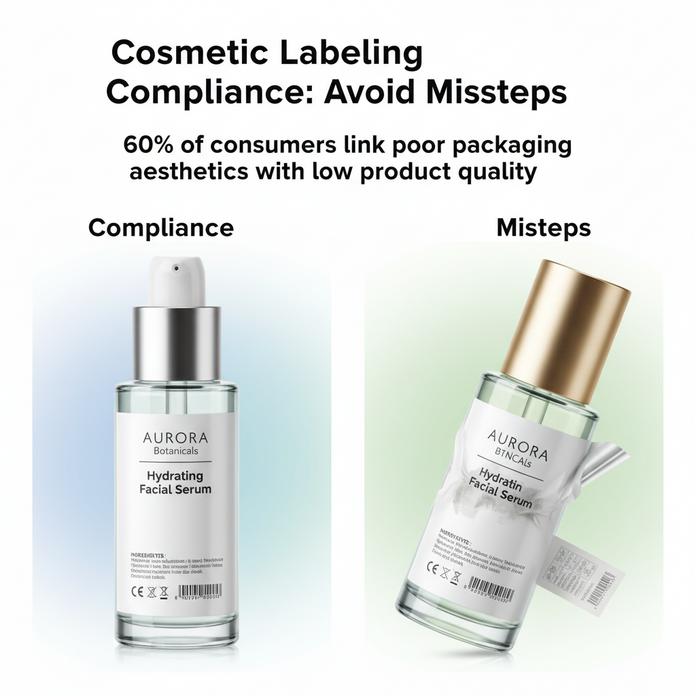
Cosmetic Labeling Compliance: Common Missteps to Avoid
Even small custom cosmetic packaging choices can mess with your cosmetic labeling accuracy. Here’s where brands often slip up—and how to fix it fast.
Incorrect Closure Types Leading to Labeling Errors
Messing up your closure types doesn’t just look bad—it throws off the whole label game. Here’s what you need to watch:
- Dispenser mechanisms like pumps or droppers can shift label alignment if not accounted for during design.
- Using a flip cap when your template was made for a screw top? That’s a recipe for crooked label placement.
- A mismatch between the container design and closure can force awkward label resizing, leading to compliance issues.
- Rounded closures may interfere with vertical label flow, especially on cylindrical bottles.
- Oversized caps often cover printed content—yep, even your legally required info might get hidden.
- Poorly fitted closures may cause shifting during transit, which means labels peel or wrinkle before they hit shelves.
- Regulatory bodies expect consistency between packaging components and labeling zones—deviate and you’re flagged.
Every piece of the package—from base to lid—needs harmony so your cosmetic labeling stays tight and compliant. Don’t let an ill-fitting cap throw off everything else.
Neglecting Decoration Type: The Importance of Label Application
Skipping over the right decoration method is one way brands sabotage their own shelf appeal—and even worse, risk non-compliance. This isn’t just about looks; it’s about function too.
• Direct printing methods like silk screening ensure labels don’t peel or bubble over time. They also hold up better against moisture and oils found in bathrooms or handbags.
- Adhesive-backed labels might seem easy—but if they’re not matched correctly with the container’s substrate materials, they’ll lift at the edges within weeks. • According to Mintel’s Packaging Trends Report (2024), over 60% of consumers link poor packaging aesthetics with low product quality—even before trying it. That’s a trust-killer right there. – The wrong combo of adhesive type and surface finish leads to sliding text or smudged logos, putting both branding and legal info at risk.
Shortcuts here cost more than you think—not just in reprints but in lost credibility too. Smart brands treat label application, print durability, and visual clarity as non-negotiables when planning their next launch in skincare or makeup lines.
When your decoration method supports both beauty and durability, your cosmetic labeling doesn’t just meet standards—it elevates them.
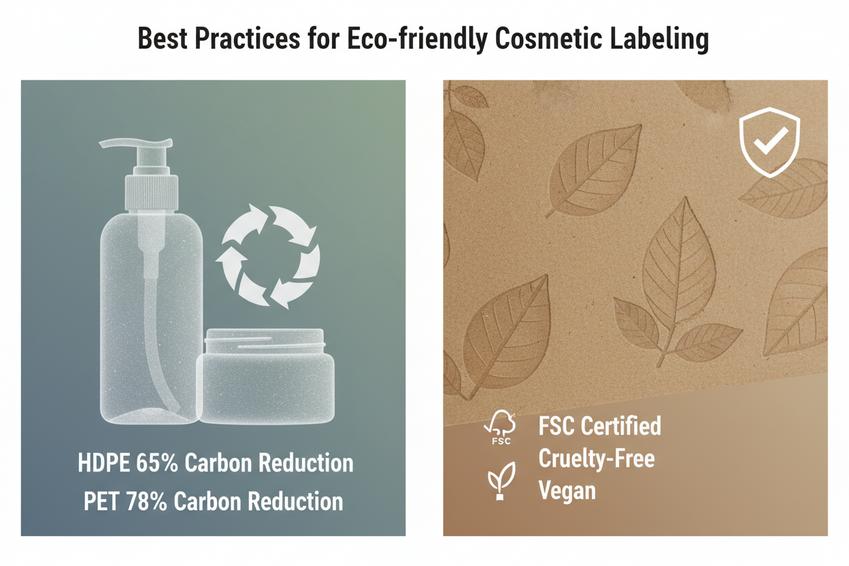
Best Practices for Eco-friendly Cosmetic Labeling
A smart mix of materials, sourcing, and design helps brands clean up their act—literally—in the world of cosmetic labeling.
Using Recycled Plastics for Sustainable Packaging
♻️ Tossing plastic into a bin isn’t enough anymore. To really make a dent, brands are shifting toward recycled plastics—especially PCR materials—to cut virgin plastic use and keep packaging in the loop.
| Material Type | PCR Percentage | Carbon Footprint Reduction (%) | Common Use Cases |
|---|---|---|---|
| HDPE | 50% | 65% | Bottles, caps |
| PET | 75% | 78% | Jars, transparent tubes |
| LDPE | 40% | 49% | Flexible pouches |
| PP | 60% | 53% | Closures, dispensers |
This shift supports a circular economy, where old becomes new again. Brands exploring sustainable packaging through plastic recycling aren’t just ticking boxes—they’re leading innovation. And with smarter material sourcing, even luxe items can look good without trashing the planet.
Eco-friendly Cardboard Decorations: What You Need to Know
• Want your packaging to pop without hurting Mother Earth? Try eco-friendly cardboard with natural textures and earthy tones.
• Add flair using:
- Embossed logos instead of foil stamping
- Soy-based inks over petroleum ones
- Die-cut windows that skip plastic entirely
• Many brands now opt for FSC-certified board with high recycled content, which blends style with substance.
💡 Tip: When it comes to decorative elements on labels or secondary packaging, ditch glitter and laminates—they’re landfill nightmares. Instead, go biodegradable or compostable. With clever packaging design, less is truly more when you’re working toward eco goals in your cosmetic label game.
Supplier Certifications: The Key to Eco-compliance
To stay legit in today’s sustainability-savvy market, you need more than good intentions—you need receipts. That’s where verified supplier certifications come in.
- Look out for ISO standards like ISO 14001, which proves strong environmental management.
- Ask suppliers about third-party audits tied to ethical labor and low-impact production.
- Check if they follow globally recognized frameworks like Global Recycled Standard (GRS).
These proofs help ensure your entire supply chain passes the sniff test—not just your front-facing branding. From responsible material sourcing to verified eco claims, this is how you build trust into every inch of your product’s outer shell—aka its label and box.
By locking down certified partners who meet tough environmental standards, you’re not just playing by the rules—you’re setting them in the world of sustainable cosmetic branding.
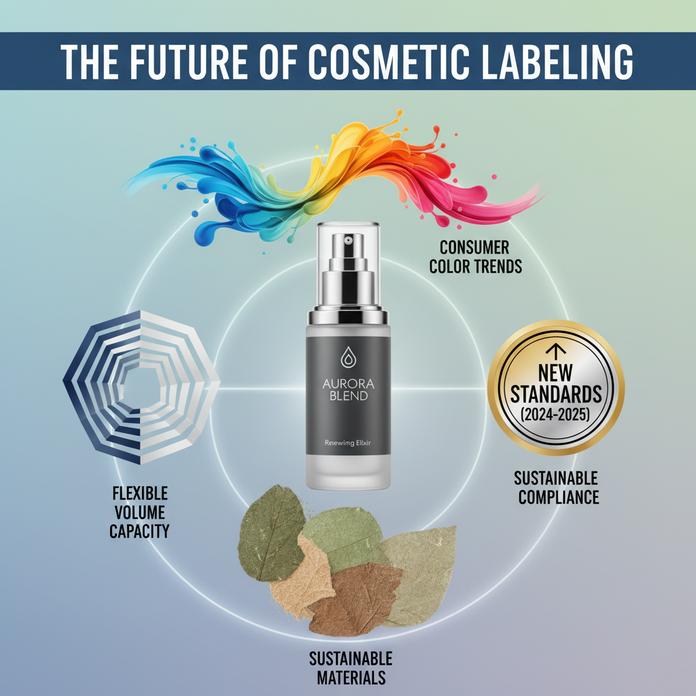
The Future of Cosmetic Labeling Regulations
Big shifts are coming to how products get labeled and packaged—so let’s break down what’s changing and why it matters.
Innovations in Volume Capacity for Future Packaging
• Brands are playing with flexible volume measurement systems, especially for travel-friendly formats like 100ml squeeze tube lip gloss containers. • Expect more precise fill levels, making it easier for consumers to see what they’re actually getting.
- Manufacturers are testing collapsible pouches that adjust to different capacity standards without altering the packaging shape.
- Rigid containers with adjustable inserts could become the norm, offering variable product volumes under a single SKU.
– These changes demand updated labeling accuracy, as fluctuating volumes must still meet compliance rules.
Consumers want transparency, and that includes how much product they’re buying—down to the last drop.
Shorter tubes, wider jars, refillable pods—each new design forces a rethink on what counts as “standard” volume for cosmetic labeling.
Potential Changes in Material Types and Sustainability
Grouped by function, here’s what’s trending:
Eco Materials: • Recycled aluminum replacing virgin metals • Paperboard tubes overtaking plastic sleeves
Biodegradables: • PLA-based plastics entering mainstream use • Sugarcane-derived HDPE popping up on shelves
Sourcing Ethics: • More brands publishing full traceability reports • Certifications tied directly to raw material origin
Each material shift impacts how cosmetic labeling works—from ink absorption on paperboard to adhesive compatibility with compostables. And yes, even those tiny font sizes need rethinking when you’re printing on textured bamboo or matte kraft paper.
The Impact of New Certification Standards on the Industry
| Certification Body | Focus Area | Launch Year | Compliance Difficulty |
|---|---|---|---|
| EcoCert | Organic & natural claims | 2025 | Medium |
| ISO 16128 | Ingredient transparency | 2024 | High |
| EWG Verified | Health safety criteria | Ongoing | Very High |
| Cosmos | Sustainable sourcing | 2025 | Medium |
These incoming certification standards won’t just affect ingredients—they’ll reshape packaging too. Think stricter audits on recyclability claims or penalties for non-compliant label adhesives.
It’s not just about passing tests anymore; staying market-ready means keeping up with shifting definitions of “clean,” “safe,” and “green.”
Anticipating Trends: Color Options and Consumer Preferences
Color trends aren’t just about pretty packaging—they’re emotional triggers that can make or break a sale:
- Pastels signal calmness; great for skincare lines.
- Metallics scream luxury; expect them across high-end serums.
- Gradient fades? They’re hot right now and scream modernity.
- Matte blacks continue dominating masculine grooming products.
- Holographic sheens are nudging into Gen Z beauty kits.
Brands are using this data from consumer behavior studies to fine-tune their packaging aesthetics, aligning colors with buyer psychology while ensuring consistency in label design across SKUs.
Cosmetic labeling has evolved into something far more than compliance—it’s now a key player in brand identity and shelf appeal alike.
FAQs about Cosmetic Labeling
1. How does packaging type affect cosmetic labeling compliance?
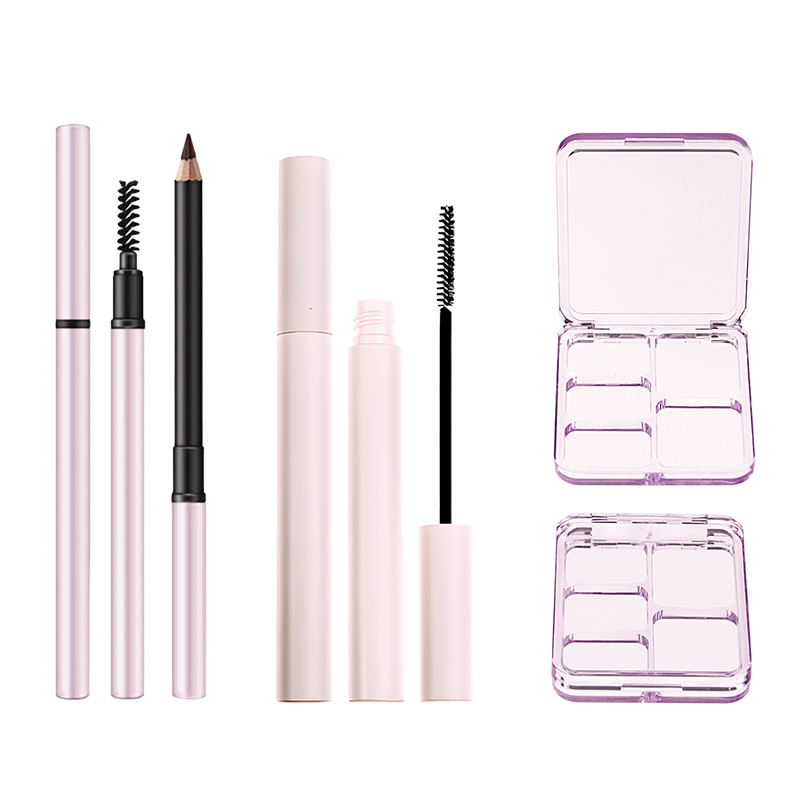
The curve of a mascara tube or the sleek surface of a compact case changes how a label clings and stays clear over months in transit.
- Compact cases & foundation jars: flat spaces allow crisp silk screening or hot stamping without distortion.
- Lipstick tubes, eyeliner pens: require precise UV coating for durability against frequent handling.
Acrylic plastic resists color fade, while glass bottles invite delicate embossed designs—each choice whispers its own quality story to the buyer’s eye.
2. Why are supplier certifications critical for bulk orders?
Trust blooms when your lipstick tubes arrive with proof of ethical work behind them—ISO 9001 certified processes, GMP-compliant checks on ingredient accuracy, REACH-compliant lacquers through every pump dispenser and spray nozzle deployed in production runs from 15ml containers to full 200ml bottles. Sustainable sourcing seals not only contracts but reputations; RoHS compliant aluminum casings speak volumes without saying a word.
3. Which decoration styles best protect brand integrity during mass printing?
Hot stamping glints like confidence; silk screening lays down colors that hold like promises under shipping stress tests on eco-friendly cardboard boxes or acrylic lids with magnetic closures. UV coating shields gradient effects from smudging between thousands of units stacked together—a quiet guardian ensuring each jar arrives looking as bold as intended.
4. What role do eco-conscious materials play in lasting cosmetic branding?
Recycled plastics carry an unspoken emotional weight: buyers sense care in the hand feel before they read it in fine print labels applied perfectly along their smooth arcs. Eco-cardboard supports metallic finishes without bending under pressure; across seasons and evolving sustainability codes beyond 2026, these choices become part conscience, part craftsmanship—linking product beauty with responsibility that resonates long after purchase day ends.
References
- Modernization of Cosmetics Regulation Act of 2022 (MoCRA) – www.fda.gov
- EU Regulation EC No.1223/2009 – www.ctpa.org.uk
- Regulatory information for cosmetics – www.canada.ca
- The 2026 Outlook: Convergence of Wellness, Tech, and Regulation – www.ulprospector.com
- COSMOS certification (organic or natural cosmetics) – www.ecocert.com
- Leaping Bunny Recommitment List – www.leapingbunny.org
- ISO 22716 Certification – Cosmetics GMP – www.sgs.com
- Global Recycled Standard – www.scsglobalservices.com

