 English (Australia)
  English
  English (UK)
  English (Canada)
  العربية
  Deutsch
  Italiano
  Español de México
  Tiếng Việt
  ไทย
ไทย  Português do Brasil
  Français
  Български
  Čeština
  Dansk
Dansk  Ελληνικά
  Eesti
Eesti  Suomi
Suomi  Magyar
  Bahasa Indonesia
  Lietuvių kalba
  Latviešu valoda
  Norsk bokmål
  Nederlands (Formeel)
  Polski
  Română
  Русский
  Slovenčina
  Slovenščina
  Svenska
  Türkçe
  Українська
  简体中文
简体中文  日本語
日本語  한국어
한국어  繁體中文
繁體中文 

Ultimate Guide to Finding the Right Cosmetic Jar
December 30,2025
It’s wild how something as small as a cosmetic jar can make or break your product line, huh? You’re not just picking out containers—you’re betting your brand’s reputation on tiny vessels that have to look good, protect formulas like bodyguards, and survive warehouses, shipping trucks, and sweaty summer shelves. If you’re buying in bulk for production runs in the tens of thousands… this gets real serious, real fast.
Think about it: one weak seal or cheap material choice and boom—returns pile up, customers bail, inventory goes sideways. Not to mention the missed chance to stand out visually when someone’s scrolling through hundreds of options online. Packaging for Cosmetics isn’t just packaging anymore—it’s part science lab, part runway model.
Smart buyers know it pays (literally) to get this right from day one. So buckle up—we’re pulling back the lid on what makes a jar worth investing in at scale.
Understanding the Importance of Choosing the Right Cosmetic Jar
Picking the right cosmetic jar isn’t just about looks—it affects how your product performs, sells, and lasts. Here’s what really matters.
The Role of Material: Plastic, Glass, or Bamboo?
• Plastic jars are lightweight and cost-effective but can vary wildly in chemical compatibility.
• Glass offers that luxe feel with excellent UV protection, though it’s heavier and breakable.
• If you’re going green, bamboo scores high on recyclability, but it may require inner linings to maintain product integrity.
→ According to packaging market research, over 54% of consumers reported deliberately choosing products with sustainable packaging in the past six months, driving brands to prioritize eco-friendly materials despite higher costs.
Each material tells a story. Glass whispers sophistication. Plastic shouts practicality. Bamboo? It’s your eco-conscious badge of honor.
How Closure Type Affects Product Integrity
- Screw-top lids are simple but must seal tight to prevent leaks and oxidation.
- Pumps offer controlled dispensing while minimizing air exposure—ideal for serums.
- Tamper-evident caps build trust with customers by ensuring safety.
- Magnetic closures look sleek but may compromise air-tightness if poorly designed.
A good closure isn’t just a lid—it’s a guardian against contamination, evaporation, and customer complaints about short shelf life.
Why Jar Shape Matters for Branding
Oval jars feel ergonomic and premium; round ones are classic and safe; square jars stand out on shelves—each shape affects how people perceive your brand’s vibe.
Short bursts:
A unique silhouette boosts shelf appeal instantly
Ergonomics matter more than you’d think for daily-use products
Custom molds help embed your visual identity into memory
The shape isn’t just aesthetic—it becomes part of how users remember your brand every time they reach for that jar.
Color Choices: Impact on Customer Appeal
→ “Color is no longer decoration—it’s strategy,” and recent trends in beauty indicate that consumers are increasingly focused on efficacy and functionality, often signaled by clean, sophisticated packaging aesthetics.
• Bright hues like coral or teal target younger buyers craving freshness
• Monochrome tones such as matte black suggest luxury and mystery
• Metallic finishes like rose gold scream modernity
💡 Don’t forget color psychology: Blue calms (great for night creams), red excites (perfect for lip balms). And always match Pantone shades to stay consistent across marketing touchpoints.
Your jar’s color could be the thing that stops someone scrolling—and starts them buying.
Top 5 Factors to Consider for Your Cosmetic Jar Selection
Picking the right cosmetic jar isn’t just about looks—it’s about how your product lives, breathes, and sells.
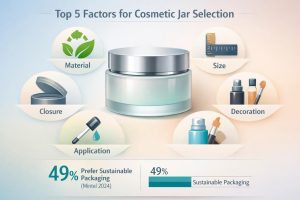
Material Type: Balancing Durability and Aesthetics
Choosing the right material is like finding the perfect outfit—it needs to look good and hold up under pressure.
- Glass jars feel luxe, resist chemicals, but can be heavy.
- Lightweight plastic, especially PET or PP, offers durability without breaking the bank.
- For eco-conscious brands, recycled plastics or natural materials like bamboo are gaining serious traction.
According to Mintel’s Global Packaging Trends, sustainable packaging has shifted from a selling point to a baseline expectation, with consumers demanding functionality alongside eco-friendly credentials. That’s a wake-up call for anyone still stuck on single-use plastic.
Size Matters: Choosing the Right Volume for Your Product
When it comes to size, don’t guess—match your product type with consumer behavior.
- For daily-use creams? Go with 50 ml or 100 ml jars—reliable and familiar.
- Travel-size lotions? Stick to anything under 30 ml; easy to carry, TSA-approved.
- Bulk products like body butter? 200 ml+ jars reduce refill frequency.
| Product Type | Ideal Volume | User Frequency | Waste Risk |
|---|---|---|---|
| Eye Cream | 15 ml | Daily | Low |
| Face Moisturizer | 50 ml | Daily | Medium |
| Body Lotion | 200 ml | Weekly | Low |
| Sample Serum | <10 ml | One-time | High |
Choosing volume isn’t just math—it’s psychology. Too big feels excessive; too small feels cheap.
Closure Type: Options and Their Benefits
The lid game is strong—and functional closures make all the difference in user satisfaction.
✱ Screw caps offer tight seals—perfect for thick creams that need protection from air exposure.
✱ Flip-tops are quick-access champs but not ideal for runny formulas.
✱ Airless pumps? Game changers for serums needing zero contamination risk.
✱ Add a tamper-evident seal if you’re selling premium products—it builds trust fast.
A well-designed closure doesn’t just protect your formula; it becomes part of your customer’s daily ritual.
Decoration Techniques: Customizing Your Cosmetic Jar
Want people to remember your brand at a glance? Decoration does that heavy lifting silently but powerfully.
• Silk screening is great for bold logos that pop against clear glass or matte finishes.
• Use hot stamping foil when you want metallic accents—think gold lids or silver edges on labels.
• Frosted coatings give off a high-end vibe while hiding fingerprints and smudges on glass surfaces.
• Combine embossing with custom cosmetic packaging printing for tactile branding that customers literally feel in their hands.
The best designs don’t scream—they whisper luxury with every detail baked into the jar itself.
Application Type: Matching Jar with Product Needs
Matching your jar type with what goes inside sounds obvious—but it’s often overlooked during development stages.
Step-by-step:
1️⃣ Identify product texture: Is it thick like balm or fluid like serum?
2️⃣ Choose compatibility: Gels do better in wide-mouth jars; loose powders need sifters built-in.
3️⃣ Optimize user experience: A rich cream should scoop easily; liquid lotion should pour cleanly without mess.
For instance, storing an oily ointment in a narrow-neck container spells frustration every time someone tries to dig some out—don’t be that brand!
In short, function beats fashion here—but if you balance both? You win twice over in usability and shelf appeal across all types of cosmetic containers including jars, pots, and tubs alike.
Choosing Between Glass and Plastic Cosmetic Jars
Picking the right material for your cosmetic jar isn’t just about looks—it’s about function, cost, and sustainability too.
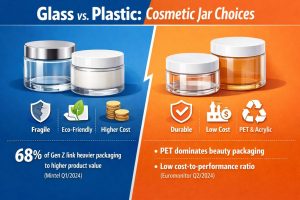
Glass Containers: Pros and Cons
- Durability vs Fragility: While glass is chemically stable and doesn’t react with most cosmetic formulas, it’s also prone to breaking if dropped.
- Aesthetics & Perception: The premium feel of glass gives products a high-end vibe, making them ideal for luxury skincare or serums.
- Sustainability Factor: Fully recyclable and endlessly reusable, glass containers are an eco-conscious choice—but they’re heavy to ship.
- Weight Consideration: Heavier than plastic, which increases shipping costs and carbon footprint.
- Chemical Inertness: Ideal for volatile or sensitive ingredients that might degrade in plastic.
In short? If you’re going luxe and want your product to scream quality on the shelf, glass is hard to beat—but it comes at a price in weight and breakability.
Acrylic Plastic vs. PET Plastic: Which is Better?
Grouped by key factors:
🟢 Clarity & Appearance
- Acrylic wins here with its crystal-clear finish, mimicking glass without the fragility.
- PET, though slightly less clear, still looks professional enough for most personal care products.
🟡 Durability
- Both offer solid toughness, but PET edges ahead in impact resistance—perfect for travel-size or toss-in-your-bag products.
🔵 Scratch Resistance
- Acrylic tends to scratch easier than PET; think long-term shelf wear or repeated handling.
🔴 Recycling & Eco-Friendliness
| Material | Recyclable | Resin Code | Common Use |
|---|---|---|---|
| Acrylic | Limited | #7 | Display jars |
| PET | Widely | #1 | Lotion bottles |
According to Euromonitor’s packaging reports, circular and regenerative economies are transforming beauty packaging, yet practical materials like PET continue to be relevant due to their durability and recyclability. So unless you’re chasing ultra-premium aesthetics, PET likely offers more bang for your buck.
The Cost-Benefit Analysis of Material Choices
Let’s break this down into three quick parts:
• Manufacturing Costs: PET plastic is cheaper per unit than both acrylic and glass—especially when scaled up.
• Shipping & Handling: Glass adds weight fast; you’ll pay more per pallet shipped compared to featherlight PET options.
• Consumer Perception: While glass screams “luxury,” today’s eco-aware buyers also appreciate lightweight plastics with high recyclability like PET (#1).
Now here’s where it gets interesting—according to recent data, sustainable packaging is becoming a critical value driver, with over 75% of U.S. consumers placing importance on sustainably packaged cosmetic products.
So if you’re choosing between materials for your next line of cream pots or serum bottles—or any type of segmented cosmetic jar—you’ve got some trade-offs to weigh carefully depending on your market goals.
Common Mistakes When Selecting Cosmetic Jars to Avoid
Choosing the right cosmetic jar isn’t just about looks—it’s about functionality, branding, and customer experience. Let’s break down what not to mess up.
Overlooking Closure Options: Why It’s Critical
Closures do way more than just cap your product—they literally seal the deal.
- Seal integrity matters. If air gets in, your formula breaks down faster.
- A weak dispensing mechanism can frustrate users or waste product.
- Incompatible closures ruin the whole vibe—your lid must match your jar’s neck size perfectly.
- Tamper-evident designs boost product security, which builds trust.
- Leaky lids? That screams cheap. Focus on leakage prevention from day one.
Skipping closure details is like ignoring seatbelts in a car—everything looks fine until it doesn’t.
Ignoring Customization: The Power of Personalization
Customization makes your brand pop, especially when everyone else is playing it safe.
- A unique shape or color enhances brand identity instantly.
- Consumers are drawn to packaging that feels personal—think textured finishes or embossed logos.
- Without customization, you’re stuck with generic jars that scream “off-the-shelf.”
- According to NIQ’s innovation report, transparency and clear packaging claims are becoming essential, with 45% of consumers wanting clearer, more transparent packaging.
- Don’t forget inner design elements too—liners and inserts can elevate both form and function.
- Skipping personalization? You’re handing over your shelf appeal to competitors.
Great packaging isn’t just about holding product—it’s about holding attention.
Misjudging Size and Volume: Common Pitfalls
It’s not just how much you fill—it’s how customers feel about what they get.
• Ordering jars too large leads to wasted space and higher shipping costs.
• Too small? You’ll end up with annoyed customers who thought they were getting more bang for their buck.
• Mismatched volume can mess with dosage accuracy, especially in skincare lines.
Here’s a quick reference table comparing common jar sizes:
| Jar Capacity (ml) | Ideal Product Type | Shelf Fit | Consumer Perception |
|---|---|---|---|
| 15 ml | Eye creams, serums | Compact | Premium |
| 30 ml | Moisturizers | Moderate | Balanced |
| 50 ml | Body butters, masks | Bulky | Generous |
| >100 ml | Hair masks, scrubs | Large | Value-heavy |
Choose wisely—the wrong size doesn’t just cost money; it costs trust.
Failing to Evaluate Supplier Quality: Why It Matters
Not all suppliers are created equal—and some can tank your entire launch if you’re not careful.
Grouped essentials:
Material standards & manufacturing process: If your supplier cuts corners here, expect brittle jars or inconsistent finishes that damage your brand image fast.
Lead times & defect rates: A supplier with slow delivery or high returns will leave you scrambling during peak seasons—or worse—dealing with angry buyers online.
Supplier reputation & quality control: Check reviews, request samples, and ask tough questions about their inspection protocols before signing anything long-term.
As noted by Euromonitor International, supply chain resilience has become critical, with pricing sensitivity and production costs being major challenges for beauty players.
You don’t want beautiful products trapped inside flawed containers—choose partners who care as much as you do.
The Hidden Benefits of Choosing a High-Quality Cosmetic Jar
A top-tier cosmetic jar isn’t just about looks—it’s the secret sauce behind product safety, brand power, and long-term savings.
Enhanced Protection for Your Products: Importance of Material Choice
• Premium materials like thick-walled glass and PET offer superior chemical resistance, keeping formulas stable longer.
• An airtight seal locks out moisture and oxygen, crucial for extending shelf life and preserving product integrity.
• UV-blocking coatings shield sensitive ingredients from light degradation—key for products with active elements like Vitamin C or retinol.
Choosing the right jar isn’t just smart—it’s essential if you want your skincare to actually work when it hits your customer’s hands.
Aesthetic Appeal: How Great Design Attracts Customers
Design is more than decoration—it’s persuasion at first glance:
- Unique shapes elevate face makeup packaging aesthetics and boost visual appeal, making your product pop off shelves.
- Custom finishes like matte frost or metallic spray coating enhance perceived value and strengthen your brand image.
- Minimalist labels paired with bold caps create a clean, modern vibe that improves overall customer perception.
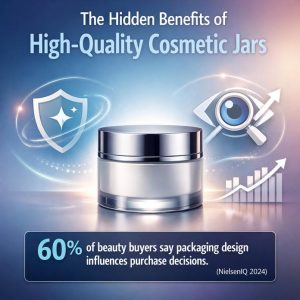
In fact, NielsenIQ’s research emphasizes that packaging design helps brands develop more powerful presence by utilizing non-conscious measures to predict preferences. That’s not something to ignore.
Long-Term Cost Savings: Investing in Quality
Why pay more upfront? Because over time, it pays off:
▪️ Durable jars reduce breakage during shipping—fewer refunds, less waste.
▪️ Stronger builds mean fewer replacements needed across inventory cycles.
▪️ Better packaging earns trust—translating into stronger brand reputation and deeper customer loyalty.
Topfeel understands that every high-quality cosmetic container is an investment—not an expense—and ensures each piece delivers lasting value beyond the shelf.
Extended Shelf Life Through Airtight Sealing
Airtight closures aren’t optional—they’re non-negotiable if you care about performance:
• They prevent oxidation from degrading formulas loaded with actives.
• They block airborne contaminants that could ruin texture or cause irritation.
• They preserve fragrance profiles by minimizing evaporation loss.
Long story short? If you’re using a serum or cream packed with botanicals or acids, poor sealing means wasted potency—and disappointed buyers.
Material Properties That Match Product Type
Not all jars are created equal—and they shouldn’t be:
For oil-based balms: go glass—it resists leaching and offers unmatched stability.
For water-heavy gels: PET is lightweight but still provides solid barrier protection against microbes.
For natural formulations prone to spoilage: opt for double-walled jars with inner liners for extra defense against heat and light exposure.
Matching material to formula helps maintain true-to-form consistency while guarding against contamination risks all too common with generic containers.
Attracting Consumers Through Packaging Aesthetics
Short bursts of visual storytelling matter more than ever:
● Textured lids = tactile luxury; they invite touch before purchase happens.
● Transparent bodies = honesty; shoppers love seeing what they’re getting.
● Color-coded collections = intuitive navigation; makes multi-product lines easier to shop.
These subtle cues build emotional connections—which means higher cart sizes without even changing your formula inside the jar.
Lifecycle Costs vs Short-Term Savings
Cutting corners on cheap packaging might seem smart—but here’s what really happens:
Step 1: You save $0.10 per unit going low-grade plastic.
Step 2: You lose $5 per unit when customers complain about cracks or leaks online.
Step 3: You spend thousands rebranding after reputation damage sets in.
So yeah… maybe spending a little more upfront on quality saves you way more down the road—in both dollars and dignity.
Design Elements That Boost Shelf Presence
Grouped by impact level:
🔹 High-impact:
- Bold typography paired with embossed logos
- Vivid color gradients that contrast competitors’ muted tones
- Oversized lids that create visual balance on crowded shelves
🔸 Mid-impact:
- Subtle metallic accents around rims
- Frosted finishes on translucent bodies
- Stackable designs for retail-friendly display
🔹 Low-impact but meaningful:
- Inner seals printed with affirmations (“Glow starts here”)
- QR codes linking to usage tips or ingredient sourcing stories
All these touches add up—not just visually but emotionally—for shoppers scanning rows of lookalike containers hunting something special from their next cosmetic jar set purchase.
How to Evaluate Cosmetic Jar Suppliers Effectively
Choosing the right supplier for your cosmetic jar needs is more than just comparing prices—it’s about building a reliable, long-term partnership that supports your brand’s growth.
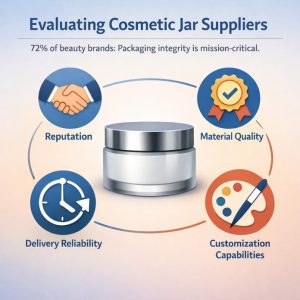
Supplier Reputation: Why It Should Matter to You
- A supplier’s reputation often reflects years of consistent service and product quality.
- Look for verified buyer testimonials, not just flashy websites.
- Check how they handle disputes—this reveals their business ethics.
- A strong track record builds real trust, especially when scaling operations.
If a vendor has shaky reviews or zero online presence, that’s a red flag. Great suppliers don’t just talk—they’re backed by years of solid performance and customer loyalty. When it comes to sourcing cosmetic jars, credibility matters as much as cost.
Material Quality Standards: Ensuring Compliance
- Confirm if the supplier holds ISO or SGS certifications—these validate material safety and regulatory compliance.
- Ask if raw materials undergo third-party lab testing, especially for BPA-free plastics or food-grade glass.
- Review documentation proving alignment with EU and FDA packaging standards.
According to market reports, over 72% of beauty brands cited packaging material integrity as “mission-critical” to maintaining consumer trust. Don’t let subpar materials sabotage your product line—especially when customers expect safety with every jar twist.
Delivery Reliability: Timeliness for Business Success
• Ever waited three weeks past the ETA? That hurts business flow big time.
• Reliable suppliers nail their lead times—they respect your calendar as much as theirs.
• Ask about their average delivery window and logistics partners; this affects overall supply chain reliability.
Late shipments can mean out-of-stock listings, angry customers, and lost sales momentum. Whether you’re ordering 500 or 50,000 cosmetic jars, on-time delivery isn’t optional—it’s essential.
Customization Capabilities: Partnering for Your Needs
-
Branding Options:
- Logo embossing
- Color-matching
- UV coating
-
Design Flexibility:
- Unique lid styles
- Variable volume options
- Custom shapes like hexagonal or oval jars
-
Innovation Support:
- In-house designers available?
- Rapid prototyping?
- Low MOQ for trial runs?
Suppliers who offer real customization aren’t just vendors—they’re collaborators in your brand story. Topfeel stands out here by offering bespoke solutions without bloated costs or rigid minimums, making them an ideal partner when you need more than cookie-cutter containers for your next line of cosmetic jars.
FAQs
1. What materials work best for large-scale cosmetic jar production?
Choosing the right foundation defines how your brand feels in hand:
- Acrylic plastic – crisp clarity that makes a cream product storage glow with high-end charm.
- Glass container – weighty, recyclable, gives instant prestige to balm type containers.
- PET plastic – flexible and durable; ideal for travel-ready gel formulation packaging.
- Aluminum shell & eco-friendly bamboo – the duet of sustainability and resilience appealing to ethical consumers.
2. How do different closures affect safety and usage comfort?
Every lid tells a story about protection and convenience:
• A tight screw top lid promises secure sealing yet easy repeat access.
• The simple “click” of a snap fit closure signals freshness preserved.
• For extra assurance, pair a vial with a tamper evident seal, or choose a snug child resistant cap when formulas demand care.
3. Which decoration methods heighten visual presence on jars?
Eye-catching surfaces speak louder than slogans — aesthetics adorn the substance beneath:
| Decoration Type | Effect | Best Used On |
|---|---|---|
| Silk screen printing | Bold logo precision | Opaque white color jars |
| Hot stamping foil | Reflective metallic gold finish | Round cylindrical shape |
| Label application | Flexible branding space | 15 milliliter volume sets |
| Spray coating finish / Metallization process | Lux touch shimmer or mirror tone | Oval shaped container |
These layers turn each package into art—small glimmers drawing buyers closer at first glance.
4. How does size selection influence operational efficiency?
Balancing beauty with practicality keeps production breathing steadily:
- Opt for nimble heroes like the 30 gram capacity pot for testers or single-use gifting.
- The stalwart mid-range — 50 ml container — satisfies habitual users of lotions.
- Larger companions such as the 100 gram size or stately 200 ml jar strengthen shelf dominance while limiting restock hassle.
The orchestra of sizes turns storage logistics into rhythm rather than chaos.
5. Why are supplier credentials so vital when ordering in bulk?
Behind every glossy outer wall lies unseen discipline:
– Consistent layering on each PET plastic mold ensures flawless transparency batch after batch.
– Glass container finishing must meet uniform thickness standards to prevent fractures.
– Trusted suppliers time deliveries precisely, keeping cream lines alive without pause.
A reliable partner means fewer surprises between factory floor and retail smile.
6. In what way do color tones boost emotional connection with customers?
Colors whisper mood before scent escapes:
★ A deep solid black pigment radiates sophistication suited to bold lotion dispensing jars.
★ Warm reflections from a metallic gold finish or custom pantone match tone down monotony, anchoring brand identity firmly in memory.
★ The purity shown through a transparent clear glass unveils natural ingredients—the silent proof of honesty within an elegant form.
As hues dance across shapes—round, square geometric design, even rectangular prism form—they carry stories that words never could.
References
- 50+ Beauty packaging statistics showing innovation in a changing industry – www.woola.io
- Mintel announces Global Beauty and Personal Care Trends for 2024 – www.mintel.com
- 2025 Global Packaging Trends: Packaging in Perspective – www.mintel.com
- Beauty and Personal Care Packaging in the US – www.euromonitor.com
- Cosmetic Packaging Trend Tracker: Sustainability x Functionality – www.gcimagazine.com
- 2024 Beauty, Health & Wellness Innovation Report – nielseniq.com
- Top Five Trends in Beauty and Personal Care – www.euromonitor.com
- Packaging Design – nielseniq.com

