 English (Australia)
  English
  English (UK)
  English (Canada)
  العربية
  Deutsch
  Italiano
  Español de México
  Tiếng Việt
  ไทย
ไทย  Português do Brasil
  Français
  Български
  Čeština
  Dansk
Dansk  Ελληνικά
  Eesti
Eesti  Suomi
Suomi  Magyar
  Bahasa Indonesia
  Lietuvių kalba
  Latviešu valoda
  Norsk bokmål
  Nederlands (Formeel)
  Polski
  Română
  Русский
  Slovenčina
  Slovenščina
  Svenska
  Türkçe
  Українська
  简体中文
简体中文  日本語
日本語  한국어
한국어  繁體中文
繁體中文 
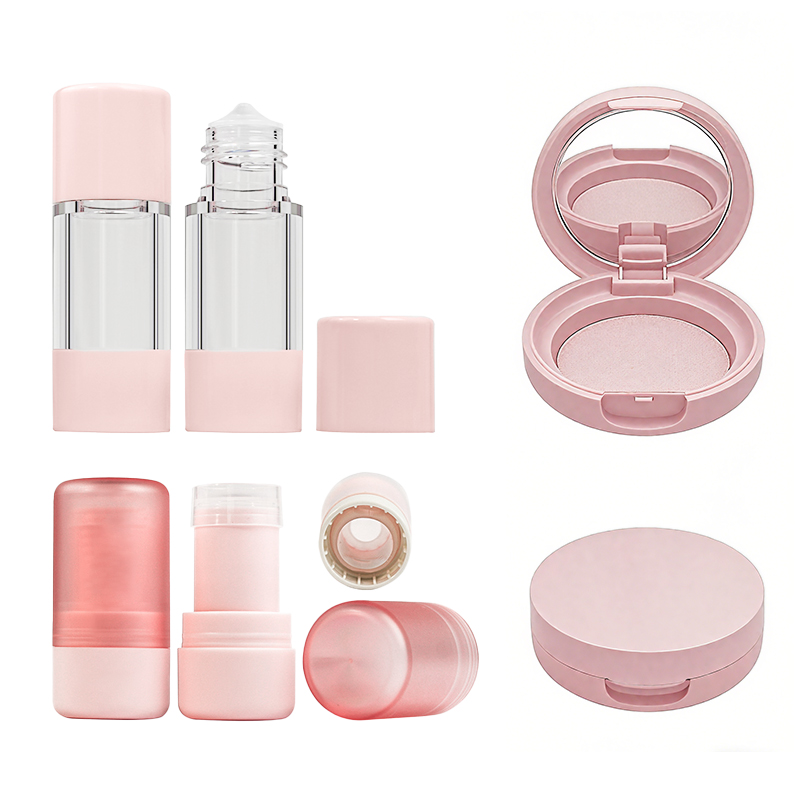
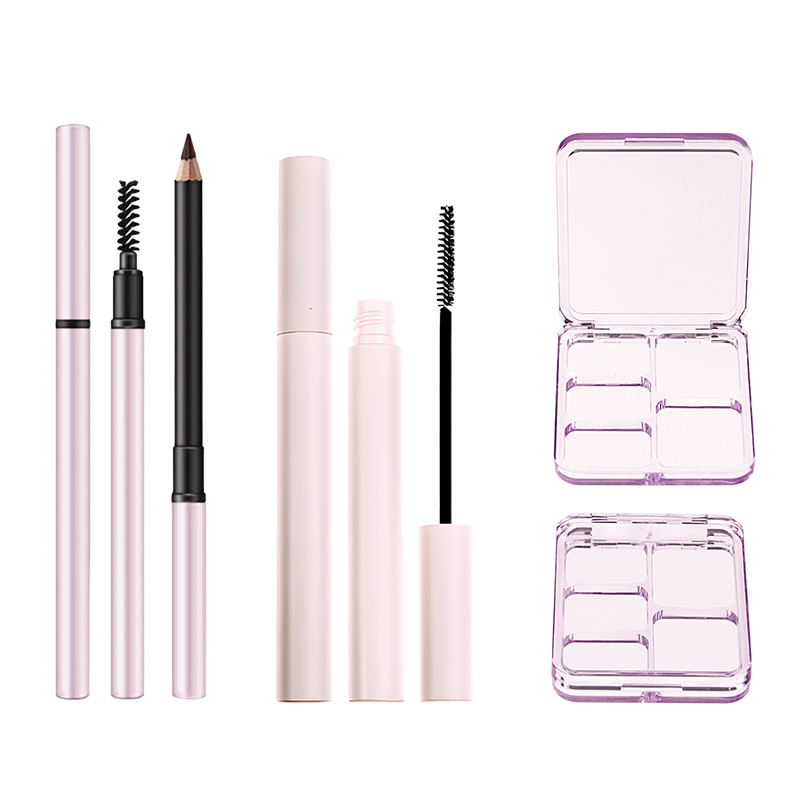
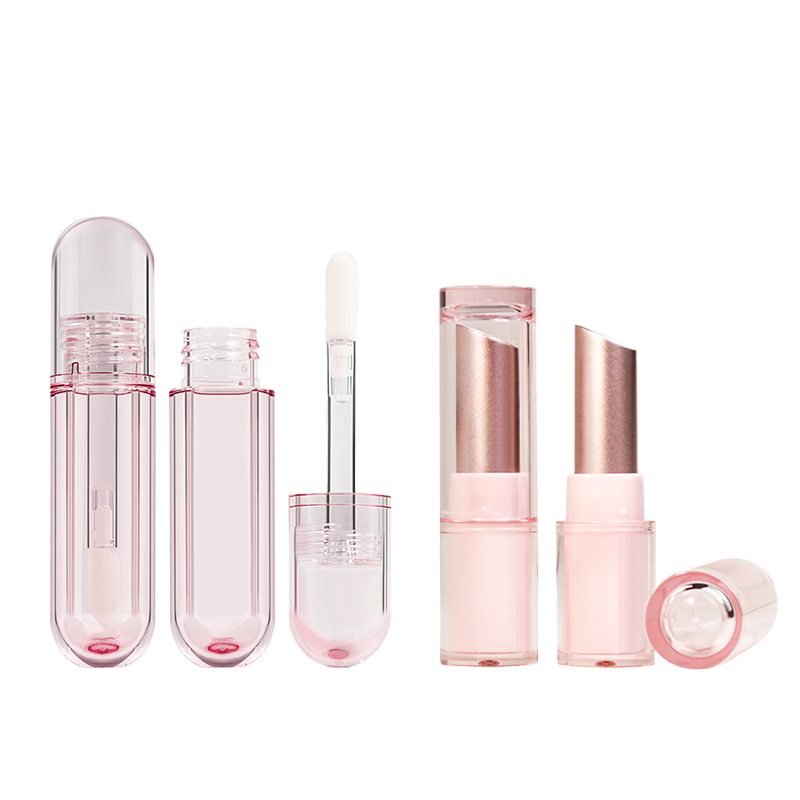

Eco Friendly Cosmetic Packaging: Top 3 Strategies
December 03,2025
Plastic is out, and purpose is in. These days, if your brand’s still wrapping lipstick tube components in layers of plastic like it’s 2005, you’re not just behind—you’re invisible. Eco friendly cosmetic packaging isn’t a nice-to-have anymore; it’s the new baseline. Shoppers want transparency with their mascara and compostable jars for their night cream. And big surprise—throwaway packaging? That’s a dealbreaker for Gen Z.
One Topfeel designer put it bluntly this March: “If your box can’t biodegrade or be refilled, it’ll end up as bad press.” That stings—but they’ve got a point. So how do you stay visible and sustainable without burning through budget or sanity? Keep reading—we’ve got three sharp strategies that’ll turn your custom cosmetic packaging into your brand’s loudest advocate.
Key Points in the New Age of Eco Friendly Cosmetic Packaging
➔ Brand Impact Matters: Sustainable materials like recycled cardboard and biodegradable mushroom packaging can boost your brand’s image by aligning with consumer values.
➔ Waste Not, Win More: Refillable compacts and recyclable options like aluminum tins help reduce environmental impact—and win over Gen Z buyers.
➔ Smart Choices, Big Results: Picking between glass jars or aluminum tins? Consider recyclability and weight for both sustainability and shipping efficiency.
➔ Certify to Clarify: FSC certified paper, compostable certification, and recycled content standards build trust with eco-conscious consumers.
➔ Design Less to Do More: Minimalist label designs using soy-based ink not only cut material waste but also reinforce a clean, green brand aesthetic.
Why Choose Eco Friendly Cosmetic Packaging
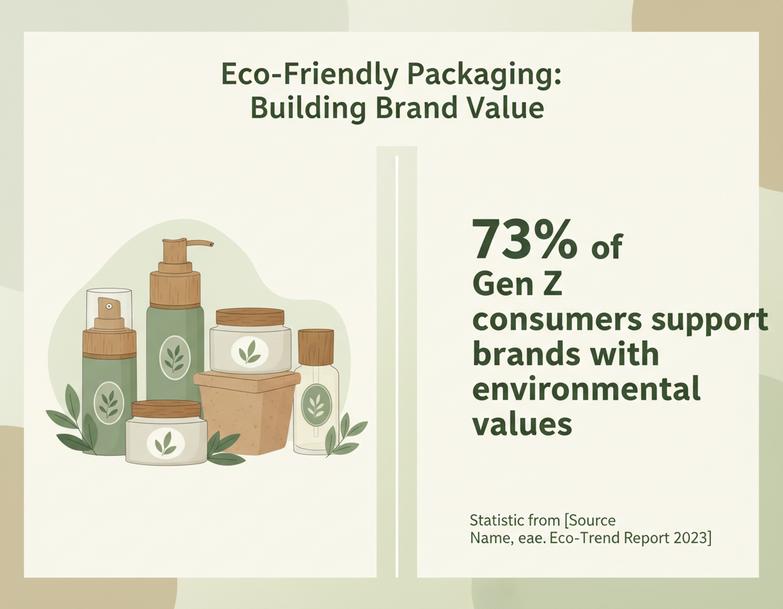
Choosing the right packaging isn’t just about looks—it’s about values. Let’s unpack why brands are switching to eco friendly cosmetic packaging and what it really says about them.
The Impact of Eco-Friendly Materials on Brand Image
- Brands using eco-friendly materials like bamboo, recycled paperboard, or sugarcane pulp often see a spike in customer trust.
- 73% of Gen Z consumers are more likely to support a brand that aligns with their environmental values.
- ♻ Using sustainable packaging is no longer optional—it’s part of the brand identity puzzle.
A beauty product wrapped in thoughtful, low-impact design tells customers you care beyond profits. This emotional connection builds loyalty and positions your business as forward-thinking. When someone sees a sleek lipstick tube made from recycled aluminum, they don’t just see makeup—they see purpose.
Short bursts of impact:
— Consumers associate green choices with higher brand value.
— Clean design meets clean conscience.
— You’re not just selling cosmetics—you’re selling alignment with their beliefs.
By integrating sustainable practices into branding, companies signal modernity and responsibility. Topfeel, for instance, has adopted renewable materials across its line to reflect this shift—earning nods from eco-conscious influencers and industry insiders alike.
How Eco-Friendly Packaging Reduces Environmental Footprint
- Ditching virgin plastics slashes manufacturing emissions by up to 60%.
- Switching to compostable mailers cuts landfill waste dramatically over time.
- Replacing foam inserts with biodegradable mushroom-based padding conserves raw resources.
“Brands that incorporate circular design principles reduce total lifecycle emissions by an average of 38%,” according to the 2024 Sustainability Insight Report by GreenMetrics Research Group.
Less pollution = cleaner production pipelines = better air and water quality near facilities. That matters when customers ask where and how their products are made.
You’ll also notice:
• Lower transport weight thanks to lighter eco-friendly packaging, reducing fuel use
• Better stackability during shipping = fewer trips = smaller carbon trail
• Easier sorting at recycling centers due to clearer material labeling
All these tweaks add up fast—and your buyers will notice the effort behind every box they open.
Benefits of Using Biodegradable and Recyclable Packaging
Grouped by functionality:
🌿 Biodegradable packaging
- Breaks down naturally without leaving microplastics
- Great for single-use items like sachets or sample packs
- Enhances composting initiatives in urban areas
♻️ Recyclable packaging
- Extends material lifespan through repeated use cycles
- Works well for containers like jars, bottles, tubes
- Encourages responsible consumer behavior post-use
Together, these options reduce dependency on landfills while supporting a growing circular economy model in cosmetics.
Each piece of recyclable or biodegradable material replaces something toxic that would’ve sat in the earth for centuries. It’s not just good PR—it’s smart product stewardship that keeps your sustainability story real and relatable across all touchpoints.
From lip balm tube options made from post-consumer metals to mascara tubes crafted from PLA bioplastics—choices matter more than ever in today’s eco-aware market for beauty goods packaged responsibly.
Consumer Preferences: Shift Toward Eco Friendly Packaging
More shoppers are turning to planet-friendly beauty buys. Here’s what’s nudging those choices and why it matters for brands.
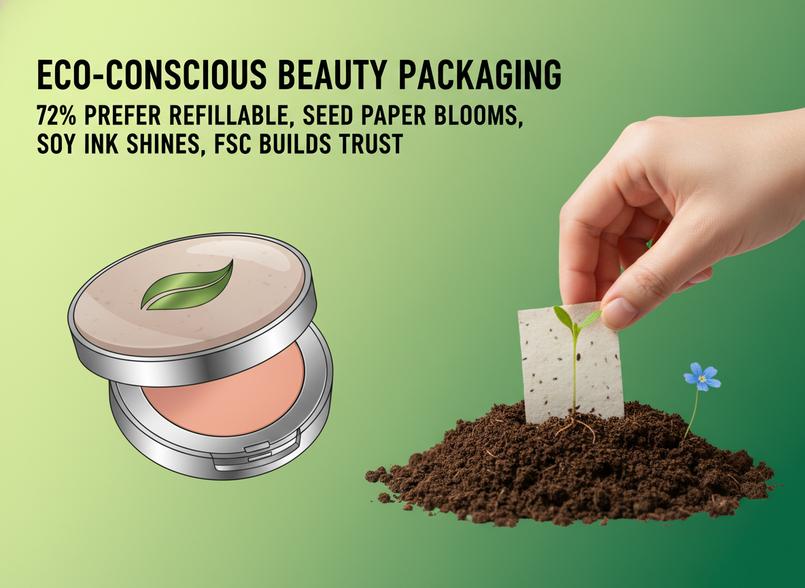
72% of Consumers Prefer Refillable Compacts
- Consumers are ditching single-use containers for good.
- The appeal? Convenience, cost-saving, and less trash.
- Beauty lovers want their go-to products without tossing the whole thing each time.
Refillable compacts cut down on plastic waste, making them a win for both the planet and your wallet. These days, if a compact isn’t refillable, it’s already outdated. Brands tapping into this shift are seeing increased loyalty from sustainability-focused buyers who care about their impact just as much as their glow. The trend is clear—swapping out disposables for reusable formats isn’t just smart; it’s expected.
The Rise of Plantable Seed Paper in Cosmetics
▪️ It looks like paper but grows like wildflowers—literally.
▪️ Beauty boxes made with plantable seed paper let customers plant the packaging after use.
▪️ It’s biodegradable, compost-safe, and adds a feel-good factor to every unboxing moment.
This innovation isn’t just about being cute or quirky—it aligns with growing demand for fully sustainable packaging for cosmetics options that go beyond recycling bins. And consumers love that it encourages biodiversity while reducing landfill waste. For brands aiming to stand out in the crowded space of eco friendly cosmetic packaging, seed paper is blooming with potential.
Why Eco-Conscious Consumers Choose Soy-Based Ink Printing
Eco-aware buyers aren’t just skimming labels—they’re reading between the lines… printed with soy ink.
According to Mintel’s April 2024 report on sustainable beauty trends, over half of Gen Z consumers say they notice whether packaging uses environmentally responsible ink types before buying. That makes sense when you consider how traditional petroleum-based inks can pollute water systems during decomposition.
Soy-based ink is biodegradable and derived from renewable sources—it checks all the right boxes:
- Safer for printing on recyclable materials
- Vibrant color payoff without toxic residues
- Lower VOC emissions during production
When paired with other sustainable materials like FSC-certified paper or refillable designs, soy ink becomes part of a full-circle solution that today’s conscious shopper craves.
The Influence of FSC Certified Paper on Purchasing Decisions
Short story? People trust what they can trace—and FSC certification brings receipts.
The Forest Stewardship Council stamp tells buyers that their product came from responsibly managed forests. That tiny logo has become a mighty influencer across cosmetics shelves where sustainability sells hard.
• Shoppers associate the FSC mark with ethical sourcing practices
• It signals authenticity amid widespread greenwashing concerns
• Boosts brand credibility among eco-aware demographics
In fact, NielsenIQ data from Q1 2024 shows that products featuring certified-paper logos saw an average sales lift of nearly 9% compared to non-certified counterparts within skincare categories. So if you’re choosing between two products with similar claims but only one flaunts the FSC label—guess which one gets tossed into the cart?
Brands taking these steps aren’t just staying ahead—they’re earning trust where it counts most: at checkout.
How To Implement Eco Friendly Packaging Solutions
Making the shift toward eco friendly cosmetic packaging isn’t just about going green—it’s about staying smart, stylish, and sustainable without breaking the bank.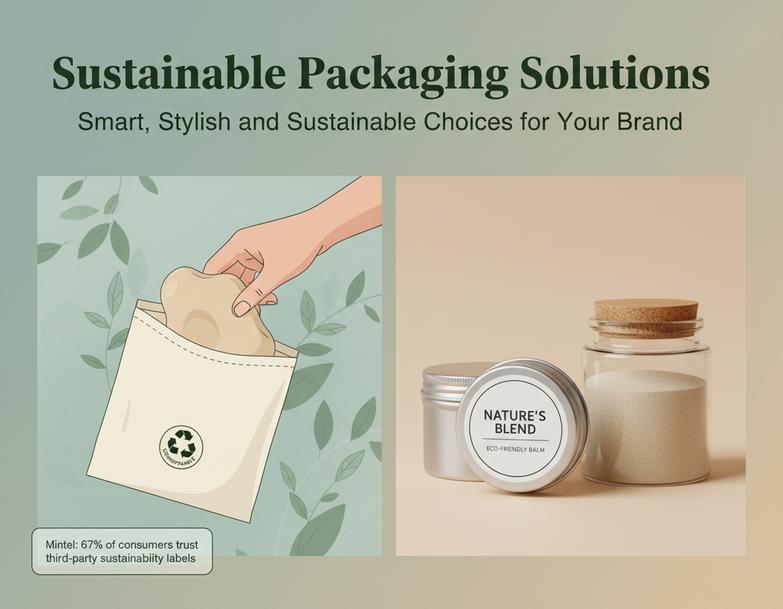
Key Steps for Transitioning to Compostable Mailer Bags
Switching over to compostable mailer bags means more than just swapping out plastic—it’s a full-on mindset shift. Here’s how brands can make it happen:
- Source quality materials: Choose certified compostable substrates like PLA or PBAT that break down quickly.
- Vet suppliers carefully: Work only with verified partners who meet ASTM D6400 or EN13432 standards.
- Update logistics systems: Adjust packing processes, storage conditions, and shipping workflows accordingly.
- Educate your customers: Use inserts or QR codes explaining how to dispose of these bags properly.
- Test durability early on: Ensure your new mailers hold up under pressure before scaling up.
By integrating these steps into your packaging strategy, you’ll align with sustainability goals while maintaining a polished unboxing experience.
How to Optimize Shipping with Recycled Cushioning Inserts
Shipping doesn’t have to be wasteful—especially when you use smart cushioning options that are already in circulation. Try these grouped solutions:
Protective Materials That Work:
- Shredded corrugated cardboard: Lightweight yet sturdy
- Molded pulp trays: Ideal for fragile items like glass jars
- Kraft paper rolls: Flexible and biodegradable filler
Cost-Saving Perks:
- Lower raw material costs through bulk recycled sourcing
- Reduced weight leads to lower shipping fees
- Less waste disposal cost post-delivery
Using recycled inserts means your brand cares—from product protection all the way down to landfill impact.
Choosing Between Glass Jars and Aluminum Tins
Material choice makes or breaks both shelf appeal and environmental impact. Let’s break it down:
Glass Jars
- Sleek look boosts premium feel
- Fully recyclable if cleaned properly
- Heavier weight increases carbon footprint during transport
Aluminum Tins
- Super lightweight, reducing fuel emissions
- Durable against dents; great for travel kits
- Highly recyclable—even infinitely so—with minimal energy input
For brands focused on minimalist luxury or refill programs within their eco friendly cosmetic packaging, aluminum often wins on function while glass delivers visual impact.
3 Essential Certifications for Eco-Friendly Cosmetic Packaging
Certifications aren’t just stickers—they’re proof your packaging walks the talk in sustainability. Here’s what counts most:
- Compostable Certification
- Look for certifications like BPI or TÜV Austria.
- Confirms materials decompose safely under commercial compost conditions.
- Recycled Content Standard
- Ensures a percentage of your packaging comes from post-consumer sources.
- Validated by organizations such as SCS Global Services.
- FSC Certification
-
Guarantees paperboard components come from responsibly managed forests.
-
A must-have if you’re using cartons or sleeves in your design mix.
According to Mintel’s Global Packaging Trends Report 2024, over 67% of consumers say third-party labels significantly influence their trust in brand sustainability claims—so don’t skip this step if you want credibility that sticks.
Decorative Techniques: Minimalist Label Design Best Practices
Less really is more when it comes to label design that supports an eco ethos. A clean layout not only saves ink but also elevates shelf presence without screaming “look at me.” Stick with muted tones derived from soy-based inks, limit embellishments like foil stamping, and lean into typography as the hero element rather than busy graphics.
This approach cuts down on unnecessary printing layers while syncing perfectly with sustainable branding efforts—especially when paired with recyclable substrates like kraft paper labels or sugarcane adhesive backings. It’s beautiful makeup packaging that speaks volumes.
And yes—Topfeel has been ahead of this game by blending slick design with low-impact production techniques across its latest launches in the skincare space.
References
The State of Consumer Spending: Gen Z Influencing All Generations to Make Sustainability-First Purchasing Decisions – First Insight Circular Design – Holcim Foundation Mintel announces Global Beauty and Personal Care Trends for 2024 – Mintel Product Insights – NIQ ASTM Compostability Standards – BPI What is ASTM D6400? Understanding Compostable Standards – Ellspo Eco Packaging – Forest Stewardship Council Paper & Packaging | Forest Stewardship Council
FAQs
Sustainable beauty doesn’t have to look bland. The most loved materials today strike a balance between function and conscience:
- Recycled cardboard: Lightweight, printable, and instantly recognizable as eco-conscious.
- Post-consumer recycled plastic: Gives old plastics new life without compromising durability.
- Bamboo fiber: Naturally antibacterial and biodegradable—perfect for brushes or lids.
- Glass and aluminum: Both endlessly recyclable with a premium feel.
Each material tells its own story—and customers notice when that story feels genuine.
It’s more than just a logo on the box. When shoppers spot the FSC mark, they’re not just seeing sustainable sourcing—they’re sensing trust. It whispers that you care where your paper comes from, who harvested it, and how forests were treated along the way. That quiet message builds loyalty faster than any flashy ad ever could.
-
Lower waste means less guilt at checkout.
-
Customers return for refills instead of tossing entire cases.
-
Ideal for blushes, foundations, or eyeshadows—easy to swap out without changing routines.
Absolutely—it holds color beautifully while being gentler on air quality during production. Soy inks dry cleanly with fewer chemicals involved compared to petroleum-based options. For brands aiming at minimalist labels or elegant glass jars, this choice keeps things vibrant yet conscious.
-
Aluminum tins resist dents better than glass but still recycle easily.
-
Glass jars offer elegance but need padding—better suited for local shipments or high-end lines with protective inserts like molded pulp trays.
Definitely. A bamboo lid etched with laser precision says more than layers of foil stamping ever could. Embossed logos replace stickers entirely—no peeling edges here—and even simple empty palette designs can carry bold identity through clever typography alone. Sustainability isn’t plain; it’s purposeful design done right.

